

CLOSING THE DOORS
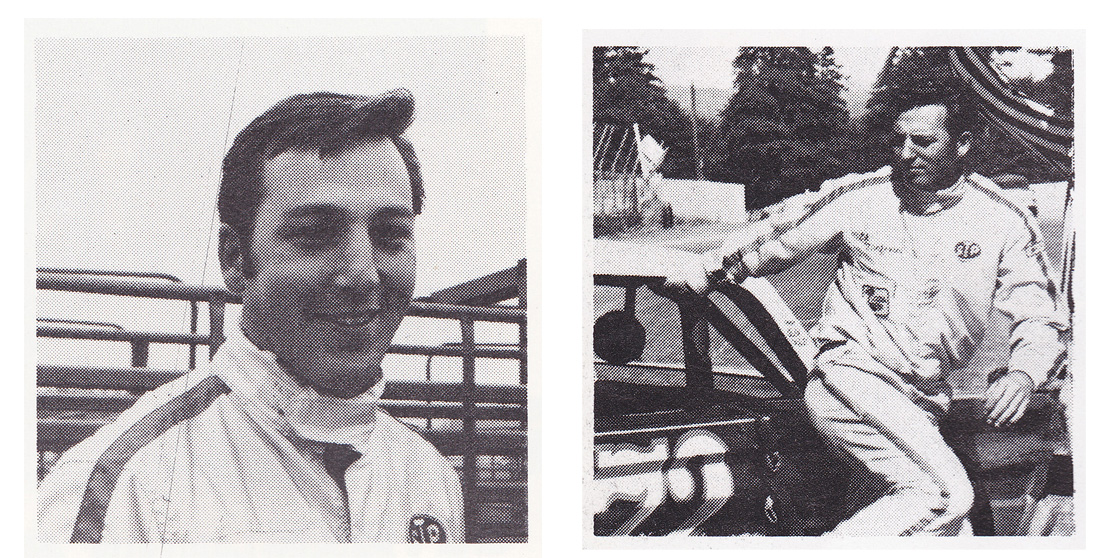
After over 50 years Fortuna Motors was closing its doors. “Lost the Chevy franchise due to the bankruptcy they declared, over 3,000 of them going away”, Ed Tanferani said in a visit to the recently emptied dealership in 2014. A young looking 71, Ed was retiring his car business and looked ready to get back out on the track, appearing no older than 61. “So far so good, huh? That’s right!” he replies with a laugh.
The ‘Rhonerville Rocket’ couldn’t get racing completely out of his blood. “My wife says every time we drive to Santa Rosa, ‘You’re not on the race track, just calm down!’ You just get in the habit of wanting to get around people. The police officers just don’t understand that though.”
Ed opened up his photo collection and clippings while answering questions about his racing at Redwood Acres Raceway in Eureka CA and his many trips to southern California to race at the legendary now extinct tracks like the road course at Riverside and the speedway at Ontario.
FIRST DRIVING EXPERIENCE AT REDWOOD ACRES:
A Traveling Carnival of Crashes
“I was born in Eureka, where they had a hospital, raised in Loleta, where my folks had a diary ranch.” His father owned a Ford dealership, and the old racing saying of Win On Sunday, Sell On Monday, was taken literally in the Tanferani family.
“In 1962 at Redwood Acres they were motorcycle racing a lot, 4 or 6 times a year, flat trackin’, and a lot of guys were into that. I think two times in ’62 some stock car guys came down from Portland and they’d get the word out in the local papers – ‘There’s going to be Jalopy races at Redwood Acres, winner takes all, all you need is a rollbar and a seatbelt, and all the glass removed’,” A reminder that you didn’t need seatbelts in regular cars back then, but they were going to be real safe for the races and have them. “So I get a ’53 Ford sedan we had on the lot, and it was a junker, six-cylinder I think we had in it, and I got a bunch of water pipe my grandmother had underneath her house in Eureka and I made a rollbar out of it, and they sent you something in the mail what it was supposed to look like. Nothing on the door, just front and behind the seat and front to back on both sides, and that was it, I guess keep the roof up. And these were shysters, they were barnstorming guys, and they’d come down here and they’d tow a trailer and bring a jalopy and they’d bring four cars. And the way it went, we all felt it was a race, but it was a show for the crowd and you’d be racing dodging through cars and I was in 3rd place trying to work my way through anybody and everybody, and here would be some guy going slow down the track and he’d pull out and hit you, and the crowd would cheer and that was the show. It was 50 laps or so and the second race I was really pissed off and I was going to dodge those guys still not knowing what they were doing, and when it was over I wrecked bad and we were all waiting around for the money, they all disappeared. They didn’t pay anybody.” Like a carny, they were gone, disappearing off into the night.
“Then I left for a year and a half and finished college, then I came back to Redwood Acres around ’66 and that’s when I started getting into races.”
On driving on the dirt, Ed said – “Like Harold Hardesty said, you could drive differently depending on what the dirt was, so you’d make the car adjust to the track, but on asphalt its the same every lap so you almost have to have a perfect car. Its an adrenaline rush, you get hooked on it. You just needed it. Once you hit it you hit it.”

SIX RIVERS RACING ASSOCIATION
For the 1965 season, the drivers at Redwood Acres formed the Six Rivers Racing Association (SRRA).
With the SRRA established, you had racers running the show, no single promoter. At that time Chevrolet was so prominent on the track that there were car classes based on which year of Chevy you were racing. “Part of the problem was I was running a Ford and it ran pretty good occasionally, and back then everybody ran Chevy’s, and if you beat a Chevy, people would get up in arms. People in the stands and everything. Nowadays they have to be all identical wheelbase. But what was neat about back then a guy could be low budget. Any guy could bring a race car out there one way or another, by hook or by crook. We’d go get parts out of the wrecking yard and from cars that had been thrown in the water at the turn in the river; get A-arms and sway bars that we needed, cut them off with torches and use them.”
Ed was on the SRRA board initially. “Oh, it was educational. You understood, from the organization side of it, but really what happens, you’re more trying to enforce the rules than you are worried about the crowd. The races would take all day sometimes. Because they’d be having these meetings during the race. When you have a promoter, really all he cares about is the crowd. He wants to keep the drivers happy. ’cause he needs the drivers to show up and he has to put the promotion on.”


BOB BRITT’S RACE TRACKS
Bob Britt (of Britt Lumber) came to Redwood Acres to race in 1964 in a ’46 Ford that he would add a Chevy engine to, and became an early SRRA Track Champion at Redwood Acres. He then built the 101 Speedway on the hill over the lumber yard next to the Hwy 101 corridor between Eureka and Arcata, where the SRRA held races. “He had two tracks (the first was below next to the highway on Humboldt Bay in the lumber yard) and the north wind was always blowin’ the dust right into the stands, so he went up behind it on a flat and built another track.” SRRA races at 101 lasted for one season before moving back to Redwood Acres for 1969.
“The best thing is Bob had a lumber yard right next to Redwood Acres on Hubbard lane where they worked on the car and they wouldn’t even trailer them to the race, they’d just drive it across the road to the race. We were jealous, towing our car from Fortuna”, he says with a laugh. “We’d have a truck and they’d tow me from Fortuna all the way to Redwood Acres with a chain and I’d be sitting in the car with my goggles on hoping I didn’t get caught.”
Back at Redwood Acres for 1969, Bob Britt won 7 of 14 main events, with Ed winning 3.
“Bob had his own car for a few years but then he was driving for someone else, figured out not to always spend your own money. Bob was a real good driver; methodical and, uh, calm.”
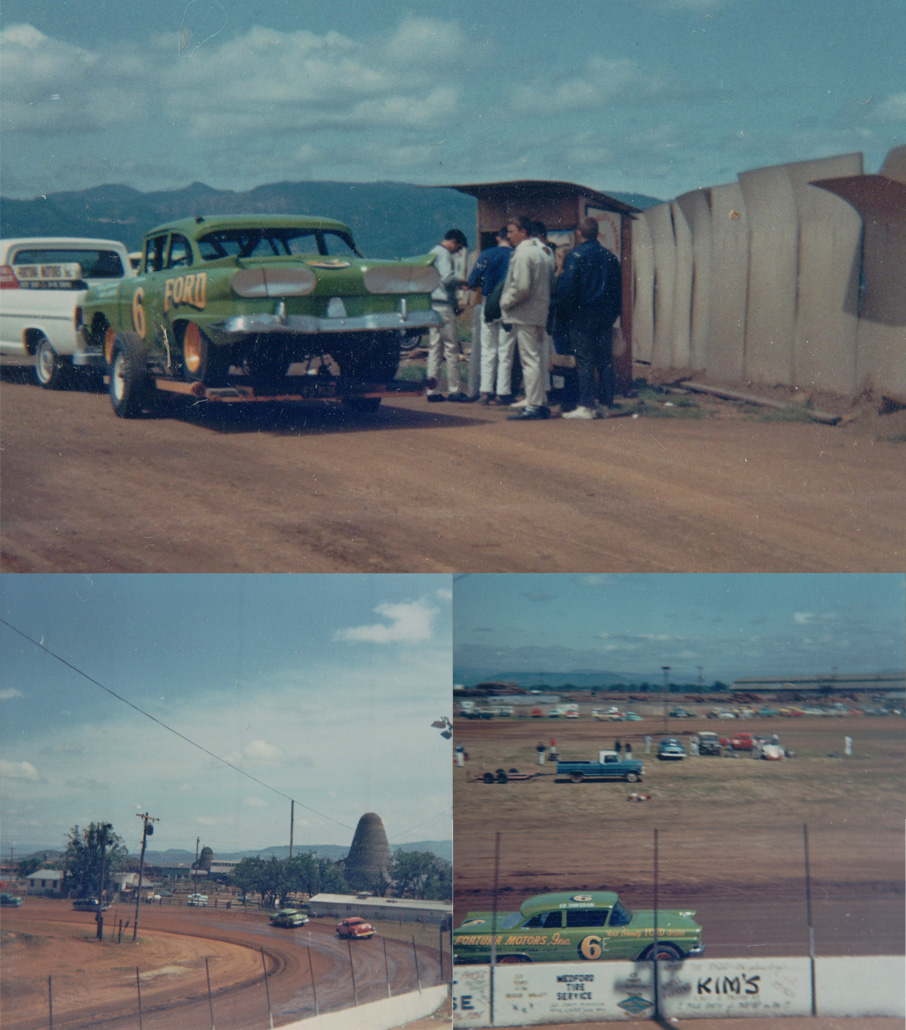

NASCAR RACE AT REDWOOD ACRES WITH HAROLD HARDESTY SEPT. 1968
On the mystery of the 1968 NASCAR race at a rainy Redwood Acres won by Harold Hardesty of Ashland with a victory photo of Harold with trophy sitting in front of his car on a trailer, Ed clarified – “His car broke”. I asked Ed if Harold’s account in my previous article was about right, he said “You’re damn right!”
The race had a small car count. “They knew they were going to be short, so they called around and anybody who wanted to bring their cars in they were going to have a separate race and put on a duel show, give the crowd their money’s worth. And then two or three of the cars broke, and another guy wouldn’t run because the track was so muddy.”
“Harold wasn’t going to race, so they wanted us to race. And then Rudy Zeck and I, Rudy was there with me, he used to race but he didn’t bring a car out that night, and we thought shit, we might as well let Harold drive my car, he’s a NASCAR guy, we’d raced and had fun and we were over, and while it would have been fun to race with them, I didn’t feel comfortable, that’s what I told Rudy. And Rudy said ‘Why don’t we see if Harold wants to drive your car?’, and he said ‘Yeah!’ He didn’t think about it”.
Harold said he loved jumping into strange cars, said it was a special talent he possessed. “There you go” says Ed. “He loved Redwood Acres. The Medford track was a quarter mile but it was banked quite a bit so it was a bowl. We raced up there quite a bit. Harold loved Redwood Acres for the speed. And I’ll tell you, when the track was a certain time he’d get out there and put on a show during hot laps. He’d come down and throw his car sideways at the flag stand and keep it all the way around and shoot down the back straightaway, very impressive. He had a talent and he learned it on that short track, because once you figured out Medford you had to be crossed up most of the time up there.”
The track was transformed into a quagmire from the rains – “Real bad, they had to blade it down and roll it to berm it up high and low and they just ran in the middle of it. We ran in the middle of it in our races, then they needed cars to start the race with, told the locals to start in the back and pull in, but we never pulled in. Nobody pulled in, everybody was just racin’ – you know how racers are! And then it started spotty rainin’ and I think NASCAR just wanted to get the race over with, so they let it go.”
On Harold Hardesty, Ed says “He was a fine gentleman.”

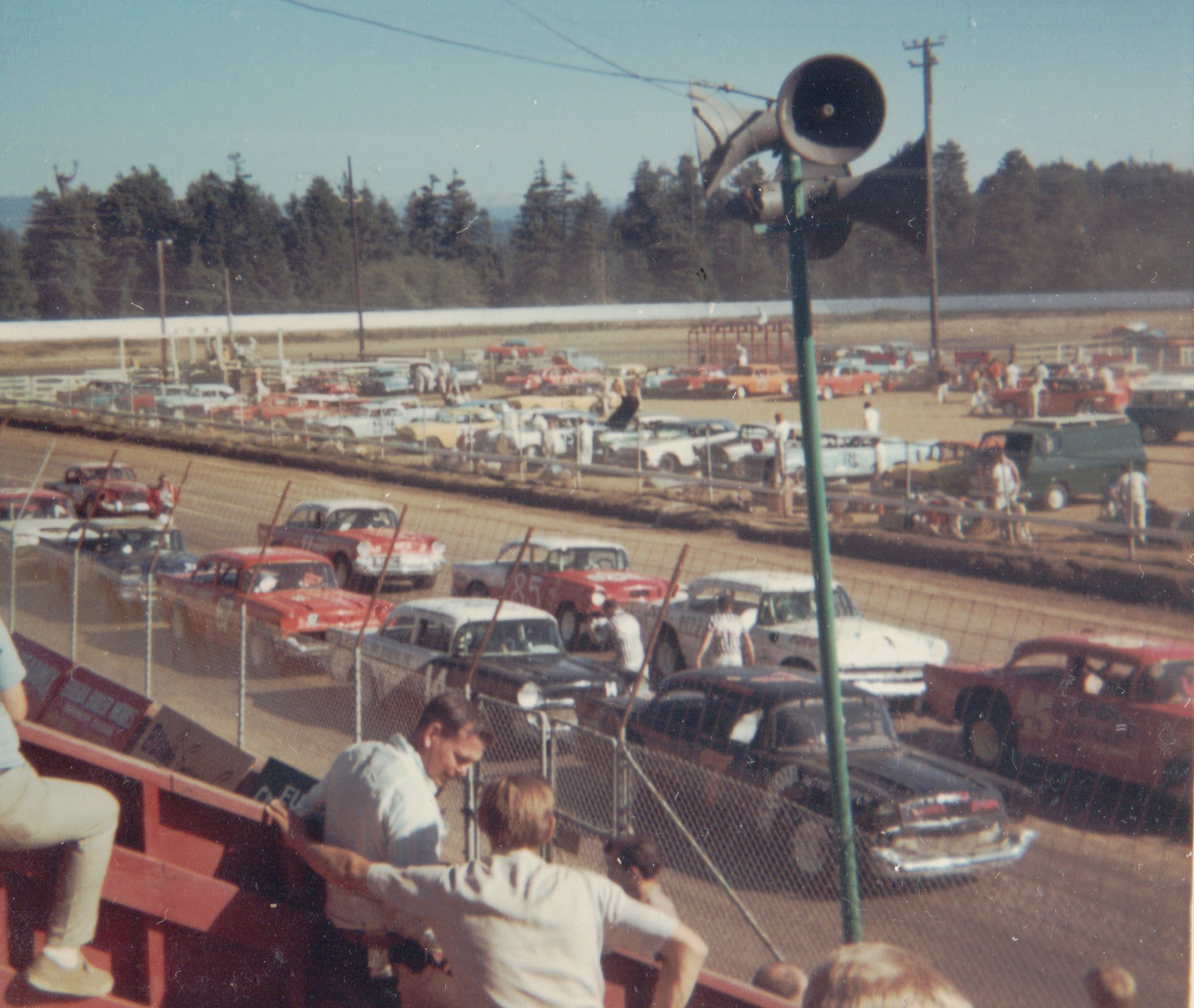
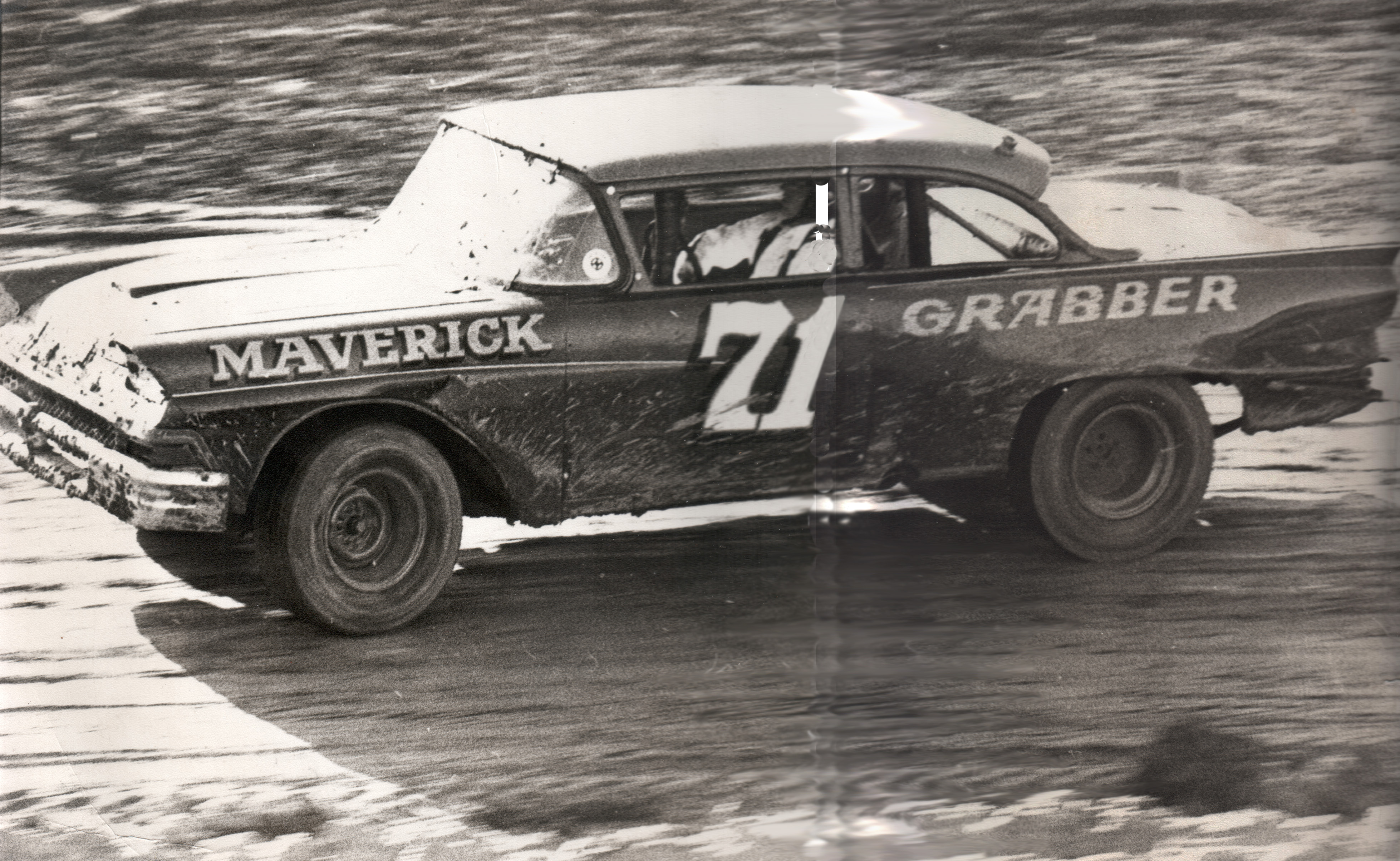
FIRST 100 LAP RACE AT REDWOOD ACRES
“At the meeting of the SRRA they said we want to do 100 laps and everyone said we can’t even get through 30 laps – we better start a lot of cars! Walker was leading it, I was in 2nd, and I think he broke with a couple of laps left, and I won. In fact I found my hub was broke after I got home, so I would have only made it a couple more laps.”
It was detailed in the 1969 Eureka Times Standard story and Dirt Trackin’ At The Acres that due to a scoring mistake, the race actually went 102 laps and Jim Walker should have been awarded the victory. Yet true to his “Gentleman” nickname, Walker upon learning of the mistake called the SRRA and told them not to worry about it.

TEAR DOWNS AND TIME OUTS
In Tom Dilling’s book, Dirt Trackin’ At The Acres, he indicated that Bob Britt grew tired of having his car torn down for winning often, and left racing.
“Bob Britt was about 10 years older than us, or a little more. He raced a little bit when he was young, in the jalopies or the hard tops, so he had a little experience. They ended up the one year that I was doing decent, and they could let anybody tear you down if somebody in the stands put up money. So we got tore down about three times that year. You won, you must do something wrong. And anybody can argue it.”
“There was this restaurant called The Flame. The guy that owned that had a jar there so somebody told me that they can put money in it and tear somebody down. And I think what we complained to the guys that it cost money to tear down. So you’ve got $75, whether you’re illegal or illegal or whatever for gaskets and stuff to put a back together or something. 50 bucks, whatever it was.”
“But the problem was with me, I got in trouble and then I got suspended there too is because nobody knew a Ford. Everybody knew Chevy’s. So they tore me down, couldn’t find anything, but they wanted to keep the car another day so they could get somebody with Ford experience and come and figure out if it was legal or not. Everything measured out fine when we got the heads off and all that. I went the next morning with a tow truck and got the car and got it the hell outta there. One tear down’s enough, I’m not gonna leave it with you guys for a week. So they got off. Sent me a letter so I couldn’t race for about three races or something.”
“So I sold the car to Rudy Zeck, he was driving a Chevy, but he was kind of my buddy. And he says, well, maybe I’ll drive the car. So we taped paper numbers over the car and I told him that I sold him the car for a dollar and now he’s gonna run it tonight and show you that it’s right. Well, they got off and wouldn’t let him race. And it was big, they had a big time out meeting and everything. They wouldn’t let him race that night.”

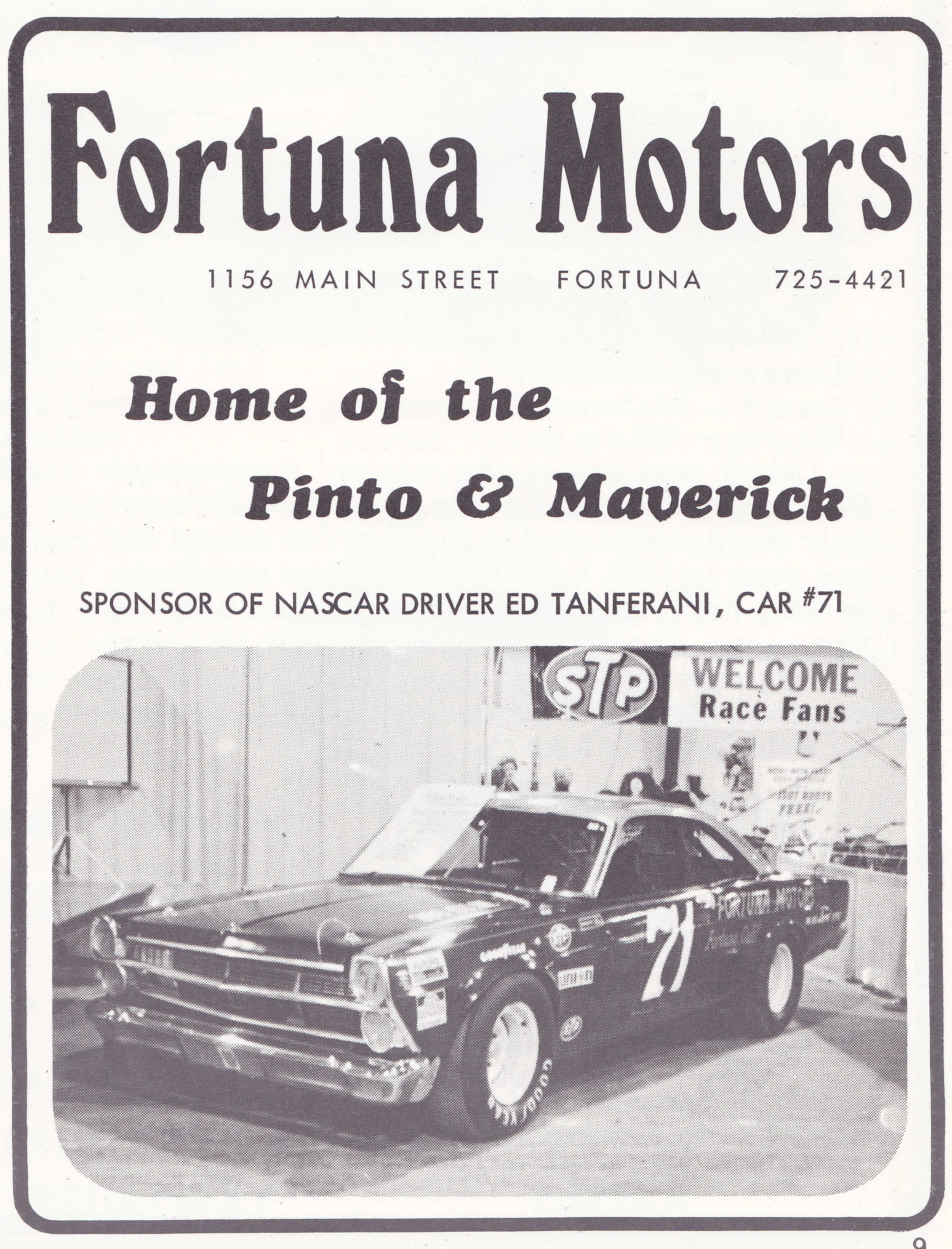
MECHANICS OF FORD vs CHEVY and OPEN COMPETITIONS
“I wasn’t good as a mechanic because things couldn’t happen quick enough; you have to be meticulous and I’m sort of sporadic. And that’s how I drove up here too; I had a bad rap, sometime people call you the villain. I drove a Ford, that was part of it. The other thing Ford didn’t have a short stroke, Chevy had a short stroke, so I had to have that thing wound up all the time. So I’d get into the turns and I’d get right in it again, and found out as long as I kept the back end loose, I could come out and then run with them. But if you shut it down like they do and work your way through the turns, you’d only start running past the flag stand where it would really start pulling. So you got to where you tried to have a rhythm. What was so funny about it, we were all after horsepower; it was carburation, it was air, it was gears – but it was really about handling. And we were all trying to go fast. And its in the turn where you were making good time. The Open Competition races – Dave McMurray came out with fuel injection! Happy Boyd came over from Redding and he had this short little wheelbase and fuel injection on it – but he couldn’t get through the turns. The light came on when you dropped a cylinder and you were passing guys in the turns because you were going in slower instead of going in and sliding all over trying to gather it all up then get back on it.”
OUT OF TOWN RACING
“From 1970 to 1974 I raced down south. Jimmy Walker did too. Larry Pries went down there a couple of times. We had fun there for a while. There were about five of us who tried to race at the other tracks – there was a dirt track at Anderson, a dirt track at Medford, and then we’d go to Cottage Grove once in a while, to Klamath Falls once in a while, we did Marysville once.”
One particular race at RAR Ed ran afoul of the SRRA. “I think we had raced in Medford Friday night, Klamath Falls on Saturday, and then we had to work on the car and we loaded up and we came down here and we were about 20 minutes late or something like that.”
“I remember driver Fergy Ferguson was acting president, he was always trying to enforce the rules of the Six River Racing Association, so that was important for him. That was pressure because you had all these guys in the back pushing you out there and saying no, you gotta enforce the rule, and He said one time I came in a little late for qualifying or something, and he was like, don’t even take it off the truck. And then we had a big meeting in the middle of the infield, like, do we let Ed in or something? He said Ed was the hot shoe. So it was like, we gotta let Ed in. And they overruled me. He’s still like, ‘they overruled me, but I stuck by my guns’. But that’s how it goes. You know; you bring your car and you’ve worked on it all week. I was young then too, and you get hot.”
“Another time I got black-balled at the races, something to do with the fire dept. My transmission blew, the engine locked up, I skidded around over the bank. (There was no wall around most of the track back then.) And the fire dept. came and there was a little oil fire under the hood and they started spraying the fire retardant all over under the car and you don’t want that. All I knew about before pressure washers was all the work I was going to have to do before I could work on the car. So I grabbed the fire man to keep away, and Six Rivers Racing Association got a complaint from the volunteer firemen and they black-balled me for two races for trying to fight on the race track. I went over and apologized to the fire chief and the fire dept a week later.”

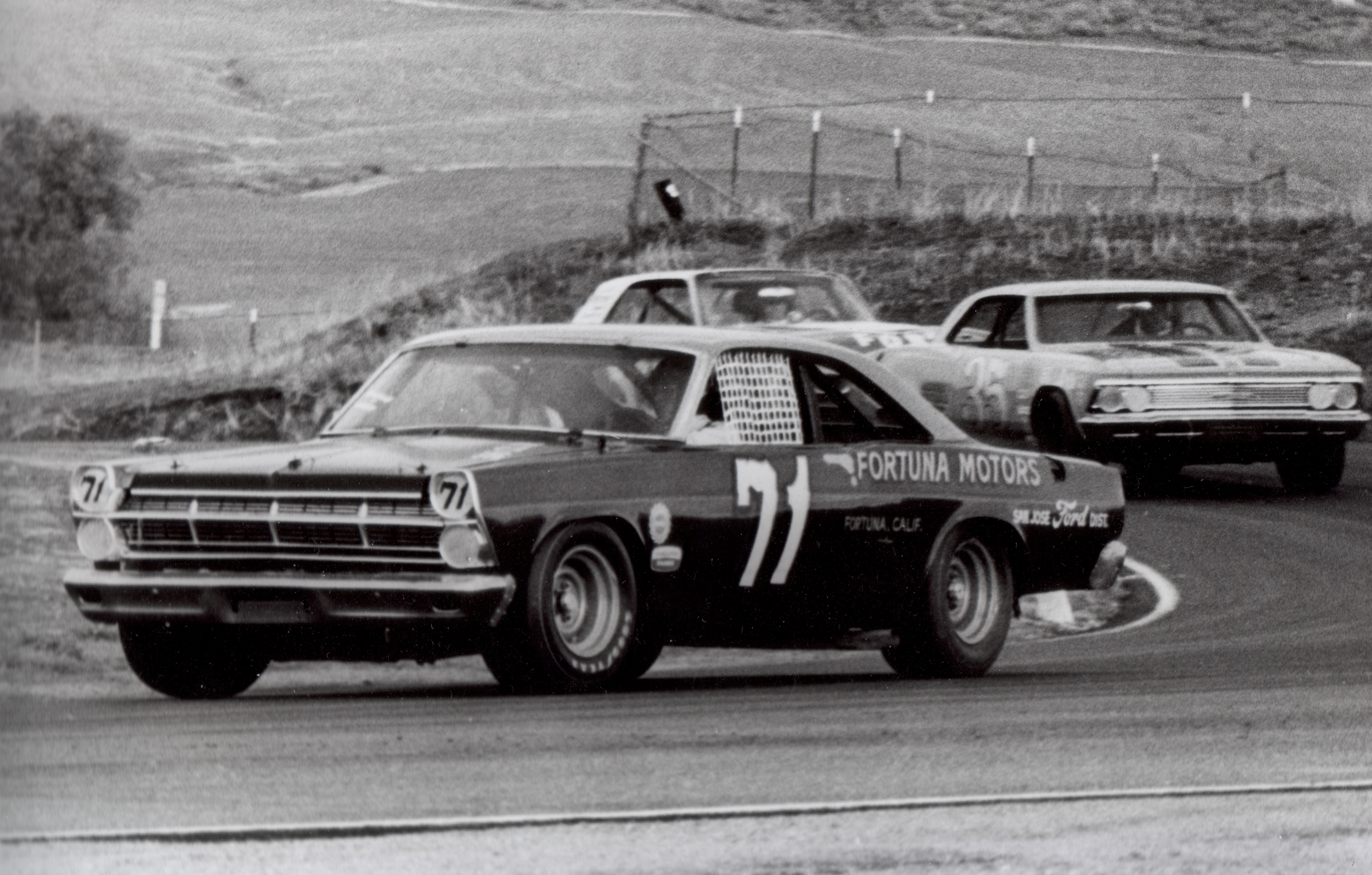
RIVERSIDE
“The hard time we all had when we first went down there to Riverside, California, the first year especially, is that we’d never been on asphalt, so we were intimidated. And the other thing was that we didn’t know the track. It seemed consistently that there would be guys from Idaho, Washington, Oregon, California, Arizona and Nevada there. There was a little over a hundred cars showed up to qualify. We always qualified, except one year I broke a clutch I think and I couldn’t qualify.”
“But the problem that I didn’t realize at first, if you get off the track at all and you had your foot on the brake getting ready for the turn or something, that tire would hit the sand and would lock up quick. So now you go around and around. You couldn’t release it, it’d lock up, you’re going so fast. And so you have to stay off the brakes and you have to use a lot of compression. And because guys would get off the track they in turn would put a lot of sand on the track. They would just let it blow off, you’d just keep racing. But what I liked about it, with the Ford still, again, you couldn’t get the RPMs, but on the bigger tracks I did better because you were wound up all the time. Where on the short tracks you had to almost use your fenders a lot in the turns or lean on somebody because you didn’t want to back off. You backed off, you weren’t gonna be competitive. And so the bigger tracks, you could think it out a little bit.”
“You figured out the road course pretty instantly, but I couldn’t get the rhythm down. They have a 250 mile in January, and then they had a hundred mile in June. And I went back in June, and then I realized it was like snow skiing or water skiing through the ‘S’ up there. You had to let that car move, don’t fight it. Just let the car run. And then you could see all the turns, about four of the turns up through there, and you would just do that.”
“And there’s that long straightaway, but that long turn on the way back, about a mile on the quarter. And it was a drag strip going this way, coming up the hill. But you’d come off that hill and the first time I got qualified, I didn’t have a good fuel line. I just had a cheap fuel line. But, Rudy Zeck being a good mechanic and a friend of mine, we got down there and I only made about three laps. And the next day we had to qualify, but the car was missing all the time at the end of the halfway down the straightaway. Well, what we figured out, we changed the distributor, we changed the carburetor going into the race, we got qualified with it missing. And we qualified right at the back, right at I think 39th or something like that. But we threw the book at it changed the carburetor distributor and the fuel line. And it ended up being the fuel line because sucking the fuel dead when you get up to about 130 miles an hour. So they start that race and I’m clear at the back and we come off that hill and the car is never missing and I’m back there with a guy that’s qualified slower and might have similar problems. Who knows, I’m just flying by these cars. So I go all the way to about 19th not even completing the first lap, going down the back straightaway.”
“Well, when we get into the final sweep and turn, all of a sudden you had to be in the one or two spots making that turn, even though it was six cars wide. Well now I had a problem. But with the dirt track experience, I was okay because I got sideways and I could skid and skid. And I remember they had turn guys on those road courses, guys on this wall and there’s a boiler cement and boiler plate wall, and I remember a guy’s feet right here. And I hit the wall, whoop whoop twice, and I was able to hit it kind of flush. And then I went by pit road and going up through the ‘S’ the whole car filled full of smoke. And so I think we’re out of the race on the second lap. So I pull into the pits and that was back when the pits were wide open, you’d come in a hundred miles an hour. No speed limit. So I come into the pits and the guys come around, well, one of the fender braces I caved the car in. It shows, and in one of those pictures how it was caved in, well the fender braces, it had buckled like that and it was rubbing against the tire and that was causing the smoke. So they just pulled the fender out, bent it off, and we took off. I think we finished ninth in that race. But we, we were running, we were cooking. So then I figured the track out.”
“Ron Honaday’s dad was a service manager for Galpin Ford in L.A., which is one of the biggest Ford dealers in the nation. He ran that at Riverside. And out of a 80 or 100 cars, only about 13 Fords had come to qualify. Well, he ran a Ford for the Ford dealership who was a sponsor. And I went over and asked him how to get through these turns. And he said, well, where you can make a lot of good time, it’s across the top, it’s short. He says, don’t shift, put it in third gear and leave in third gear. I said, I’ll wind out. He says, feather it back off. Don’t shift even if it feels like you’re wasting time, he says, because you’re gonna lose two seconds shifting into fourth and then shifting back to third and down into second to make that turn. When you get there, you pull it out a third and then the second and go around that turn, then you’re gonna make it, and now I picked up a lot of time right there.”
ADVICE FROM A.J.
“And my wife at the time and one of the pit crew wives, three of ’em were walking around the track on the Saturday race the first year I was there. And they ran into the Woods Brothers and A.J. Foyt, who was driving for the Woods Brothers. And my wife tells me on the way home, ‘AJ says you’re taking your foot out of it. You’ll never, never make a racer.’ (laughing) And I said, what the hell are you talking about? She said ‘He says, you don’t take your foot out of it going up through the ‘S’ you just leave it in wide open, put it in third gear and leave it there.’ So I went back the next year in June when we practiced and I left it in third gear instead of shifting in fourth and just wind it up and then just don’t lift. So I just left it all the way, and so this car sticks, and just rock it (side to side motion). So that was input that I got from, you might say, A.J. Foyt – ‘Boy, Don’t Lift!'”
SPINNING AT RIVERSIDE
There was a spin documented in photos at Riverside in 1971. “We were running sixth, I was in the June race, I think. You come around the blind turn, uh, you’re going up through a canyon kind of deal, and you come around a blind curve and there was a guy sliding, he’d lost it and was out in the dirt. So I thought I could get by, and he’d come around and caught it and slammed me, I think I spun it three times or something, but we still ended up finishing ninth I think.”

ONTARIO
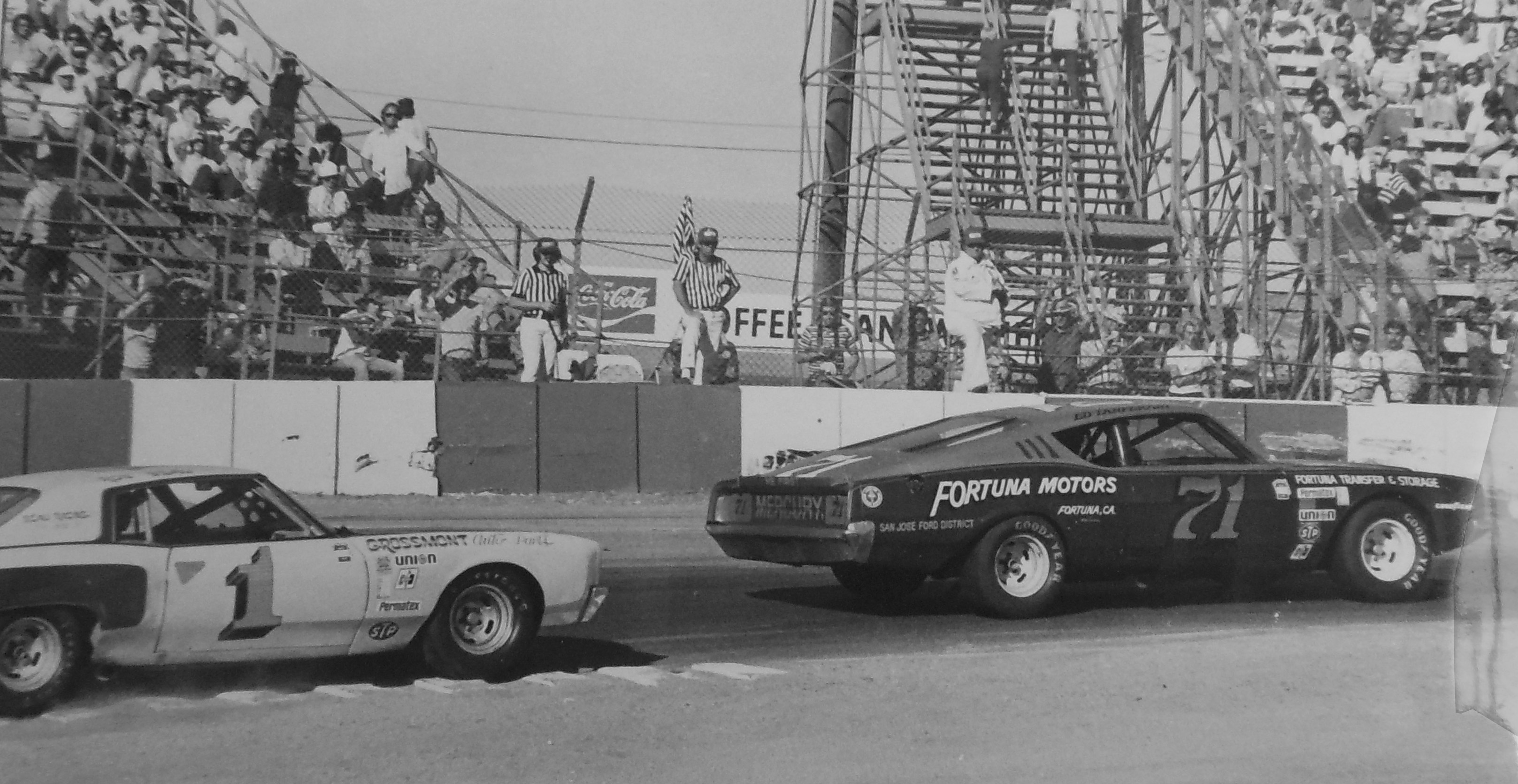
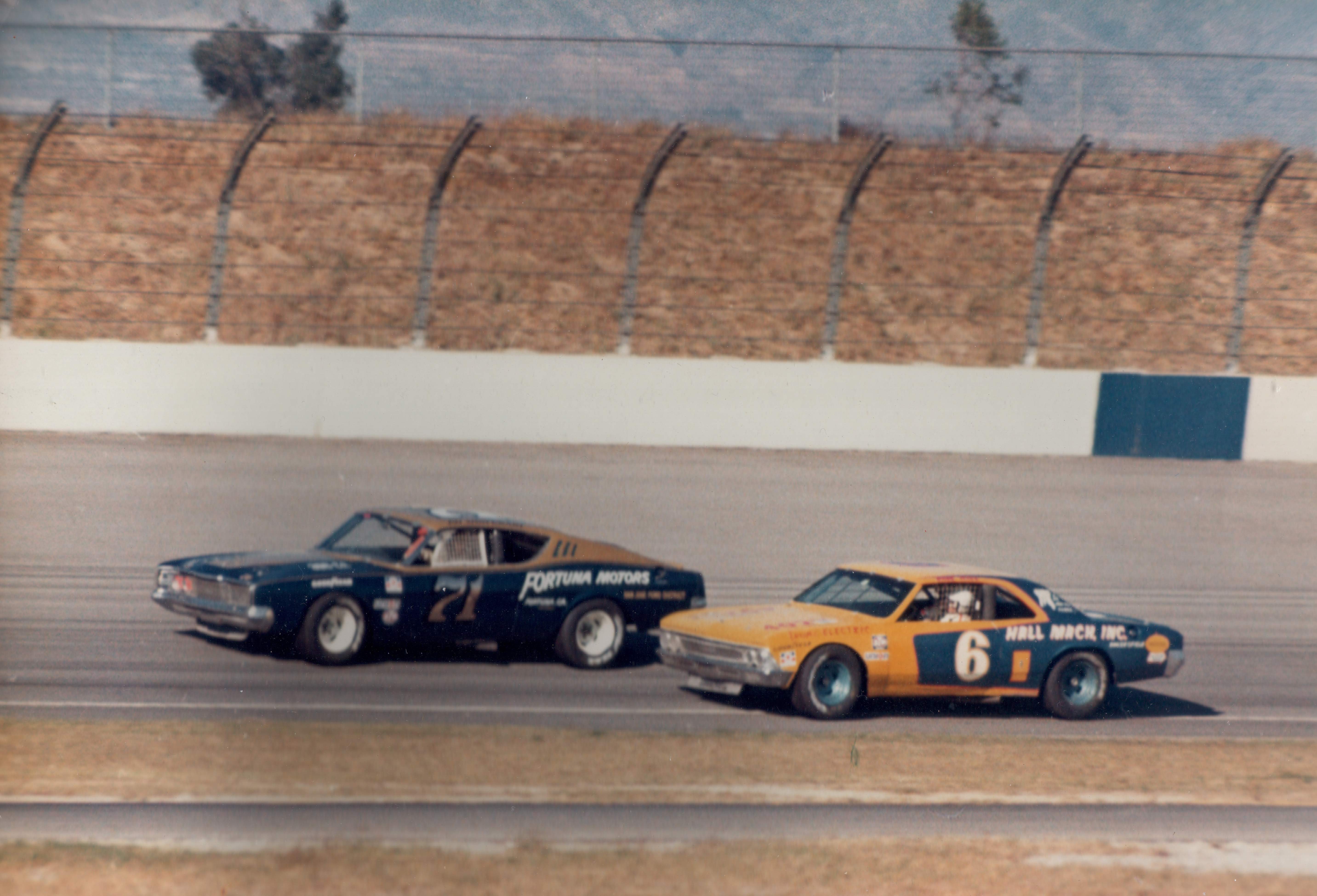
“I remember it was Southern California oval, and it was built identical to Indianapolis motor speed. Same turns, everything, same distance. We would clock out at about 160mph. We figured out with a gear wheel about 161, 162 or something like that at the end of the straightaway. And those were just iron cars. That’s stock, just street type cars back then everybody was running. We’d always did good there too for some reason; we always finished in the top 10 down there.”




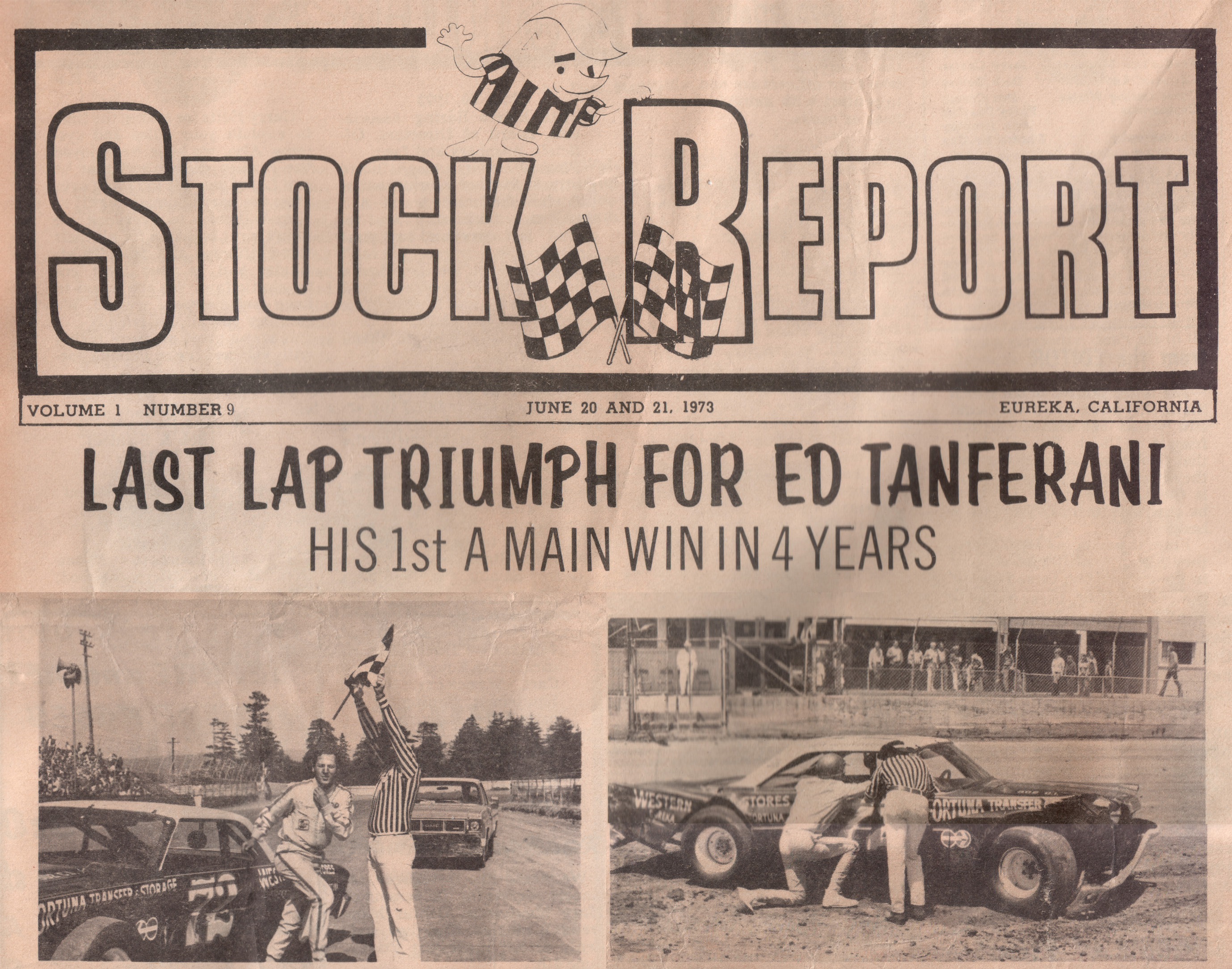
LEAVING REDWOOD ACRES
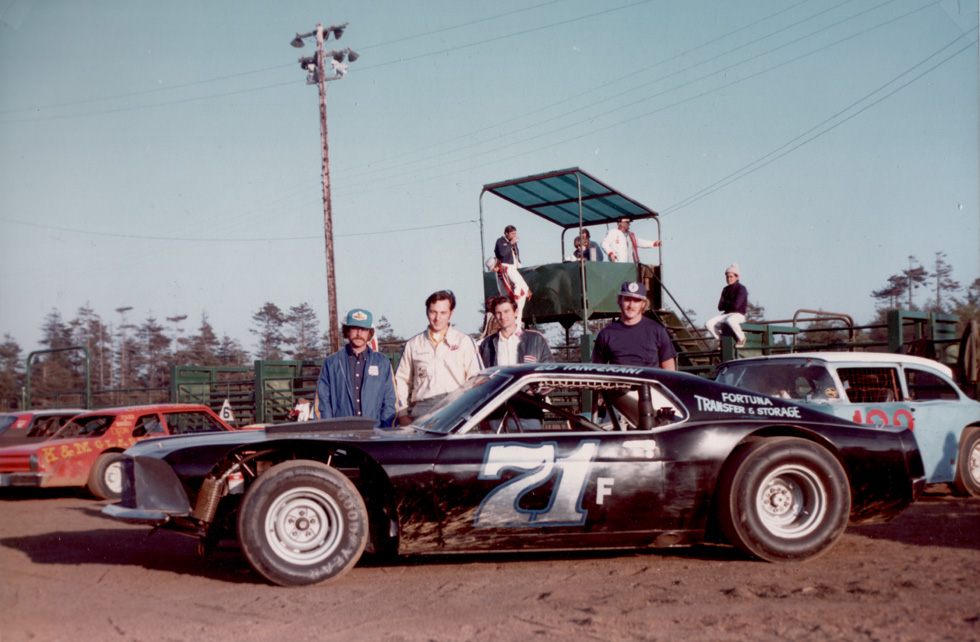
From ’65 to ’75 Ed raced in the Super Stock class at Redwood Acres. “I didn’t compete all the time, it was a combination of racing down south for 4 or 5 years, and then I was in the National Guard for 6 years, and so I couldn’t make the races. We’d have a Weekend Warrior meeting of the National Guard. We built this dealership. I was focusing on Riverside and Ontario tracks down south, and then NASCAR opened their rules to disc brakes, and we were running drum brakes, and when they went to disc brakes it was $1400 and I only had $1000 in my whole car. So I had to make a decision, and I decided this is enough, I had a family, onward and upward. And it was so far to go race down there, but it was fun, we met a lot of neat people.”
A RIDE FOR RICH KELLER
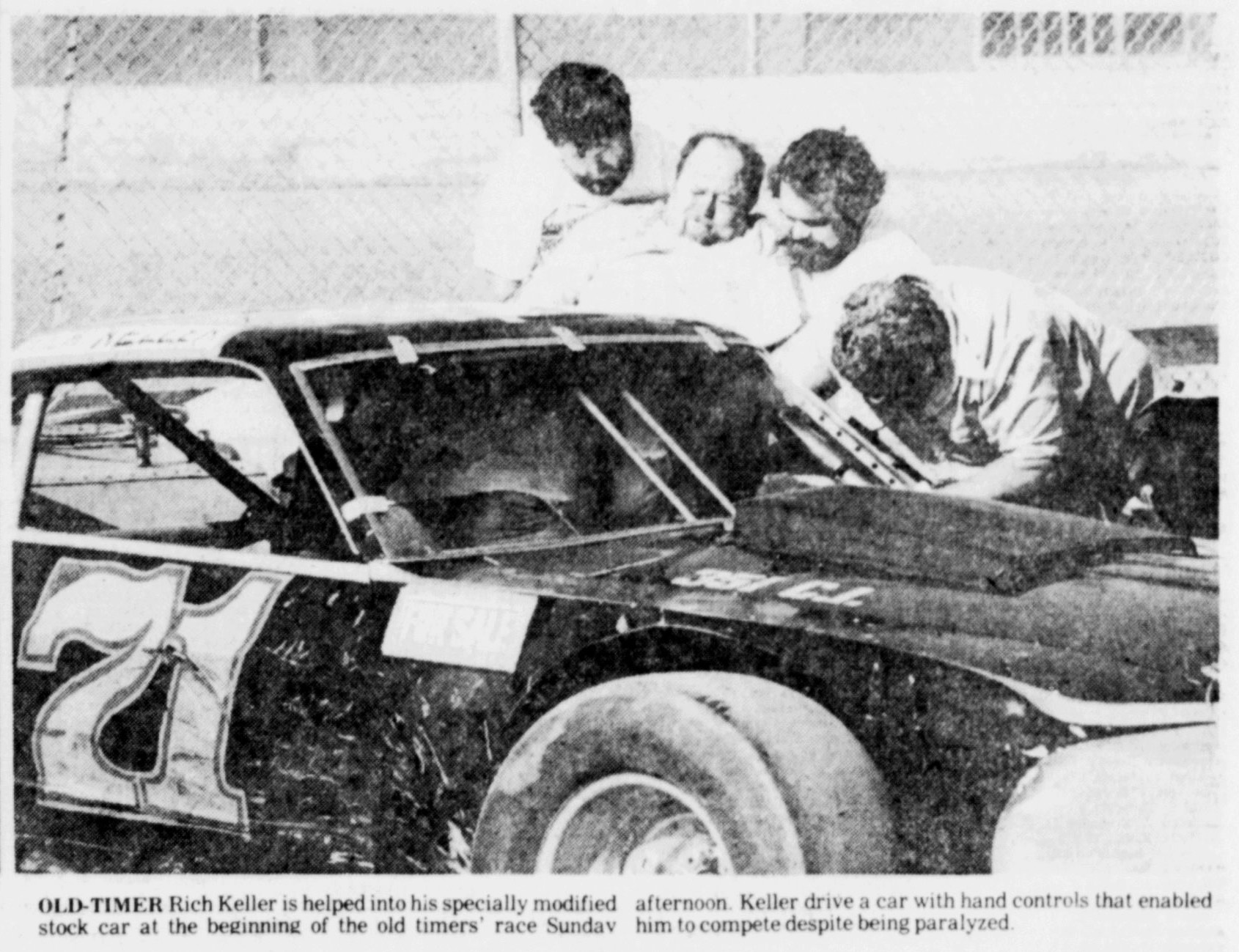
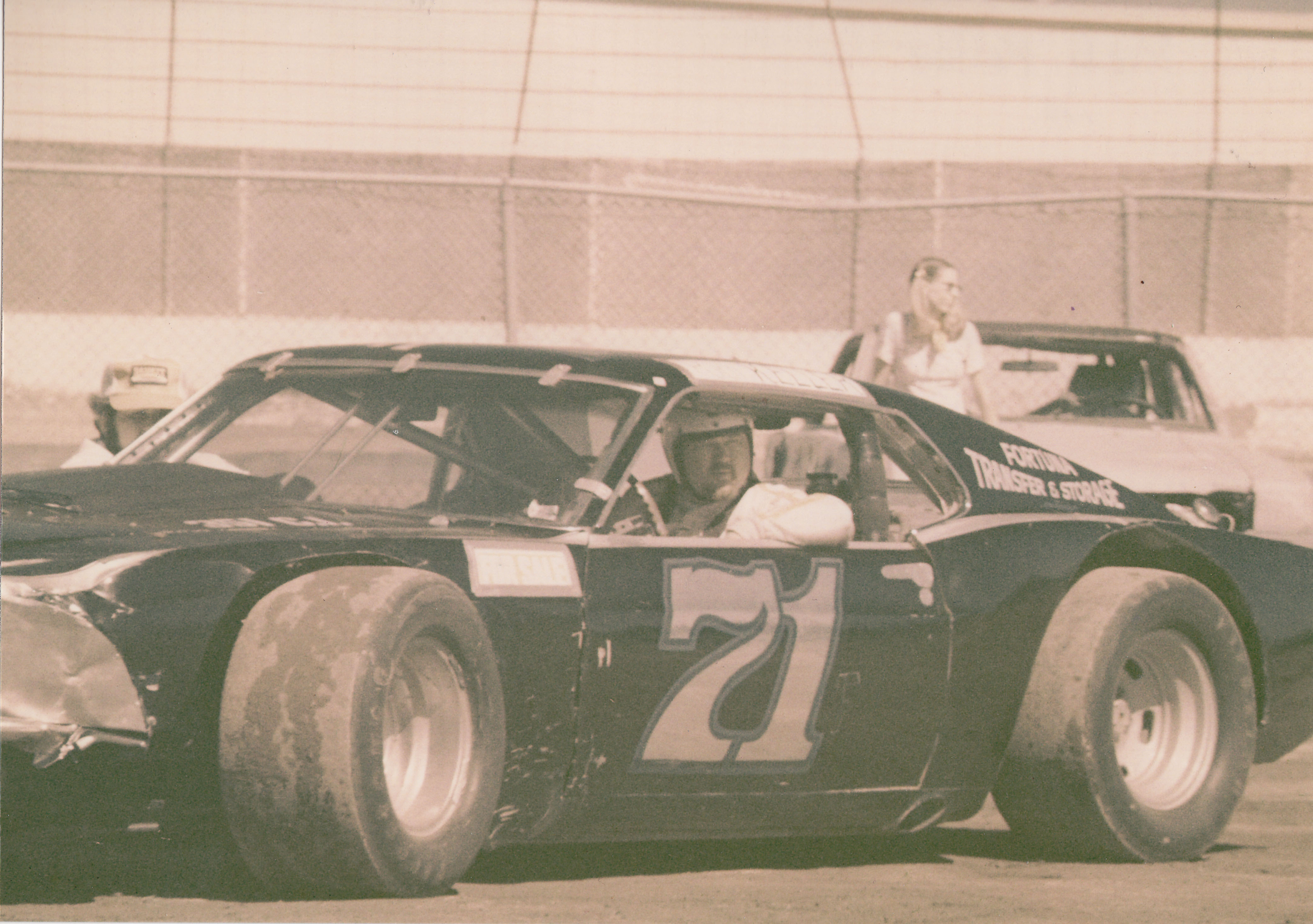
Rich Keller was an early star at Redwood Acres under the SRRA. “He went to Shasta College and started racing with all of us, he was in the mix of it. He served in Vietnam after racing, then came back and was in the Army Reserves, but got a job teaching at Shasta High School teaching Auto Shop, and he was a mechanic all the way through. He was coming back to an Army Reserve meeting over here and something broke on his hopped-up ’52 Chevy pickup; he rolled it and was a paraplegic.”
“In the mid-70s there was a ’69 or ’70 Mustang that I was racing that I built from scratch. That was the last car I had and I just couldn’t get that thing to handle. I had it parked, I hadn’t been racing then. And when they had an Oldtimer’s Race at Redwood Acres, I took it into Rudy Zeck’s shop in Eureka, and we worked on it for about three weeks. Rudy and I and another guy in Eureka got some of his hand controls, and Rich raced with us. He had a hand throttle, then we had to put a brodie knob on the steering wheel, so he could steer it with one hand. Changed the brakes and a hand throw on the clutch. Rich always remembered that, it was the biggest thrill.”
RIVALS AND RESPECT
“I think Don Price and I got into it once. So Don kept screwing with me at every race, and I told him ‘Don, I didn’t like how you were racing me’ and I was yelling and we shined each other on but in my mind if he ever messed with me off the track I was going to plant one on him. So we went to Rich Keller’s bachelor party at Vista Del Mar (a sponser of Price) down there by the wharf, and I went to the bathroom and soon as I came out he challenged me and I planted one on him. He was up to no good, he’d been drinking, I’d been drinking I guess,” (Don’s side is he told Ed he was the worst driver out there, Ed popped him, and Don was proud because he still held onto his drink – see his previous article). Ed says Don had a ‘tiger in his tank’ after he fell against he jukebox, others jumped in, and Ed told the heads of the party it was best he left and bowed out.”
Ed says now, “You have to admire him and I do. Because he’s an individualist. He can make it with nothing and make something happen. And as fate would have it, the next week we were both in the Fast Heat at Redwood Acres, Don on the inside me on the outside. My guys said he’s going to want to retaliate, and they dropped the green and I was able to pull him high side, and everyone knew what happened the week before, and he didn’t touch me, he was a man about it. It was racin’. I never did have much to do with him, but I respect him for that. Very much so.”
It’s funny how often in all forms of racing an incident happens one week and the two drivers are right back starting next to each other the next week.
“Rudy Zeck was good. He was, uh, conservative, you might say, because he was on a budget. Wild Bill O’Neill; he always drove like he had a loose steering wheel. I liked them all. Walker, Pries, Bob Britt, Denny Meyers, those were all the first guys out of the hat. We fought, we argued, but at the end of the day we were fine. It was fun, all good guys.”
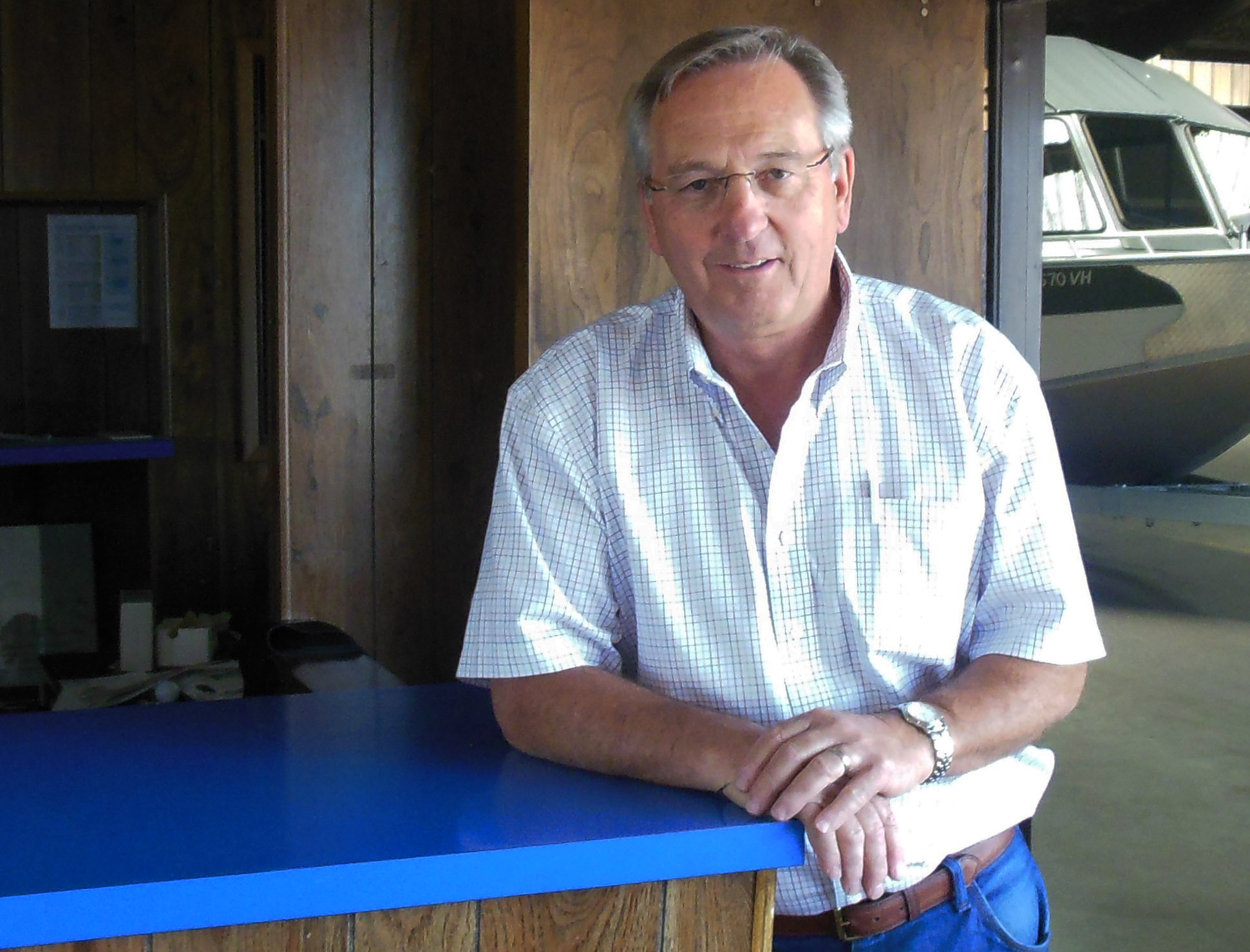
Great thanks to Ed Tanferani for his fine hospitality and opening up his racing collection and sharing all the great stories.
 Chronicles Of The Acres
Great story. Didn’t realize Ed raced at Riverside and Ontario that much. He always had clean, fast cars.
Thank you so much Doyce for the kind words! He qualified and finished very well down at those big late model races at Riverside. I love the story of A.J. Foyt’s advice as well as the way Fords worked on the short track vs Chevy’s. Very interesting. Tim