BILL SCHMITT

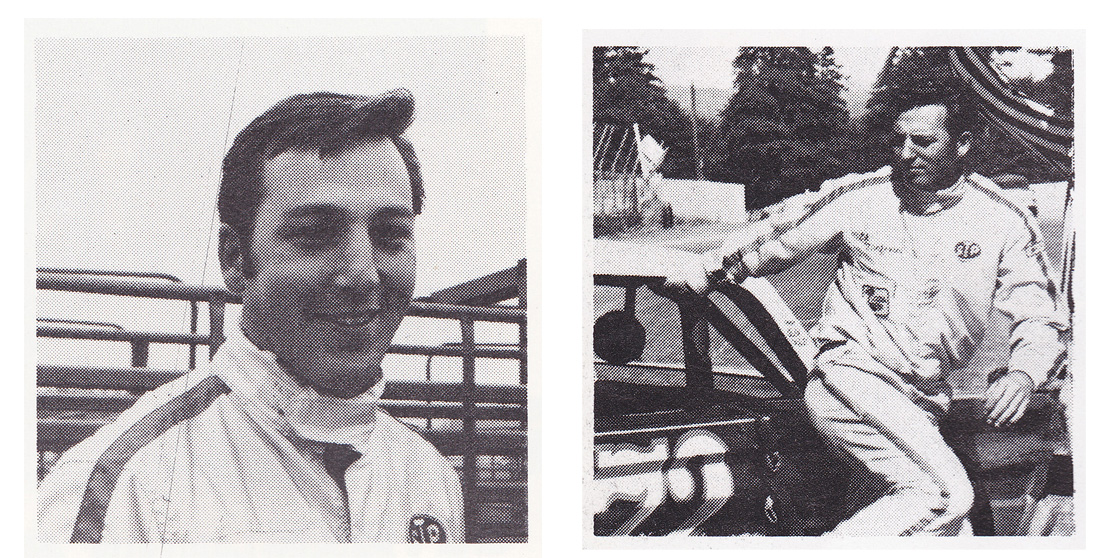
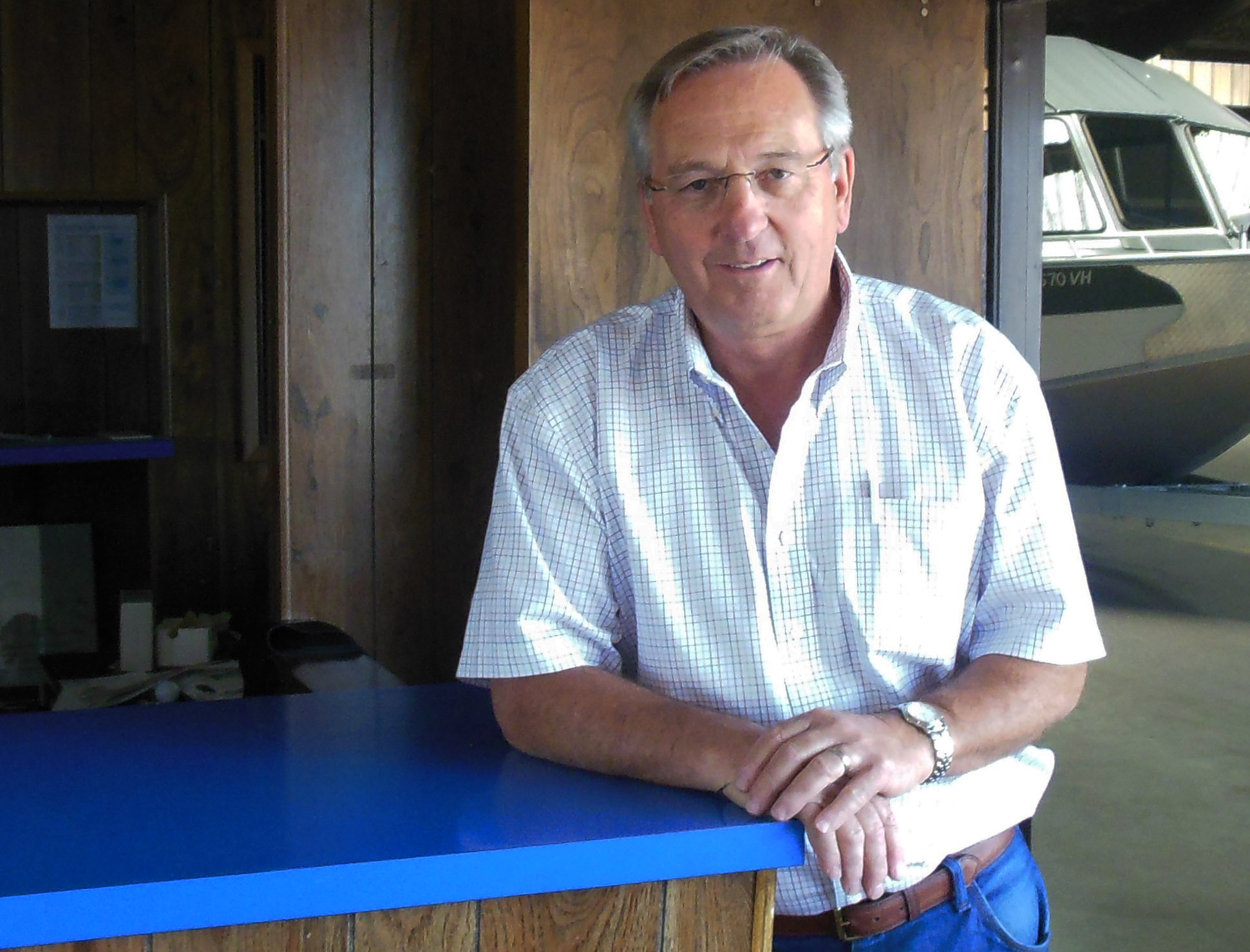
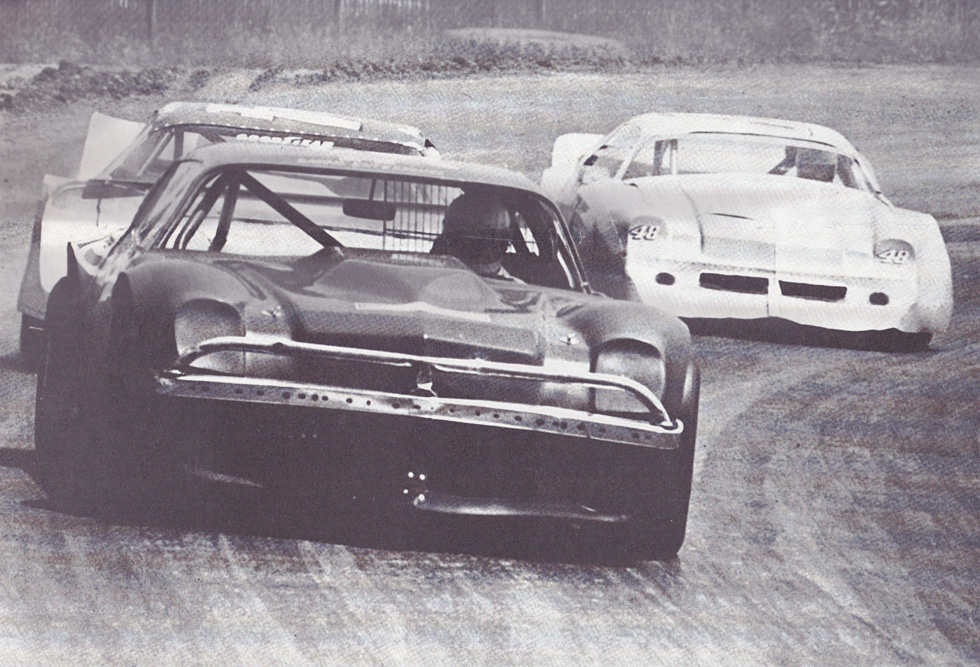
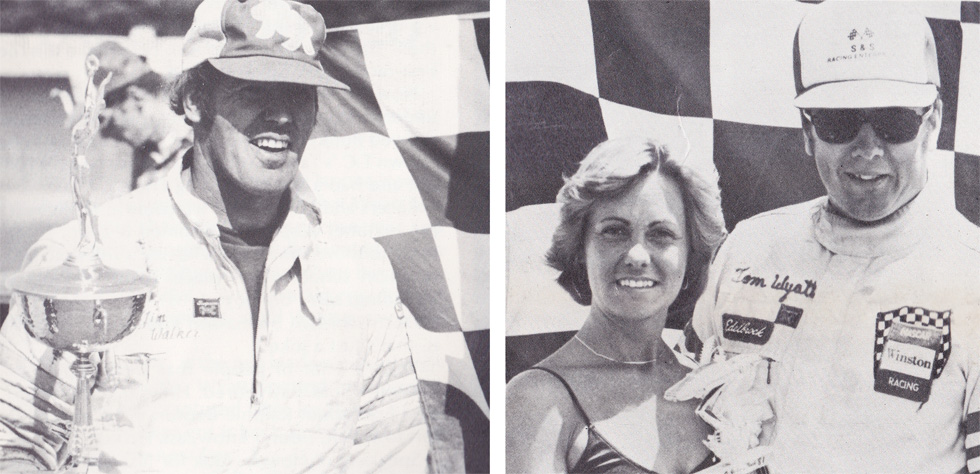
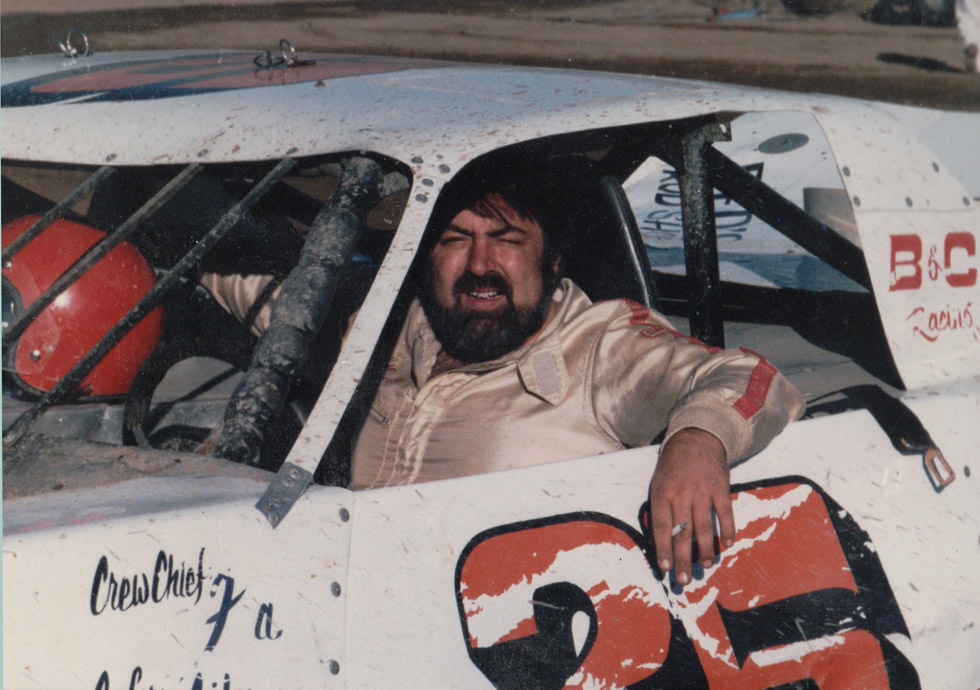
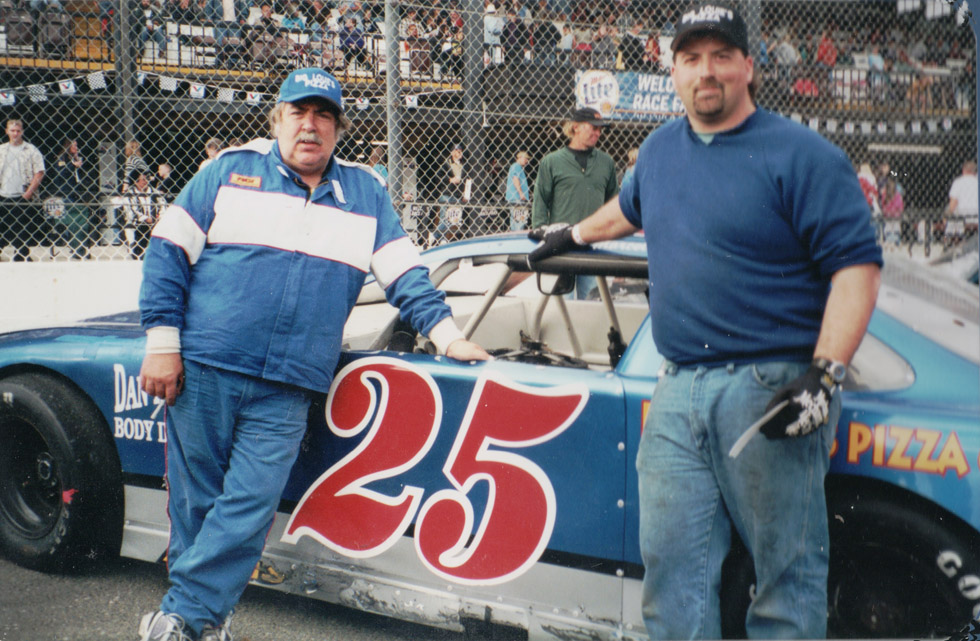
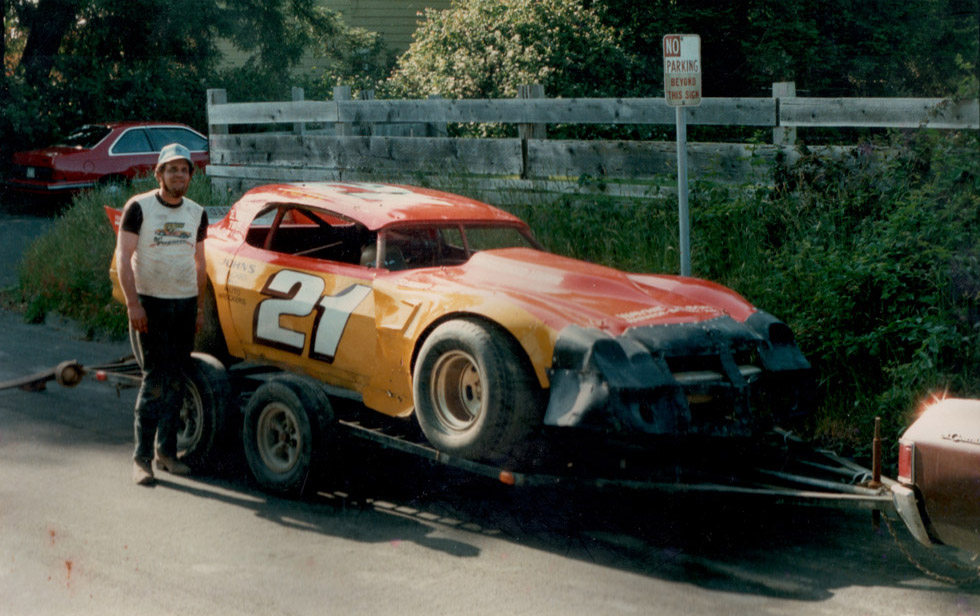
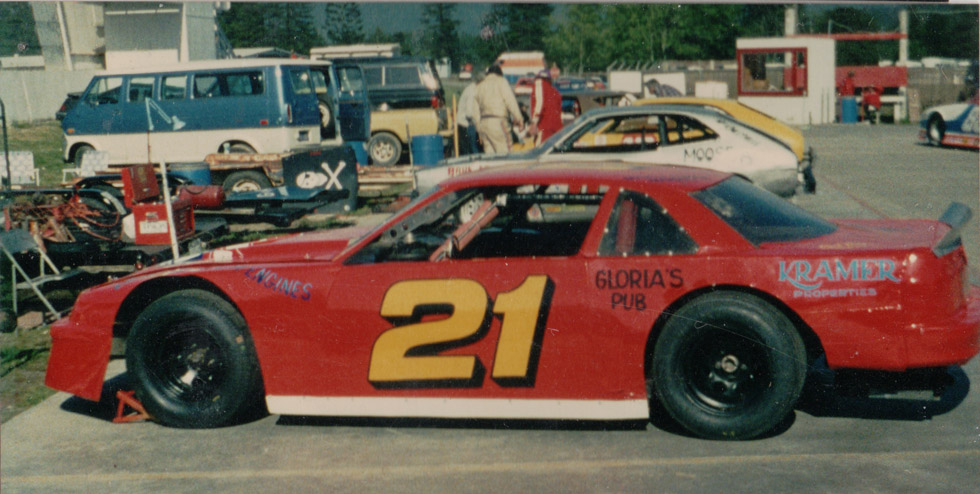
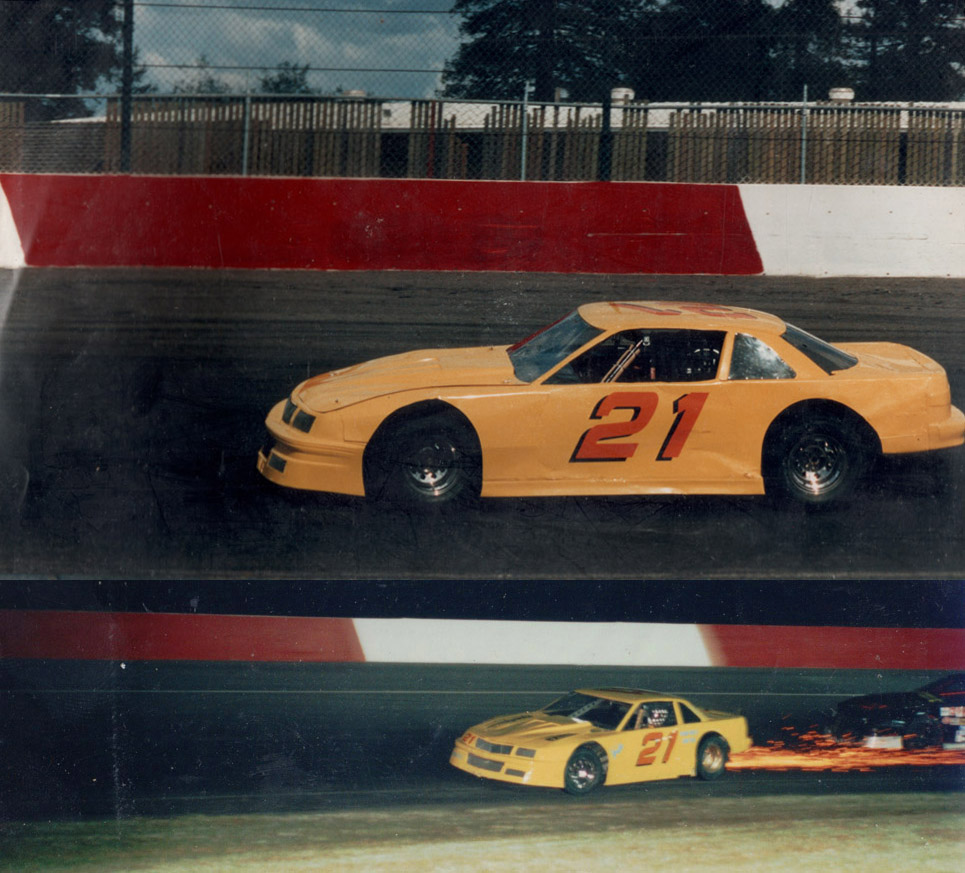
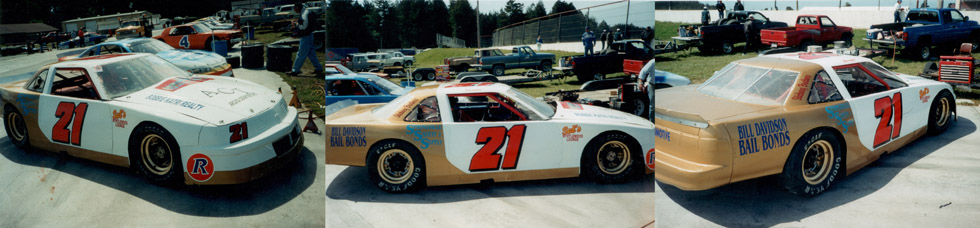
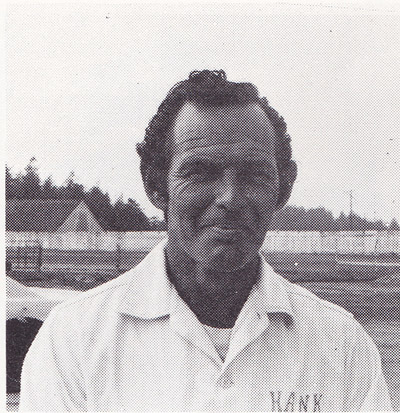
Bill Schmitt of Redding, California, was an equally successful businessman and stock car driver.

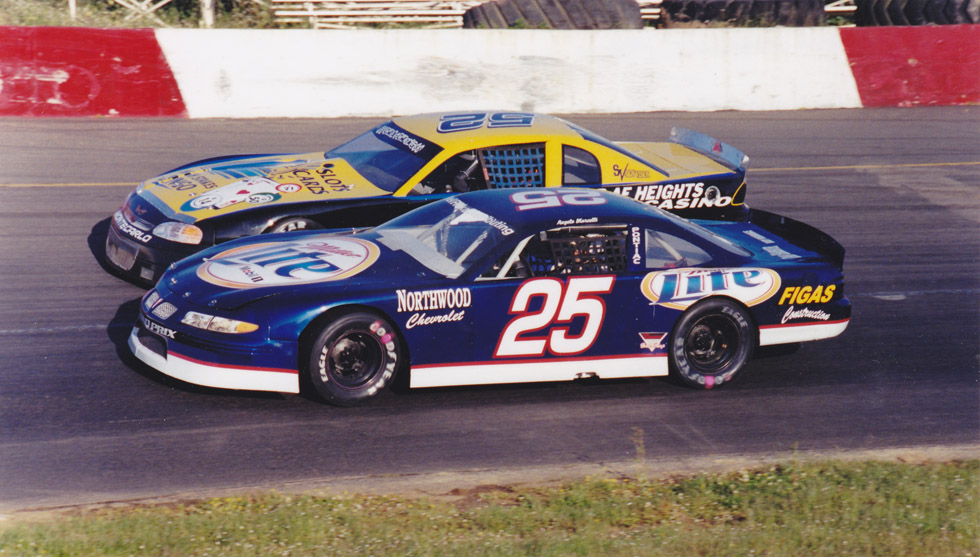
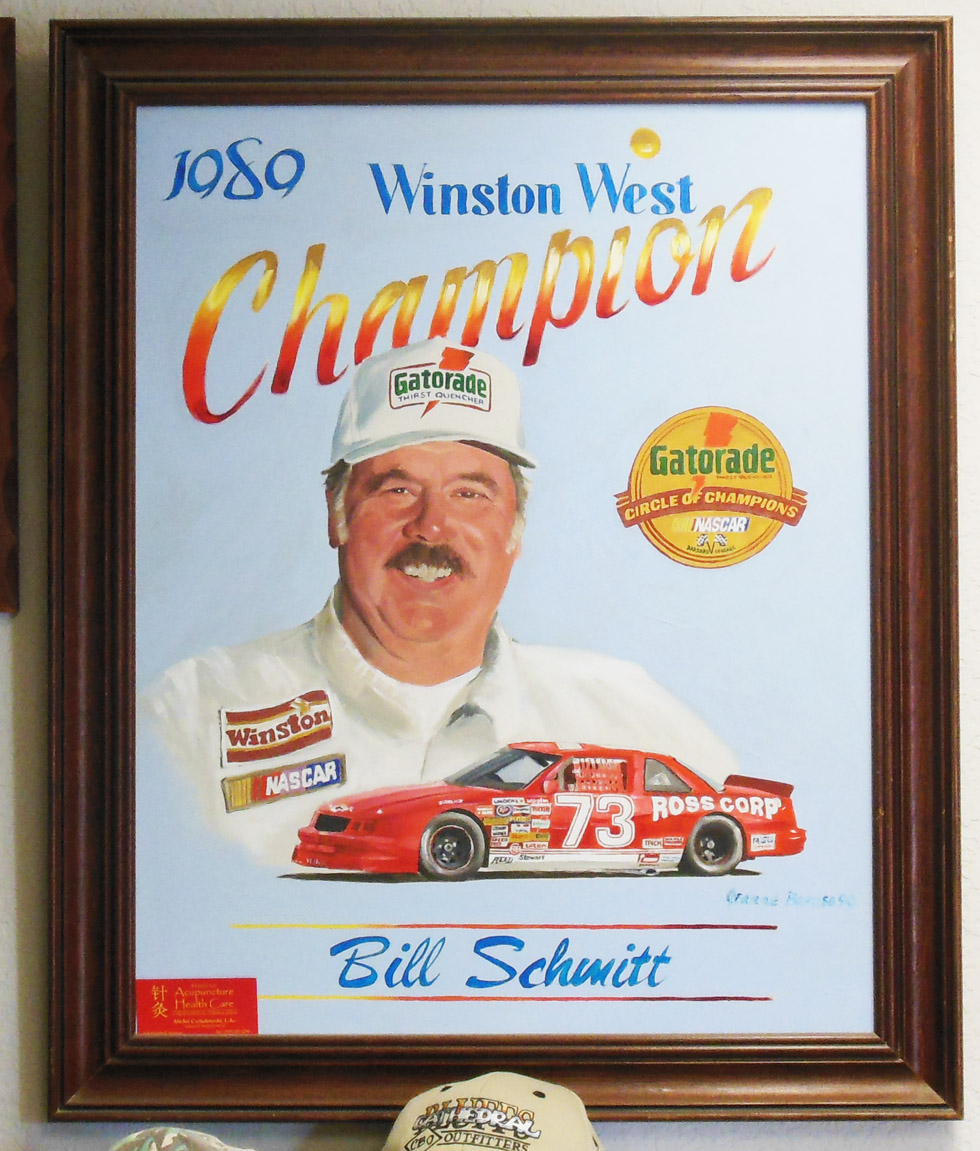
Schmitt was a four-time NASCAR Winston West Series champion (1977, 1979, 1989 and 1990), racing in the series for 20 seasons, from 1974 to 1993, which included 237 races, 19 wins and garnering 24 poles, 122 top-five finishes, 163 top-10 finishes and 4,274 laps led. He drove for legendary NASCAR driver and owner Junior Johnson.

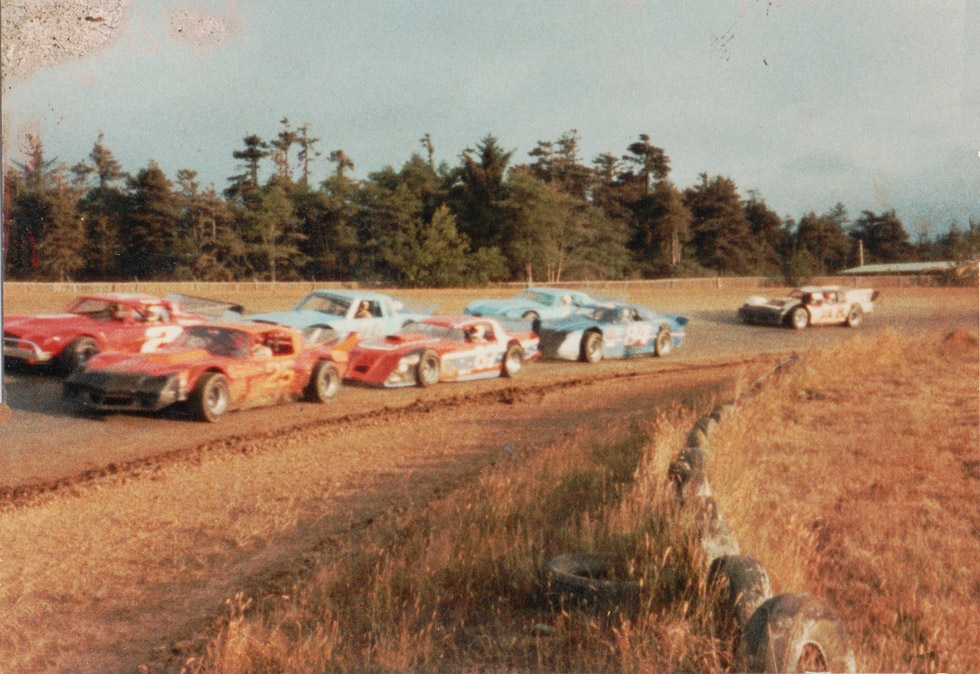
Bill was a major figure in short track races, including on dirt at Redwood Acres Raceway in Eureka, CA, where he was a frequent and popular winner, including the historic 1978 Open Competition event.

Bill passed away in November 2014 at the age of 78. I interviewed Bill in the office of his trucking company in Redding, CA in October 2013.

EARLY DAYS AT SHASTA SPEEDWAY

Bill Schmitt:

“I was born in Fullerton, California. Went to Anaheim High School in ’56. We moved up here to the Redding area. Too crowded down there. Lived on a ranch up here for about five years, my dad and I, and finally had come down here to Redding and bought this place in the ’60s. Been here ever since.”

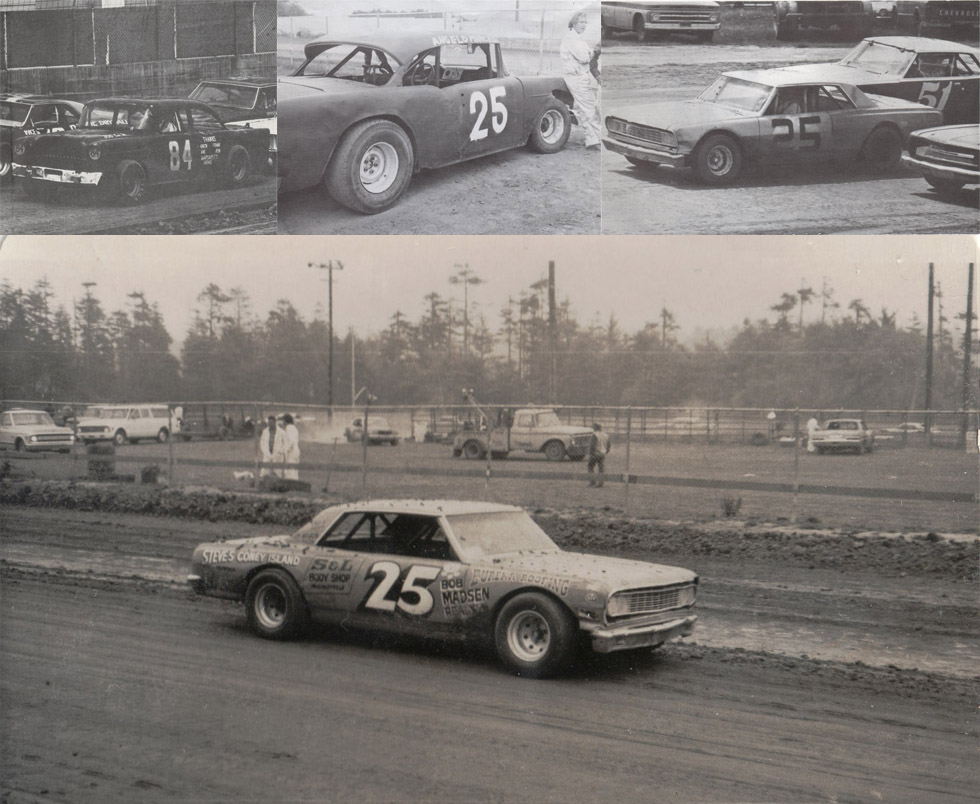
Bill’s early trucking business in Shasta County connected him with his first race car, leading to a lifelong passion for the track which started on the oval in Anderson, California, Shasta Speedway.

“I was drag racing in Santa Ana, come up here to Redding, and I put everything away because I had to make a living. I had four kids and thought I need to try to do something to keep things going, you know? So I got involved in the woods and stuff like that. But after about five years, I kind of got into doing my own thing, had some smaller trucks I was operating myself. This guy was working for me and all of a sudden got a call and had to move back to Colorado. And in the meantime he’d been driving and had an old Pontiac race car he built. You put one set of tires on and it would last a month, and I think in those days a new tire was maybe 25, 30 bucks, a big deal. And he had our trucking name, my name, all over his car and everything. So when he had to move, he said, ‘Here, Bill, you can just take the car, I can’t take it with me.’ So it sat around here for about a year. Finally, I thought I’d go down Anderson to try it out. What a joke I was. I ran into everything and wrecked it, blew it up every week.”

“So I sat it out for about a half a year, and watched old Jim Boyd. He was just winning every night. He’d go to Chico and race on the way to Anderson [the Valley Auto Racing Association]. And so I built a Chevy and then I started getting a little bit better, and then I got where I was kind of competitive with him, and I didn’t win any championships there. They had a deal here where you could win a championship on an individual track, but, and then they had the overall deal between Marysville and Shasta. And he’d usually beat me by one point or something like that, you know (laughing). Yeah, it was kinda neat.”

EVOLUTION OF SHASTA SPEEWAY

Built in the late 1940’s, Shasta Speedway in Anderson, California south of Redding, began as dirt which was paved in 1972 as a 1/4 mile oval. In 2005 it was reconfigured to a 3/8 “D” similar to Redwood Acres.

“The half mile, you should have seen that; that was years and years ago, but they had an oak tree coming out of turn two; the oak tree was three or four foot. And I’ll tell you, it had several scars on it! And if you messed up on turn one, you’d end up out there in the highway. Turns three and four had a little bit of bank to it, pretty flat, and had a little guardrail. Not that high, just like a highway; four by four posts. I remember I rode a car right over one of ’em one night. And it was nothing to go through that and be out in the horse barns.”

“Shasta was half a mile, then when they started importing more dirt, they cut the track down, and it’s a little bit to what it is today.”

“I helped them with the paving. I had an asphalt plant at the time. And they took pretty good care of the stuff around there. Porter had it, and then he wanted to get out of it, so I bought him out and I started promoting the racetrack. That was about ’75. I took Gary Cressey in because he was a good announcer. So I cut him in on a piece of the action . We did well; we’d have full grandstands every week, and we’d have people standing out in the yard. We’d have 50, 60 cars every weekend. And when we’d put on an Open Show, we’d have 150 cars, and it was a good deal. And then the locals started getting upset with me because I owned the racetrack and they said the flagman was in my favor all the time, etc. It was quite a year. I decided, well, I’ll cut back, I won’t race there much. But I still wanted to race to I decided to go into the Winston West series to try it out. It worked out pretty good. We raced in NASCAR for 28 years.”

“Well, (in 2005) they added about another hundred feet to it, about all they did. And banked the three and four a little bit more. But basically everybody tells me they run the same gear, everything, you know, drive it pretty much same as they did the other one.”

“They went and spent 2 million bucks down there on a waste of time. They had me down there to consult with what the hell to do with that race track to get more people interested in it. First thing you do is get your grandstand and put ’em on the other side where the sun didn’t shine right in your face. And then, make a half mile out it.”

“Finally they made a plan for a ‘D’ shape. And there was one like it in Tri-Cities and it was fast and fun. It was a fun track. Then somebody got a big idea down there that they’d be going into turn four too fast and might flip and go up into the grandstand. Well, grandstand shouldn’t even be there. It should be on the other side. So, it was a big go around. And they ended up with what they got. It isn’t any different than it was before they put 2 million into it.”

PROMOTING RACES

“My theory always was, and I think this is where a lot of promoters lost it; they think they have to get the people lined up to be able to put a show on – that’s not the way you do it. You get the show, then you bring the people in. And these guys don’t do that any more. I think that’s where a lot of promoters miss. It’s like they want the money in their hand before they ever put a show on. And that ain’t gonna happen. But when you start a show people weren’t gonna sit there so long. And our idea was that, if you can maintain for three hours, that’s about the limit, for the average person. So don’t hold up. You don’t treat each race like a main event. You get through the one, get ’em off the track, get to the next one.”

1976 GN car bought from Bobby Allison [photo courtesy of Bill Schmitt]

1976 BOBBY ALLISON CAR

“I had a red Bobby Allison Grand National car I bought in ’76. Didn’t win over there at Redwood Acres though with it. It was quite a bit heavier car than what everybody else was driving.” As Bill joined the Winston West series, he would maintain a Late Model stock car for the short tracks.”

REDWOOD ACRES RACEWAY

Bill visited Redwood Acres Raceway in Eureka often in the many years when it was a dirt track, and like Shasta Speedway, was paved eventually in 1988.

“The promoter who paved it, Rich Olson, invited us over there two or three times, Then they had some open shows. I don’t know, it was kind of fun, it was easy to drive, it’s not a real challenging track.”

“The dirt track is what was neat, I thought. But it made a difference, you know, when the tide was out and tide was in. Because it’s relatively close to the bay. I didn’t think that would make a difference. Their problem over there at times in the 70s I know was the dust, so dusty that it would just be kind of miserable. Daytime races were tough over there. You could water that thing down, pack it in, and well, once it started unraveling it came apart fast. We used to have a lot of fun over there, man. Had some real beatin’ with those cars, you know, you could really get beat up.”

Over the years, Bill would provide some historic moments at Redwood Acres Raceway over on the coast in Eureka….
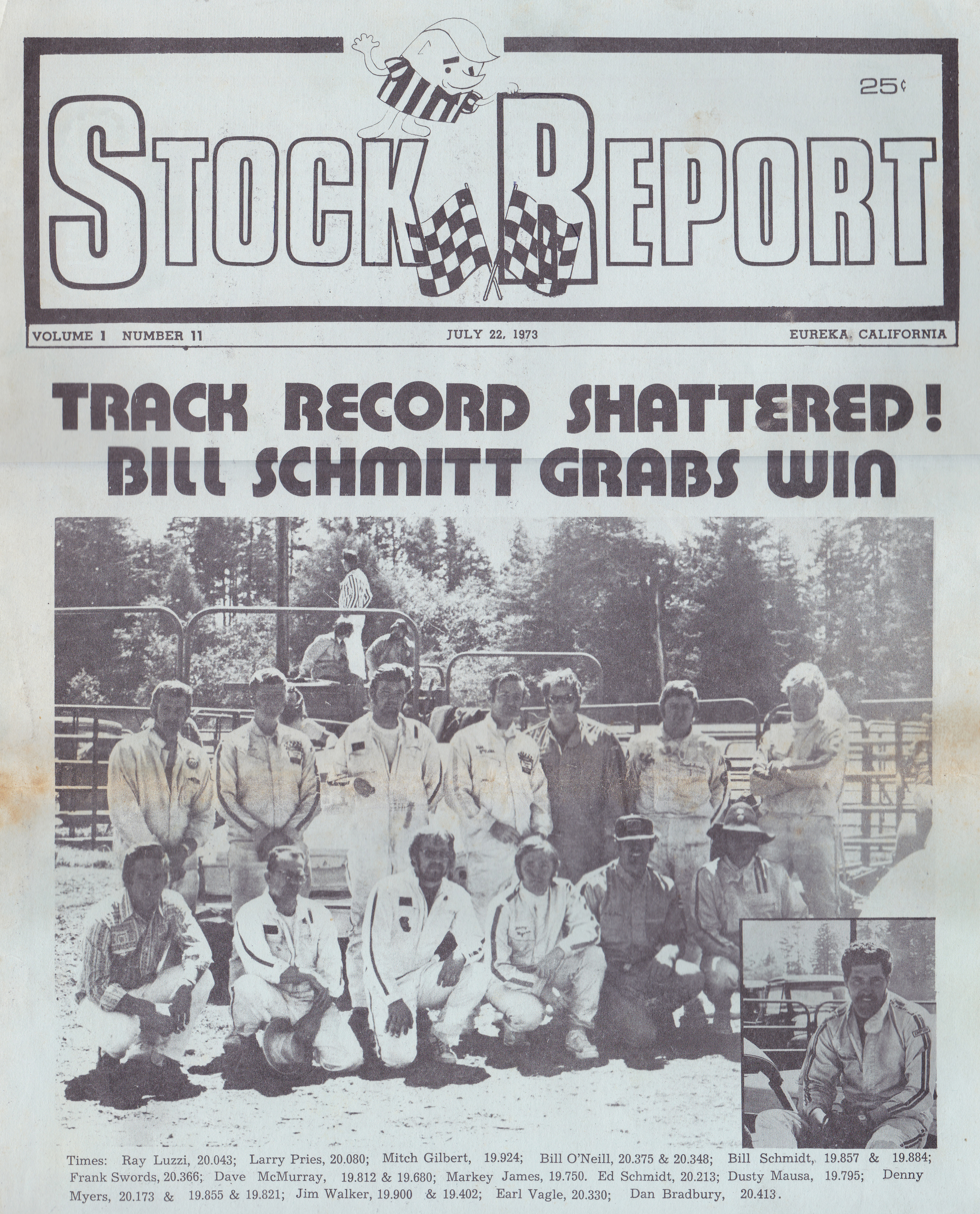
1973 TRACK RECORD BROKEN 20 TIMES IN ONE DAY – BILL WINS A-MAIN

from Dirt Trackin’ At The Acres by Tom Dilling:

“The Biggie for this season, without question, would be the beating that the track record took during timing for the July 8 Open Competition program. The entrants all took a run at the fast, fast Larry Sallady-Lee Tomasini groomed track. Ray Luzzi, Larry Pries, Mitch Gilbert, Bill O’Neill, Bill Schmitt, Frank Swords, Dave McMurray, Markey James, Ed Schmidt, Dusty Mausa, Denny Myers, Jim Walker, Earl Vagle and Dan Bradbury all broke the old record, with Denny Myers doing it three times. But after the dust cleared and all was said and done, Walker ended up with a 19.402. That was on July 8, 1973 and it would stand for over five years. And how many times was it broken altogether on July 8? A nice even 20! All ten cars in the Fourth Heat had broken the track record!! By the way, Bill Schmitt of Redding won the A Main that day…”

Bill Schmitt:

“The tire situation over there; you always took two sets, two types of tires with you, mud tires or slicks. And we started doing the slick thing over there. We were probably the first one to ever do it. The only reason that I stumbled onto it was that I took them over in the car and we got there late. We just didn’t change ’em. We just left them on; man, them things had grab, hold that track and just run, you know. And it was different. Everybody said it was crazy, but it worked. That became the norm. Everybody did that after that.”

“It was kind of funny in those days, we used to take the car we had, with dirt tires because we ran down here quite a bit. So it was all Firestone then that we used. But when it come to asphalt, we never changed nothing in the car. Change the gear and change the tires. And we always got our used M&H, and they had two compounds. And that’s what you bought, those two compounds. One of the two. So you always got the soft ones. But like Redwood Acres over there, you put dirt tires on that track when it was slick and hard like that, about 10 laps, they’d be gone.”

“They even had a groove, you could see it was all dark into the turns, like laid rubber down. Very strange for a dirt track. It was very different, you know. And we drove it like an asphalt track.”
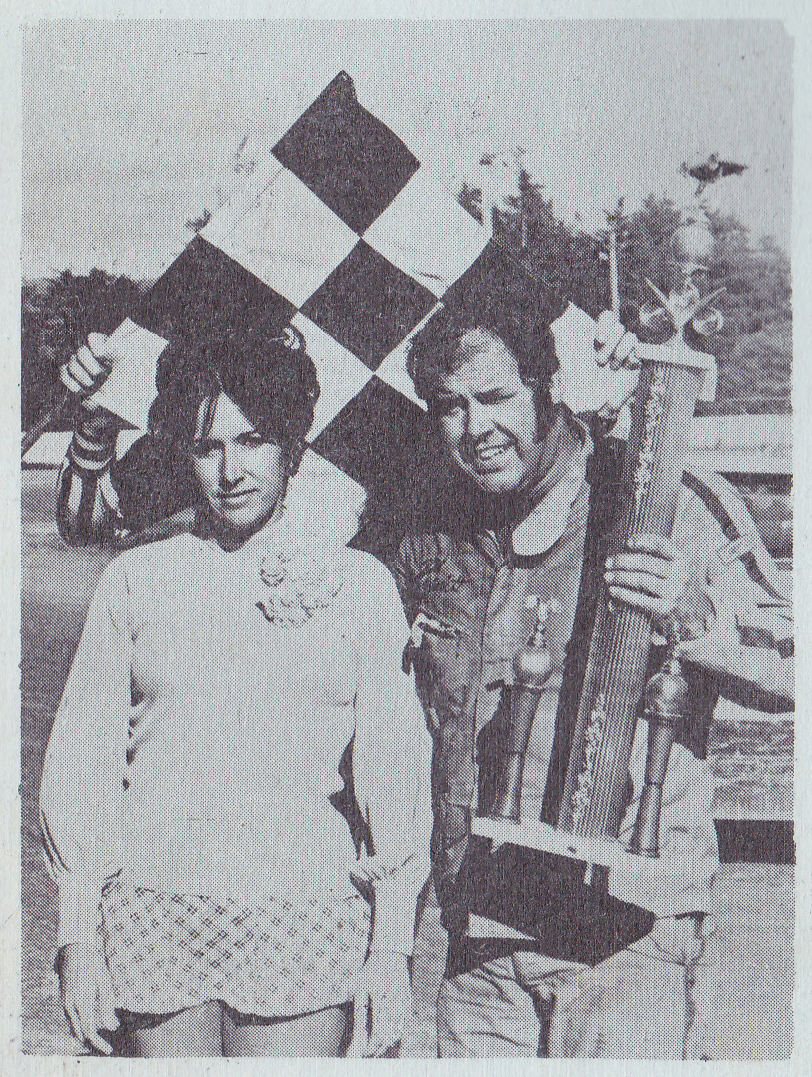
Bill Schmitt wins the A-Main after a record breaking day in 1973

1976 FAIR NIGHTS BILL SCHMITT vs JIM WALKER

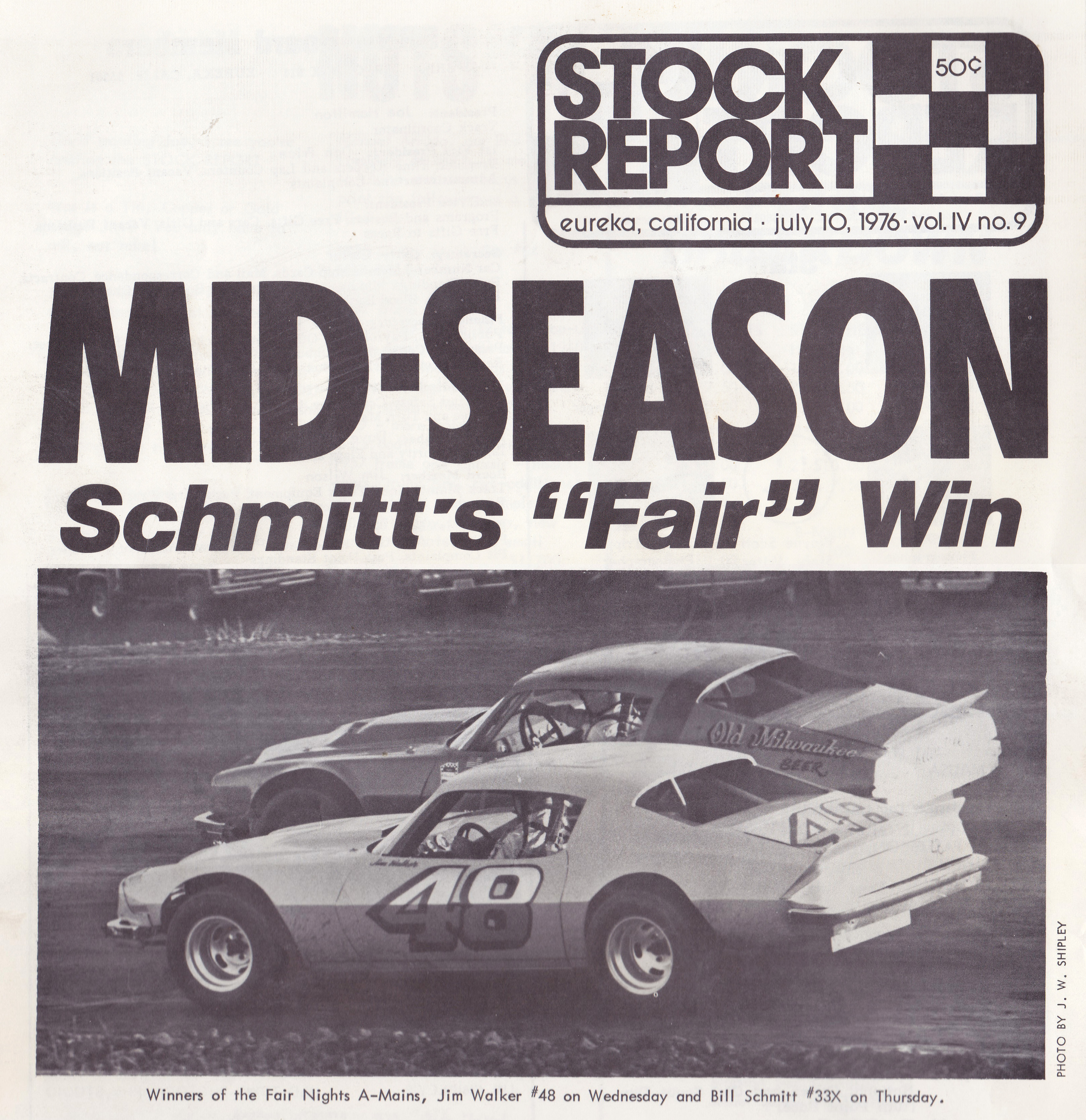
In 1976 Bill Schmitt had one of the most memorable moments in Redwood Acres Raceway history, and it wasn’t even a win, and involved the most popular local driver, Jim Walker.

Eureka Times-Standard June 24 1976:

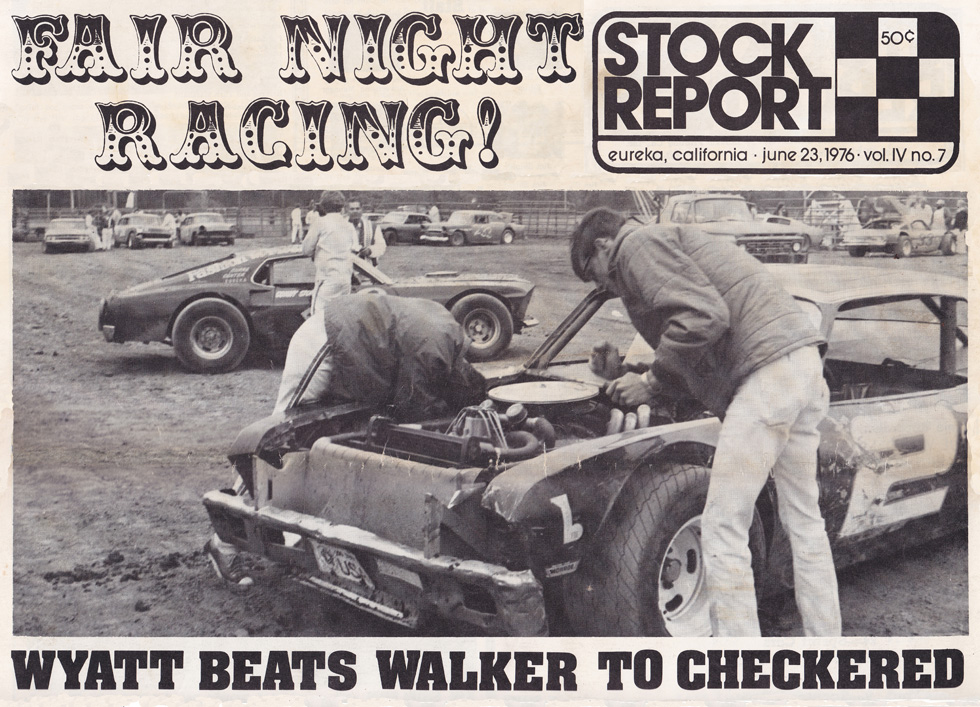
“Jimmy Walker’s A-main win and an outstanding gesture of sportsmanship highlighted the Six Rivers Racing Association program at Redwood Acres Wednesday night. Walker, the Permatex 200 champion who is back on the stock Car racing circuit after being severely injured at Daytona Beach in February, took over the lead on the 33rd lap of the A-Main with Redding’s Bill Schmitt right on his heels. On the 45th lap Schmitt hit Walker’s car going into turn two and the 1974 Camaro spun clear around. Schmitt then slowed down and allowed Walker to catch up and pass him as a capacity crowd roared its approval. Schmitt remained in second place for the balance of the race. “The A-main was one of the best we’ve ever had out here,” reported SRRA track announcer Jim Wilson. “There were lots of out-of-town drivers and several leaders throughout the event. Schmitt performed a real gentlemanly act.” “

from Dirt Trackin’ At The Acres by Tom Dilling:

“During the Fair Night racing there was another display of sportsmanship that will be remembered for a long time. Bill Schmitt bumped Walker on next to the last lap; Jim spun all the way around while Bill waited for Jim and the race resumed. Jim went on to win. Two real gentlemen and sportsmen. Schmitt endeared himself to us all with that display.”

Schmitt would take the second night’s A-Main, beating Mike Chae, Jim Walker, and Dane Smith to the line.

The Times-Standard reported:

“According to track announcer Jim Wilson, a SRRA official, the two-day meet drew close to 5,000 spectators.”

Bill Schmitt, looking back:

“That first night that Jim and I, we had our little bumpin’. Well, we always went over there for Fair Nights, and it was all the drivers somehow promoted the track (the Six Rivers Racing Assoc.) and didn’t kill each other. They had their arguments, but, you know, they had proper meetings and voting and took it very serious. And they got along enough to keep it going really well. I don’t know how they did it, but they did it.”

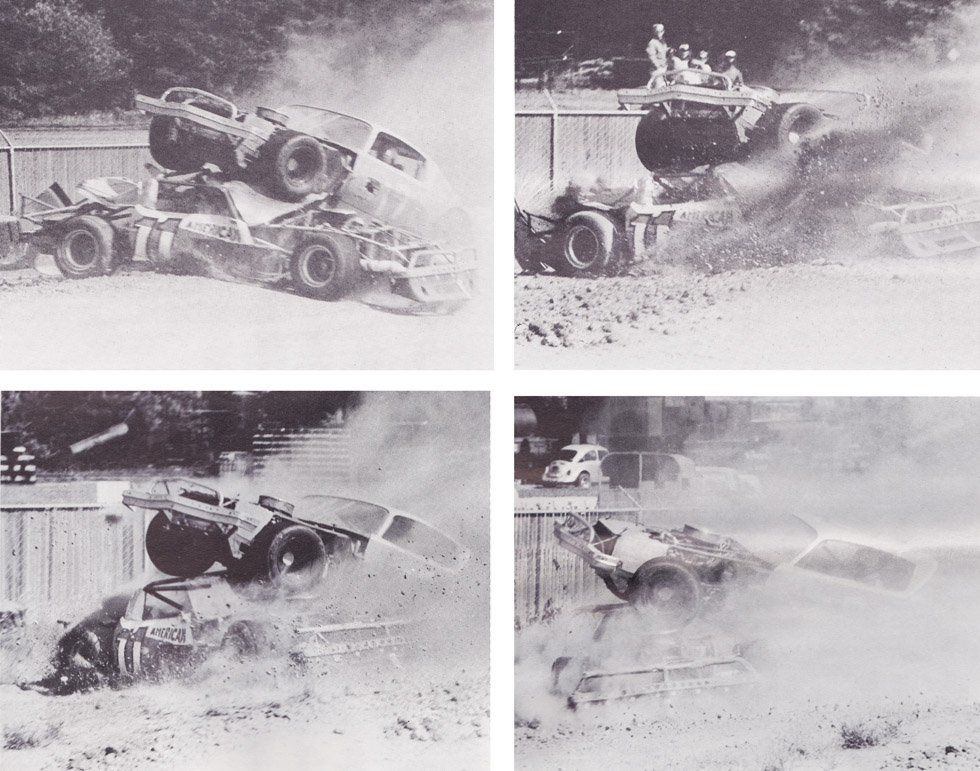
“So we go over there, but that particular weekend prior to that, we had a two day deal here in Anderson. And I was leading the race down here at Anderson and some guy got into me and I ended up going up in the air and landed on one of the posts that hold the fence right in the grand stand. And it came right up through the floorboard. Right next to me, you know. They had to take two wreckers and pick the car up to get it off of it, So we just kind of tore the car all up that night. We worked hard trying to get it ready for Eureka and we got over there and, and we were late; got in hardly any practice anyway. The race took off, there was a bunch of cars and it ended up with a two night deal – as I recall, you got so many points for positions each night. And whoever had the most won this trophy and $1,000 bucks I think it was, in those days a lot of money.”

“The first night Mike Chase was over there at Eureka that night too. And it was towards the end of the race and Jim Walker and I were way out, gone from the other guys. And I remember it was pretty open area in front of him. And he went into turn and he was doing his normal thing. And the track was getting a little bit slick, so he kinda crossed it up a little bit. So he went up high, so I come down low. But when I come down a low, I went probably in a little harder and I slipped up, just barely tagged him on the back end round he went, Oh man, you can’t do that Jimmy Walker over there. Not in those days; somebody’ll hang ya.”

“So I decided then I just pulled over there on the back straightaway and slowed way down. And again, I was going pretty slow and nobody had caught up with it. So we were right behind the whole pack, but we were leading. Finally he got going and as soon as I seen him get going, I started to pick up a little bit. But I let him get back in front of me. And took off. He won the race that night. And I was right behind him.”

“But the funny part, Chase was almost the one that won to race, ’cause he was getting ready to pass both of us over that whole episode. Anyway, I never thought too much about it. And people all were clapping and going on because he won it. The next morning he picked up paper and here’s a whole big article. And Schmidt was such a good sport, and pulled over and waited for Jimmy Walker.”

“Well I wanted it to be right, you know, especially on his own ground. And, he’d come over to me that next night when they had the second go around. And I think I won it that night, And he was second. So we ended up being in a tie anyway for the points deal. And he come over to me before the race started. He said, ‘Man, this is terrible. I’m the local, I’m the favorite. And you got all the publicity!’ There was a whole page on the thing, never mentioned him once, hardly!” (laughs).

“I ran into a guy here a while back and that was the first thing he started talking about after all these years.”

“Jimmy, he’d come over here to Anderson, him and I got along really well. He was good on this racetrack. He won a lot of races at Anderson. And I felt pretty good that, I could go over there and do the same thing on his racetrack.”
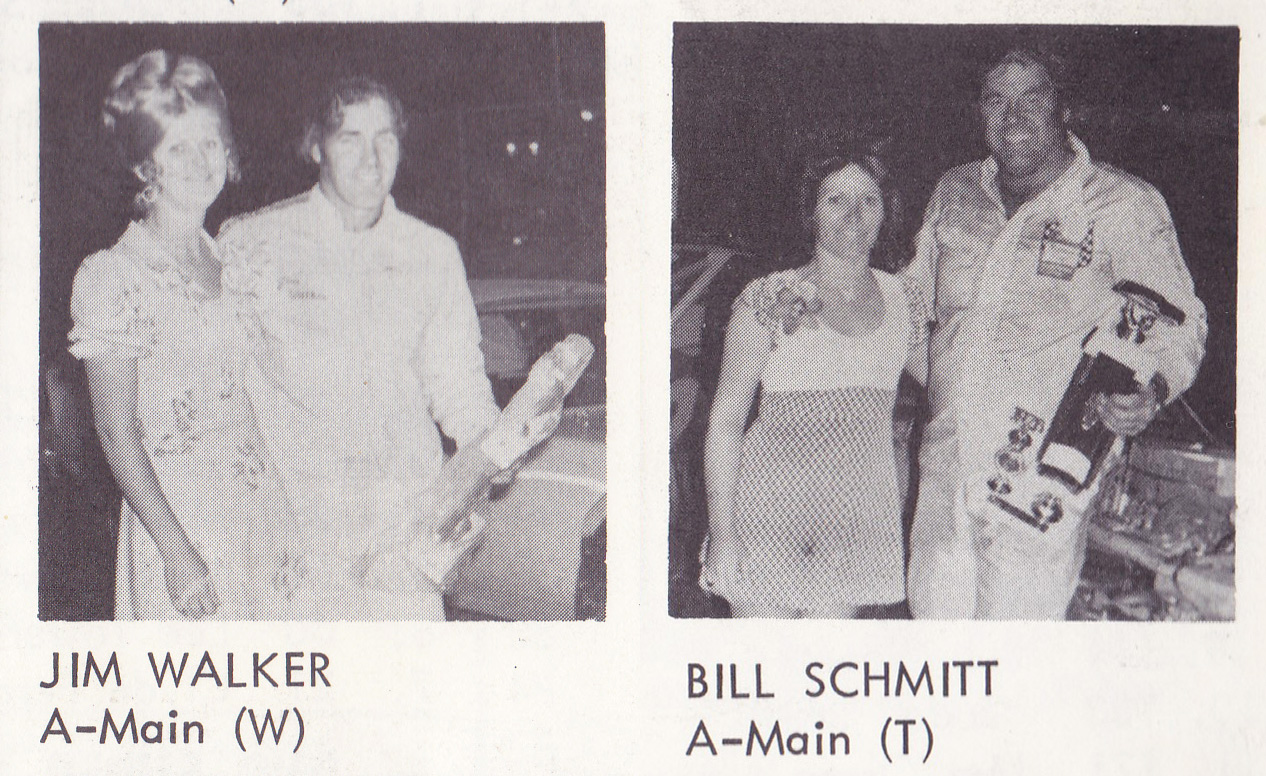
Jim Walker and Bill Schmitt, Fair Nights A-Main winners, July 1976

1978 DIRT CLASSIC AT REDWOOD ACRES

In 1978 the Six Rivers Racing Association, promoters of Redwood Acres Raceway, organized a big Open Tour event with a large purse on the line, drawing many drivers from out of the area including Bill Schmitt and Mike Chase from Redding, Dane Smith and Harold Hardesty from Medford, and Bruce Rhodes and Everett Johnson from Chico.

Eureka Times-Standard, July 24, 1978:

“Redding’s Bill Schmitt, holding off a token challenge from Ferndale’s Jimmy Walker. captured the North Coast Dirt Track Classic and the major cash prize ‘which went with the $10,000 stock car event at Redwood Acres Sunday. Schmitt, starting from the pole position. which he won in Saturday’s qualifying runs. virtually had the 100-lap race all the way, with the Redding ace taking the led only eight laps from the start, and holding first place from then on, snaring the checkered flag and the bundle of cash”

From Dirt Trackin’ At The Acres by Tom Dilling:

“The original purse for Open Competition was a whopping $10,000 but by the time the race rolled around, because of various donations, it was up to almost $12,000. A lot of money, but a lot of effort, too. Just for the record, I had better mention that Bill Schmitt of Redding won that race. Bill is a Winston West Grand National stock car driver and champion. He finished second in the division this past season.”
Bill Schmitt at the 1978 Dirt Classic packing the track [photo courtesy of Doyce Eaton]
Bill Schmitt after winning the 1978 Dirt Classic [photo courtesy of Doyce Eaton]

Bill Schmitt, looking back:

“That was, again, the points deal. Two day race. They put a lot of time into that. They worked all year to create that out of town Open Comp. The stands, they held quite a few people, and they was plum full. They had bleachers on both sides at that time. With the grandstand. So I think in 81, the North Coast Dirt Track Classic, that’s when they had what they called the world’s tallest trophy. And I think Jimmy won it that year. And it was like, you know, a story a half high. And I always wondered, I’m gonna have to ask him, like, what do you do with something like that? Do you break it down or, I mean, it’s just ridiculous. You have to keep it outdoors. (laughs)”

What brought Bill to Redwood Acres to race?

“The people” he says. “And of course the challenge with Jimmy Walker. And that was a big thing. It was like when I started in the West Coast thing and I wanted go beat Herschel McGriff. I got to do that. But it took me a while.” (laughs)

“I got along with them guys pretty good. In fact, when we went up to Medford raced up there a few times, Bert Beck and all those guys were there. They always accepted us pretty well. And it was almost like you had to be part of the clan to be able to get into it. When I got into NASCAR, it was the same way at Daytona. Jimmy had been there, for the Permatex late model race. But, the big guys wouldn’t let hardly anybody in. And the only thing that got me in there was knowing the Allisons and those ties. So once you get in that click, they helped you. But they wanted you to make it.”

“But isn’t it kind of funny that after a guy like Walker and even myself, but you go to these short tracks out of town and you win and you win, those people watch you, but they get tired of watching you. That’s the thing is they want it spread around. They don’t want you to dominate. It’s the same thing nowadays with NASCAR.”

Bill Schmitt with the winner’s trophy of the 1978 Dirt Classic at Redwood Acres
Bill Schmitt takes a soggy rain-shortened A-Main at Redwood Acres in 1979
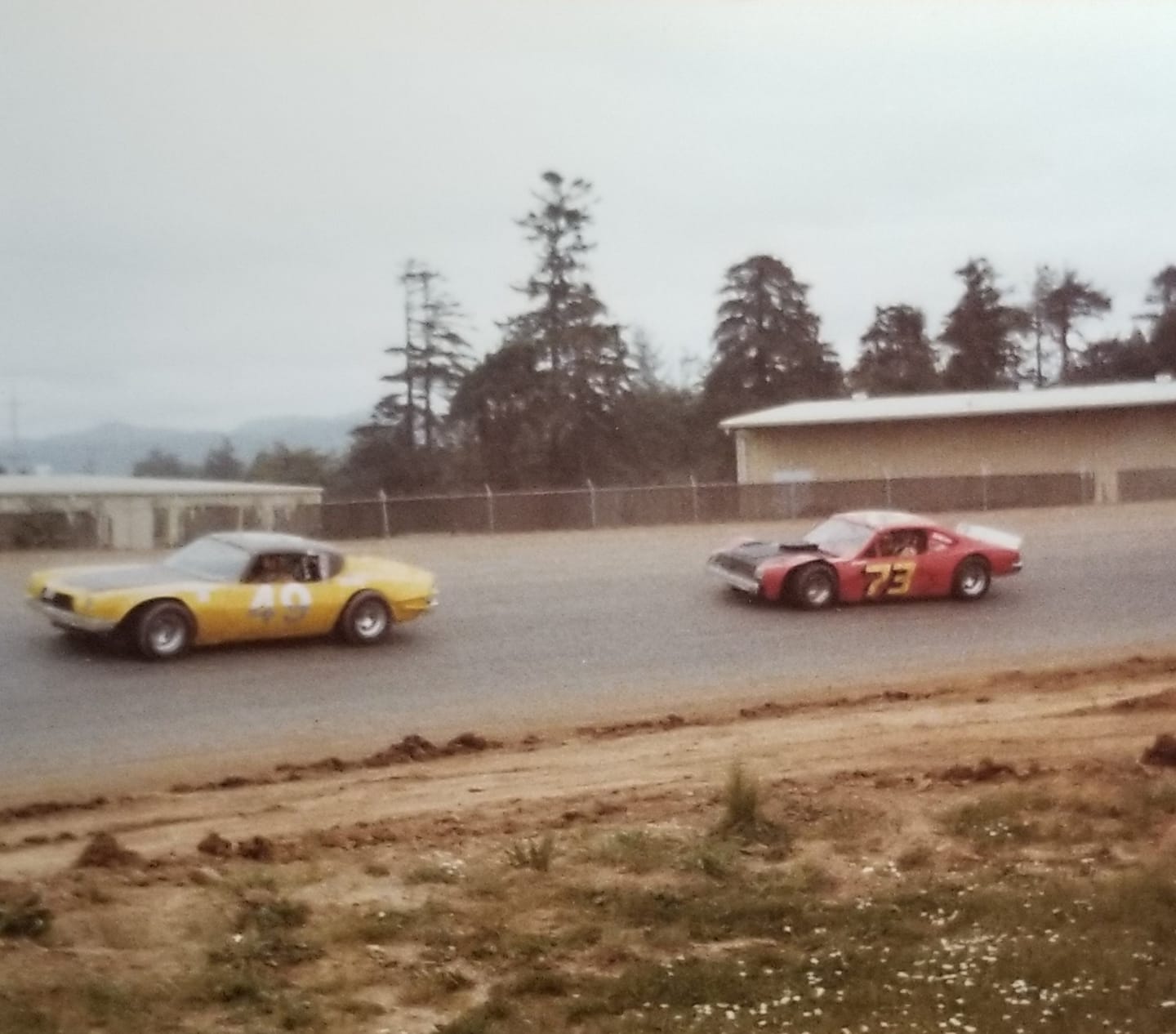
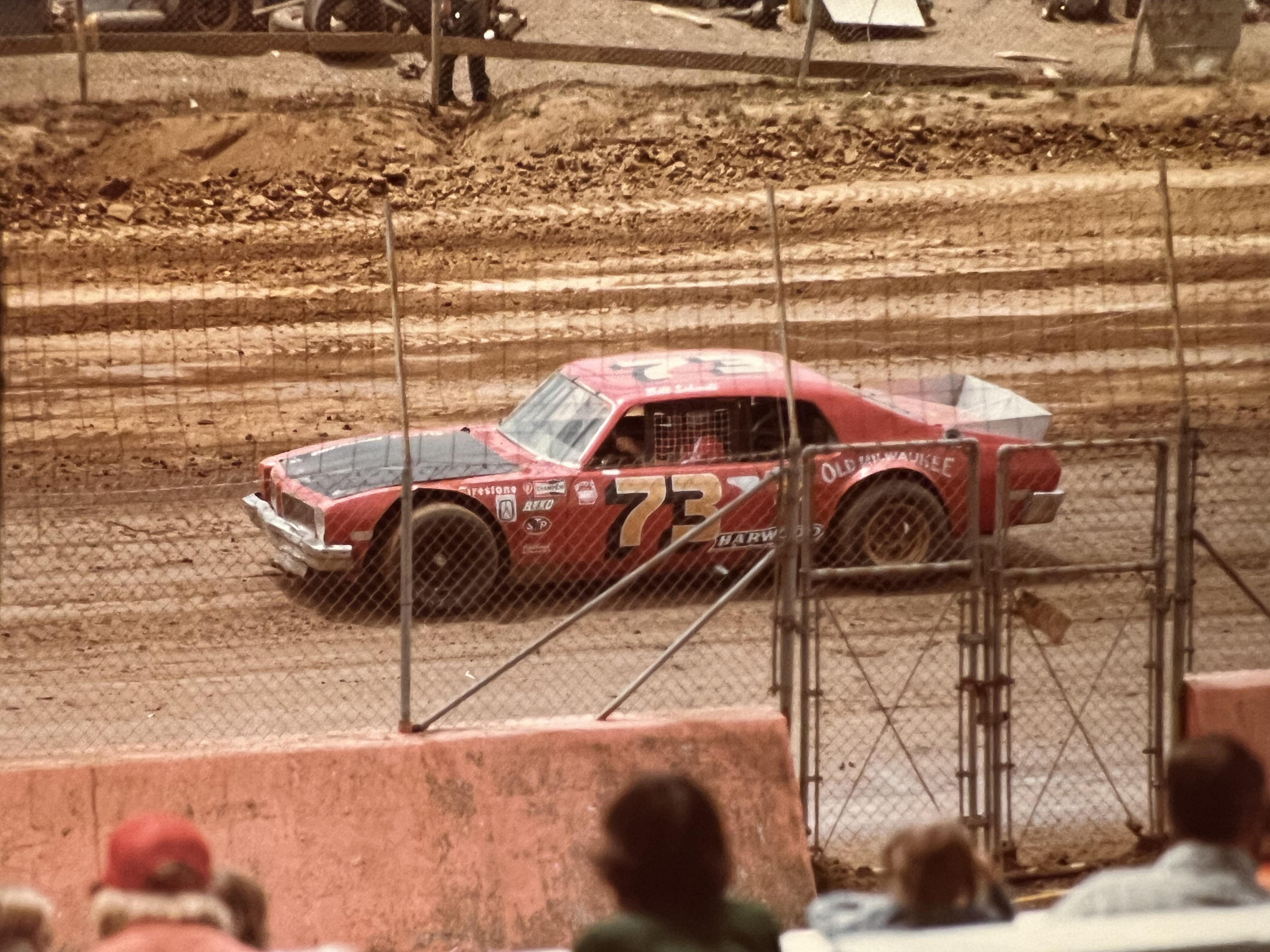
Bill Schmitt #73 following #49 Ken Wallen at Redwood Acres
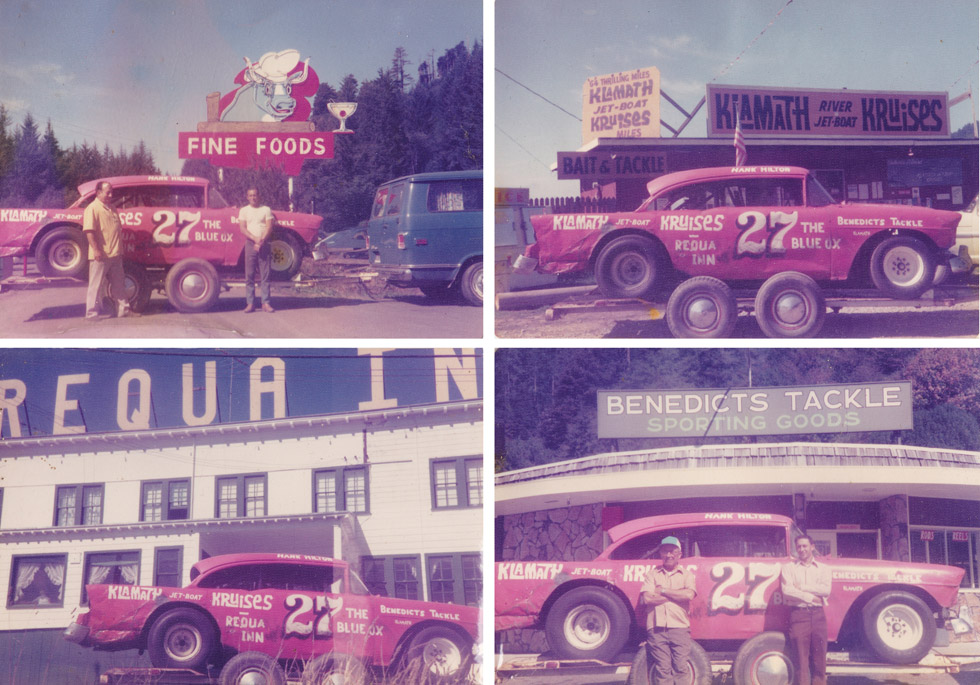
Bill Schmitt #73 behind Ken Wallen and outside Hank Hilton #98 at Redwood Acres
Bill Schmitt at the 1980 Dirt Classic at Redwood Acres Raceway [photo courtesy of Doyce Eaton]
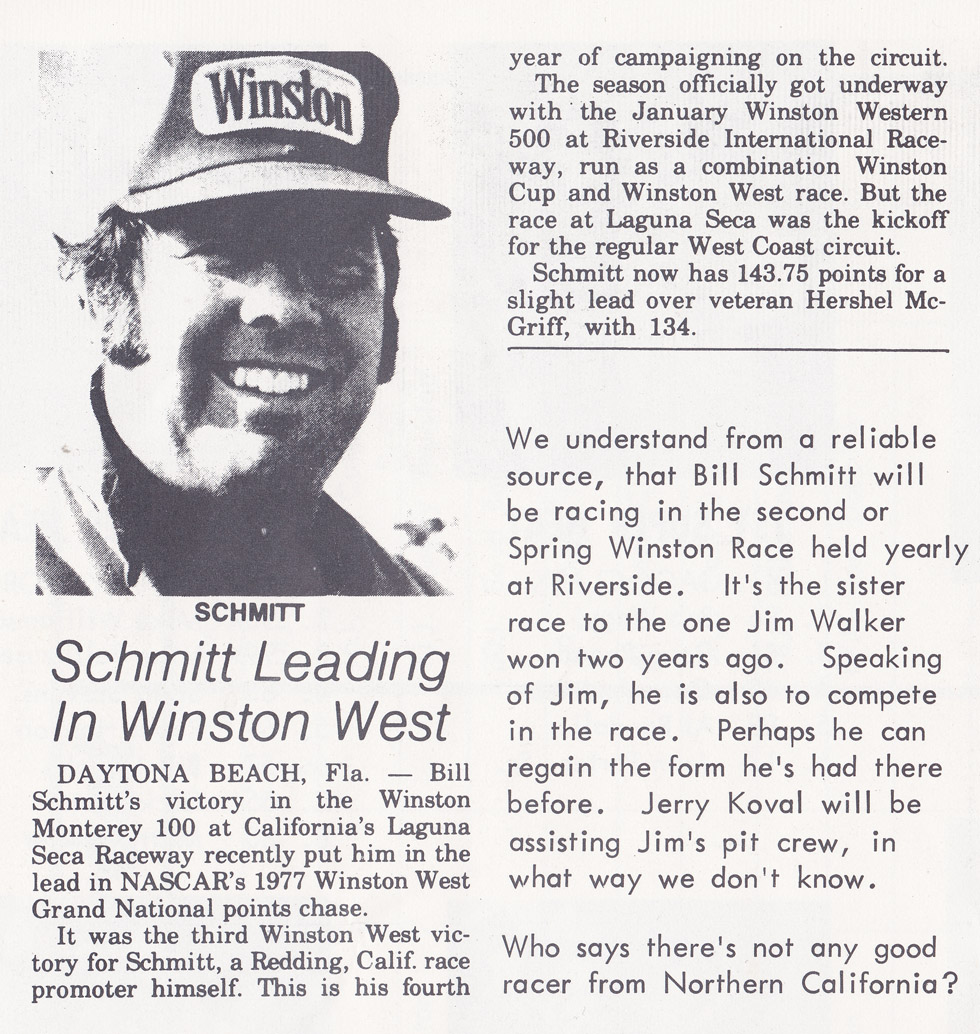
Article in 1977 issue of Redwood Acres race program ‘Stock Report’

A POPULAR VISITING DRIVER AT REDWOOD ACRES

In the old Redwood Acres Raceway program, the Stock Report, you can find photos of Bill Schmitt with his Winston cap on, and it really was a feather in our cap that he was visiting Redwood Acres from time to time, noting how he was doing in the Winston West series and that he was going to be at the Acres that weekend.

“You know, I think actually, what I felt about the way I was taken in over there was I was kind of like one of the regulars over there, you know? And even the press over there would treat me like I belonged there, better than it did here in Redding. Even though they wrote articles here, it was just about the same old thing all the time, you know? But over there in Eureka, they always had a good story with ’em.”

“You know, those fans over there were different too because they were die hard race fans. And I remember those couple of nights over there that people could get. I mean, it was scary. I think if they could do it, they’d jump that fence and come out and kill the guy. They actually were out waiting for him when they come out.!”

SHORT TRACK CARS

In the 80s Bill would come over to run at Redwood Acres other short tracks with a late model that was different than his Winston West cars.

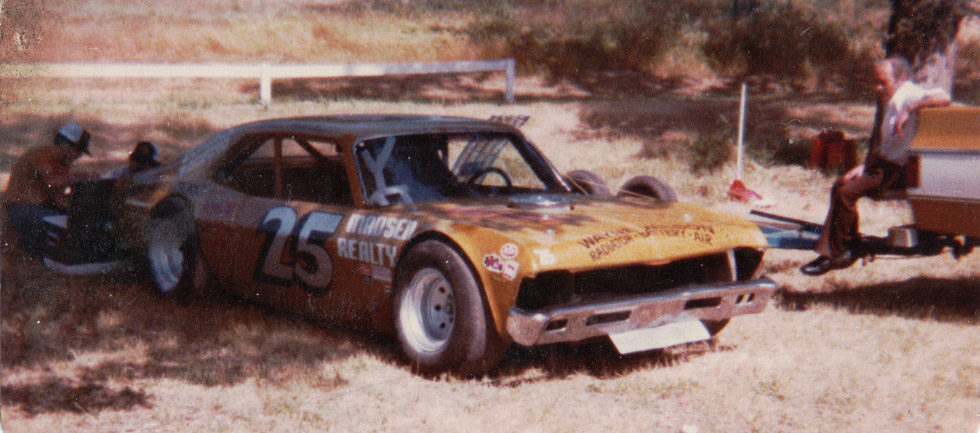
“We had one car then we had built and we used, it was a Nova. And then, then we went to a Camaro,”

“I think the only track that really sticks in my mind, and I’m sure there’s a couple others that I never won and I should have won several times, was Monroe . It was a 5/8 mile. Jimmy had been there too. He used to run his late model up there. And they had $50,000 bucks to win. And they’d always bring in like Junior Johnson’s guy, Bill Elliot was there once he took me out leading the last lap.”

And he took you out?

“He took me out.”

So he took you out, meaning he took you out?

“He took me out.” (laughs)

“And believe me, I’ve never let him forget it. (laughs) He said ‘I didn’t do it intentionally’. I said its pretty bad when he got across the infield to go take me out. (laughs) It’s like, well, you’re too good to done that by mistake. It’s like, you’re too good.”

“In the early 80s Sterling Martin was there one time, and he was leading and I was right behind him, we lapped the whole stinking place. It was a 500 lap believe it or not. We went there and the first time they had it, Herschel McGriff and I were the only ones that stayed in our cars. Took six and a half hours to run it. Him and I were the only ones that didn’t have to have relief drivers. (laughs). Chase and the rest of ’em were all crawling outta the cars.”

There was also a similar race in Calgary, the first NASCAR races outside the United States

“500 laps, and that was the third mile track! I had an 11 lap lead on the 2nd place car. They said you couldn’t pit and get back out without getting down a lot. I did it every time. We were the only ones doing it too.”

JUNIOR JOHNSON, ‘THE LAST AMERICAN HERO’

Born in Ronda North Carolina, Junior Johnson was immortalized in the Tom Wolfe essay “The Last American Hero Is Junior Johnson. Yes!” for Esquire magazine in 1965, and later as a film starring Jeff Bridges in 1973. Johnson went from moonshine runner to winner of 50 NASCAR races, 1960 Daytona 500 winner, and eventually a six time championship car owner.

From illegal stills to illegal race cars, Junior Johnson represented the old stock car adage he has been credited with: “If you ain’t cheating, you ain’t trying.” Still aggressive into his 60s, in a 1991 Battle of the Nascar Legends race on the Charlotte infield, Johnson, unhappy with the officials, was bumping the pace car repeatedly under yellow, which contained Bill France Jr, the CEO of NASCAR, who took the opportunity to get out of the car mid race. When asked afterwards if he had run into the pace car, Junior said in his southern drawl, smiling, “No, they run into me.” When reminded Bill France was in the car, he said “Well he was on the right side and that was the side I was tryin’ to get to”, (laughing).

“Junior liked drivers that drove aggressive. There wouldn’t be a place for him now. Everything was so checked on now. He was an ‘innovator'” , Bill says smiling.

From 1975 to 1993 Bill had been racing in 2 to 4 NASCAR Cup races each year, mostly focusing on the west coast tracks; Riverside, Ontario, Sonoma, and Phoenix, with the exception of Daytona in 1980. He often drove Junior Johnson prepared cars.

“Junior talked slow like a southern Good Ole Boy, but he got things done. I always sent cars over on a hauler for Junior to fix them up and send them back. He told me at one point they were switching over from Chevy to Ford, and I had been running a Chevy. I told him I can’t afford to do all that. This time we sent the cars over and they came back as Fords. When I called him on the phone, he said ‘No problem, all paid for.'” If Junior needed you to drive a Ford, you ended up driving a Ford.

At one point Junior asked Bill to drive for an injured Bobby Labonte at Martinsville in a NASCAR Cup race, but he had to turn him down. “I had a logging business with 200 employees, I didn’t feel I could leave.” Wife Sylvia says “You should have said ‘Yes’!”

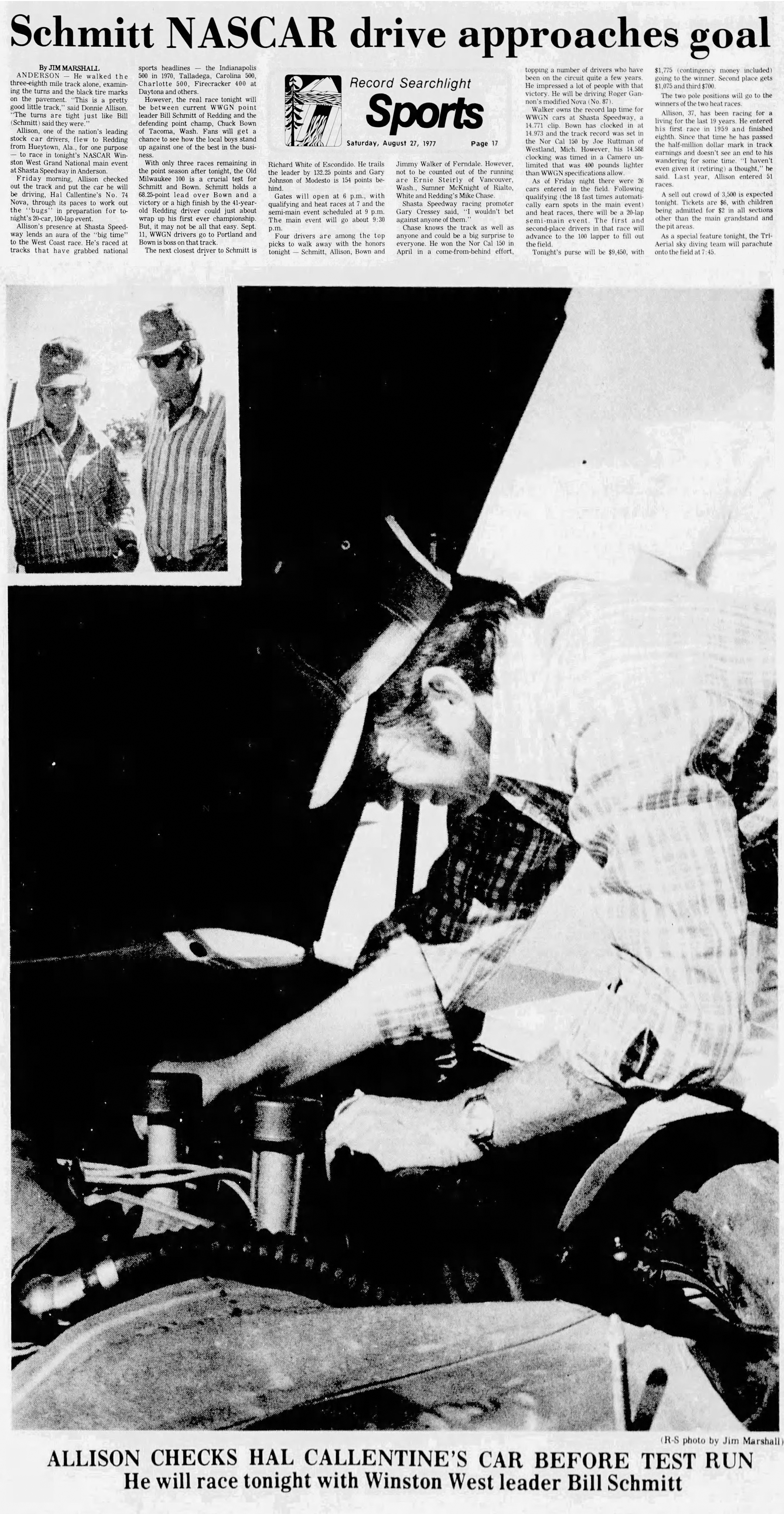
Riverside 1977
Donnie Allison visits Bill at the Anderson track 1977
Donnie Allison and Bill Schmitt 1978

HANGING WITH THE NASCAR BOYS

Bill knew the Waltrips well. “Michael is a great guy, we kept in touch. You meet a lot of nice people. Earnhardt’s come out and see us, and Allison’s and the Petty’s. They stayed friends, they’re pals, go fishing with them. Allison used to fly me from Riverside and to here in Shasta.”

“Oh, they were a kick. I’d go fishing with Allison. He liked fishing. And then when we were promoting; I’d go promote Bakersfield or a couple other racetracks just for a weekend type thing, special event, and I’d always call him up and see if I’d hire him to come out. I had Neil Bonnett, he was really a neat guy, he’d come out; Donnie Allison, Bobby Allison. They’d come out here to Redding and they’d stay here. In fact, there used to be a bar here on the corner, and they’d go down and play pool. I don’t know what time they came home, but it was the close to the night, you know, and Donnie, he was a nut. That they’d come out, never turned me down, never did. That was pretty neat. Incidentally, my wife, Sylvia, owns all that now, Design Time, that’s our Granite store now.”

“Donnie drove one of my cars at Laguna Seca. and I had something poke a hole in an oil filter on my car, had to pull into the pits, and he went on and he won. Bobby, he drove mine several times. And Dale, when he had that losing streak, he hadn’t won a race for two or three years. He and Teresa had come up and they had a race, he come out and I led, I was way out there for a while. I had about 16 laps to go, he was running second, and I had the stupid engine blow. So he inherited the lead, he went on to win that thing. And from then on he started winning back east. He called me up and said, ‘Man, you broke my jinx, but I’m not coming out there anymore.’ (laughs).”

“Davey Allison, he used to come out here with Bobby and in fact, Davey drove one of my cars at Monroe and, three days later is when he was killed (July 13, 1993 in a helicopter crash in Birmingham ALA). We knew the family pretty well, Bobby and June.”
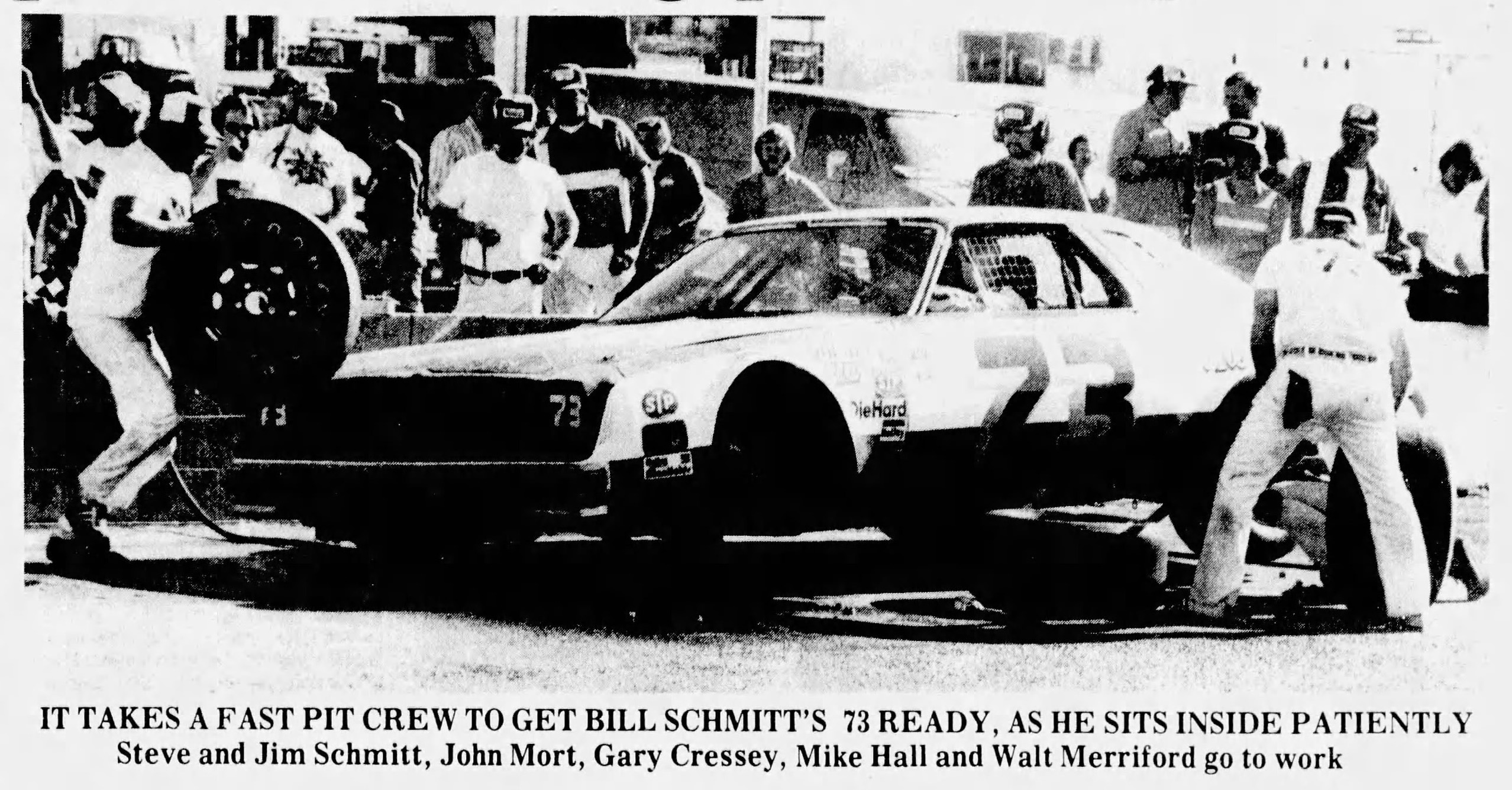
Riverside 1977
Riverside Winston West Series 1978

WINSTON WEST SERIES

Why number 73?

“That’s what NASCAR issued to me. I couldn’t get 33 like I used to run. Wherever you started racing there, that was what they gave you.”

“The first Winston West race I won was Portland in 1975. In Vancouver they had a road course up on the mountain. But it was one of those that if you went off the track, you hit stumps. That would take you out. Had to watch out for the deer across the track. That was in the days of Ray Elder and all them guys. All of ’em were good guys.”

LAGUNA SECA

In 1977 Bill won the Monterey 100 NASCAR Winston West Series race at Laguna Seca in a Chevy Nova. I asked him what the famous Corkscrew was like, going over the crest and dropping several floors.

“I was a logger for years, and that was like driving a logging truck! That was neat, I liked that.” Bill, who logged and owned trucks for 35 years and drove them on the twisty dirt roads could relate. “In fact, I was surprised NASCAR never did the schedule. We had two years we ran there and then that was it.”

ONTARIO OVAL and A.J. FOYT

“When I qualified my best at Ontario, I remember, they had a USAC (Indy Car) show there, and they had stock cars as well. Ontario was supposedly just like Indy and they had those markers on the turn (…3…2…1). And I can remember distinctly, everybody said, you gotta get past ‘2’ before lifting to make it, you know, if you are going to get a fast time. And it was hard to do because you’d start seeing the numbers pretty soon you find yourself looking too much at them numbers, not paying attention to what you’re doing. And I can remember going past the ‘1’ marker before I lifted. And I thought, ‘this isn’t gonna work too good’. But it stuck and got around, you know? And old A.J. Foyt, was doing double duty, he had a little Camaro he ran, he was on the pole and I was on the outside of the pole. And I think I was about 151 mph, A.J. was just a fraction faster. And Sylvia was sitting by the pits there, and A.J.’s wife was next to her, they didn’t know each other. I guess A.J. come over and sit down and says to his wife, ‘Who is that guy!!?’ You know, never heard of me before. (laughs).”

“I was running my Grand National, and A.J. was running his Camaro, and the open wheel Indy car the next week. But I remember we had to park outside because we didn’t have enough clout around there to be in the garage. They didn’t have enough garages. And it rained all week and they postponed it. Of course we covered the car up. They didn’t allow no practice or nothing. They put the car down the line, took off and that thing just hissed and popped. So I lost about two laps trying to get that straightened out.”

ROAD COURSES AT RIVERSIDE and SEARS POINT

Bill won at Sears Point four times. “I like road courses. The best finish I had with the cup cars was when they came to Riverside. I finished third there once. Good track. It was one of those that psyche you out a little bit. If you like the dog leg, you could run through it wide open, but if you were first timer on there, man, you’d back right off.”

In 1980 the Eureka Times-Standard reported while local driver Jimmy Walker would forego the Stock Car Products 300 at Riverside International Raceway to put together a new Camaro race car, Bill Schmitt expressed high confidence heading into the race:

“Bill Schmitt of Redding will drive in the Winston Western 500 Sunday. And the new NASCAR Winston West champion has the other drivers worried. He is loaded with self-confidence and has convinced himself he is going to win. “1 think we’ll blow their doors off,” he predicted. “We had a good year. We won four races, led twice as many laps as anybody else, and at Phoenix last race of the year, when he clinched the title, Neil Bonnett won in our backup car.” Schmitt’s doggedness in pursuit of victory was never better illustrated than in the Napa Arizona 250 Starting his Oldsmobile on the front row next to Richard Petty, he needed to protect a 12-point lead over NASCAR Winston West rookie of the year Tim Williamson of Seaside. “On the second lap Jimmy lnsolo blew his engine and dumped his oil right in front of me,” Schmitt said. “I spun and hit the wall and lost three or four laps. I thought I was done for right then and there.” But the lumberman from redwood country took off in pursuit of the field, working his way up to 11th place at the end of the race. Young Williamson, who finished a strong fourth one lap behind Bonnett, Bobby Allison and Petty, picked up seven points on Schmitt, but that wasn’t enough. So now Schmitt looks at racing the kings of the super speedways differently. “Jimmy lnsolo and I have got our heads together. He says he plans to win the pole position, and I say he may have to move over to make room for me on the front row,” Schmitt said. “We don’t care where those other guys start. We were always behind the eight-ball out here on the West Coast, because we didn’t have enough of this kind of racing. Now, with Ontario and Phoenix so close together, we think we’ve got our act together. Before, I was always so darn nervous at Riverside Now I’ve got more knowledge and a better engine. They’re gonna have a tough time with Bill Schmitt.”
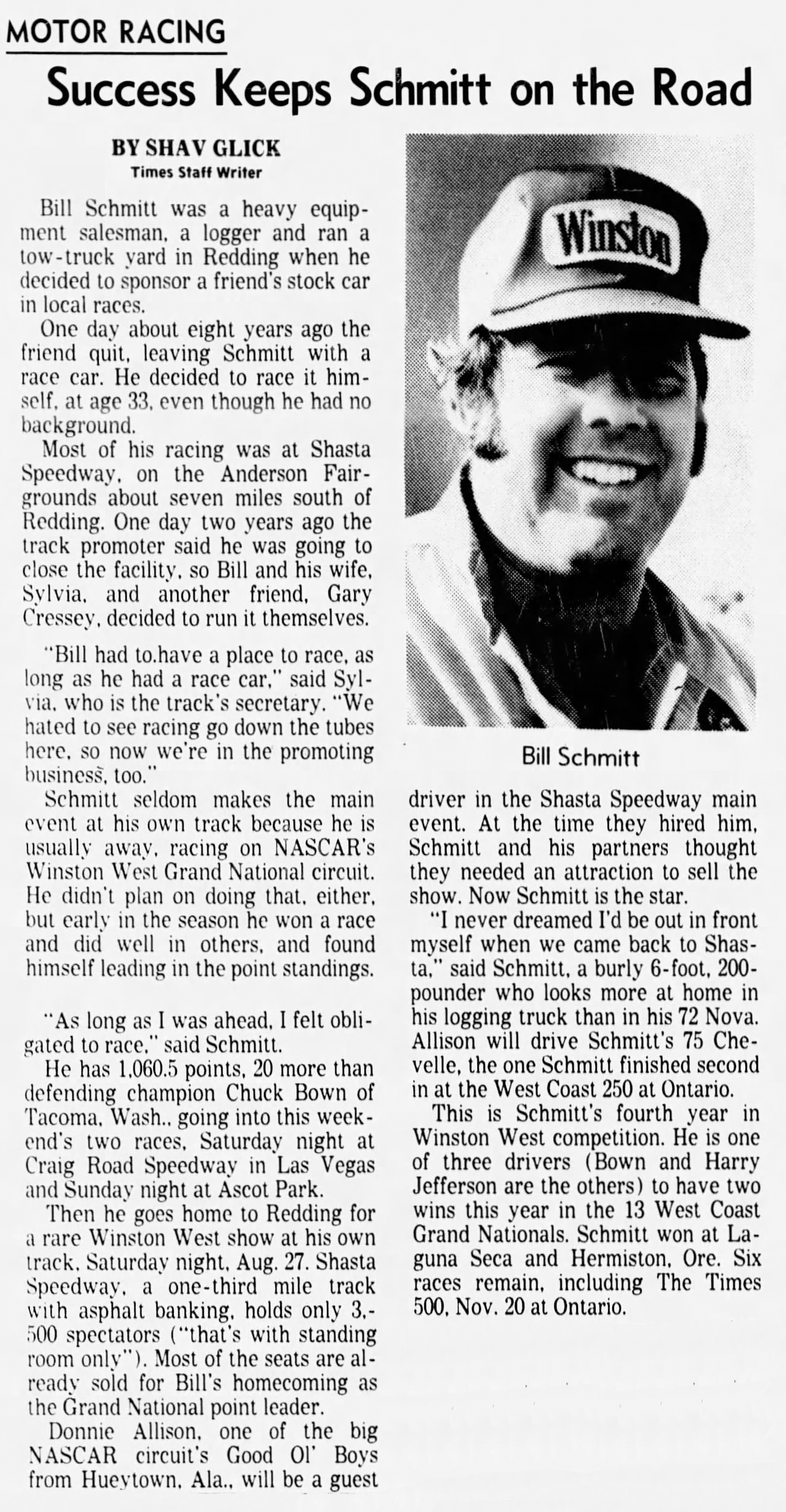
Bill leading Winston West points, Los Angeles Times Aug 1977
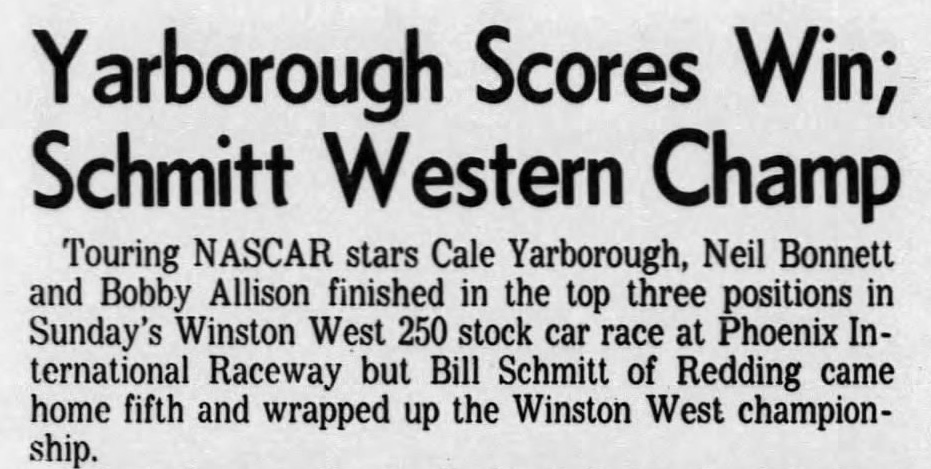
Bill clinches Winston West Championship, Lost Angeles Times Nov 28 1977
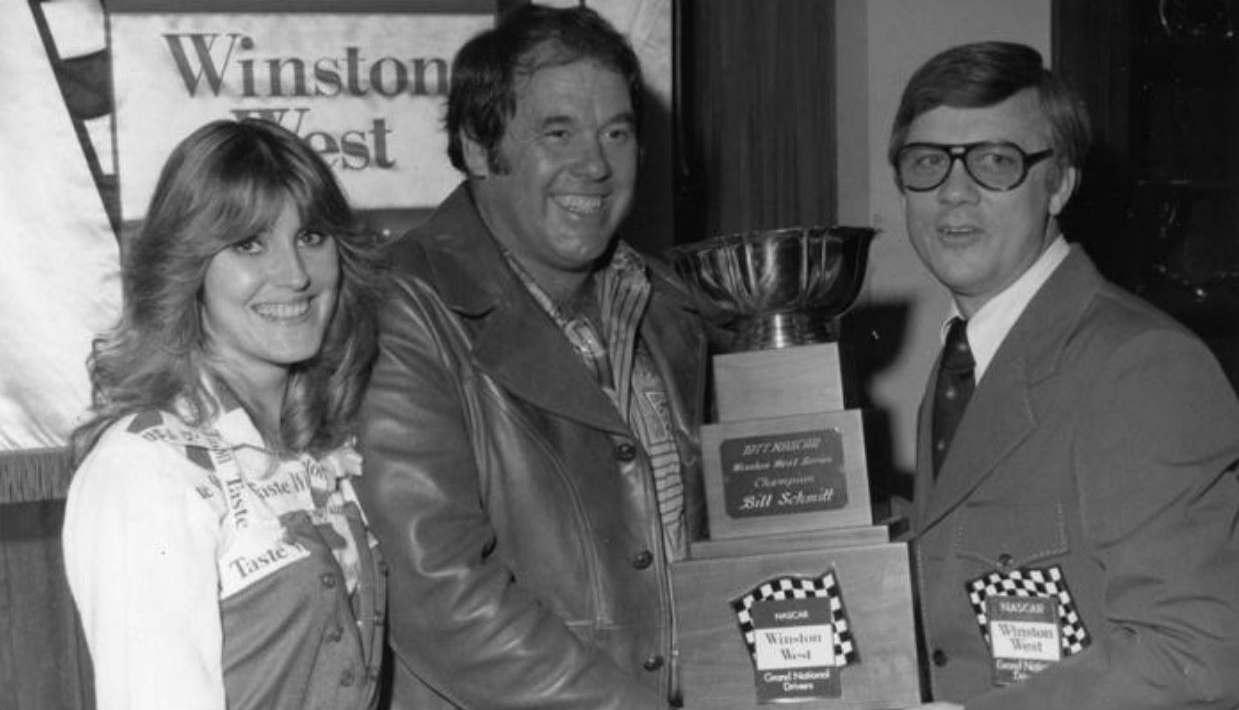
Winston West Champion 1977

WINSTON WEST CHAMPIONSHIPS

In the November 8, 1981 Eureka Times Standard, Don Terbush wrote:

“Perseverance is a quality that has stood Redding racing driver Bill Schmitt in good stead throughout his career. Schmitt, a familiar figure to Six Rivers Racing Association aficionados because of his many appearances at Redwood Acres, thought for awhile that his racing luck had deserted him. One of NASCAR Winston West’s foremost drivers — series champion in 1977 and ’79 — and winner of 10 career Winston West events, Schmitt hit a dry spell. Or perhaps it should be referred to as a drought.(…) But Schmitt never quit trying — not even when he was tempted to stay away from the Sears Point race. “I entered, then withdrew, because I didn’t think I could leave my businesses in Redding,” he recalled “But then things straightened out at work and I re-entered. We didn’t even start working on the car until the Tuesday before the race.” Schmitt’s decision to compete in Sonoma proved not only wise, but profitable. He added $5,525 — his largest career payoff to his racing bank account with the triumph and ended many months of frustration. Buoyed by the victory, Schmitt will now turn his sights toward a return visit to Riverside International Raceway on Nov. 22 for the Winston Western 500 The Win-ston West drivers will be competing with their Winston Cup “cousins” in this event Schmitt finished third at Riverside in August in the Warner Hodgdon 200 race.”

Bill Recalls:

“First year I run full time, I won the championship in ’77. And I won ’79. It was kind of funny ’cause I couldn’t do nothing for two or three years there. Just couldn’t get it together. But my oldest son was crew chief and he built the cars. And he understood what I needed. He wouldn’t drive ’cause he had to wear glasses, he couldn’t see. But boy, he could build a good car and set it up. And he didn’t even ask me what I needed. He just knew what the car needed. But when he was off in the eighties, he had some other stuff he was doing, but every year he’d come back, I’d win a championship. So we won in ’89 and ’90, across three decades.”

“We did everything here, in fact, built our engines here for a long time. Terry Elledge, started out with us. Terry went back east. He’s still going. He, he’s on the road to retire. Of course his boy Jimmy Elledge, he was a crew chief for Dale Earnhart for a while. A million bucks a year. So he must be pretty good at it.”

“Then after that was Lloyd McCleary, they called it Pro Power then, they built the engines. He’s back east. Everybody’s who’s worked for went back east. So if nothing else, it set them guys up pretty good shape. My problem was, I was just too late in life starting and I should have been doing it this these days, you know? Right. Now the bucks are in there. And it’s kind of strange to hear what they do to set the cars up ’cause it’s just the opposite of what we were doing. Like that Bump sitting on in rubbers. Shocks were a big thing, our days was a pair of Monroe 50/50s and that was it.”

“Mike Chase, he recently stopped by here, He works for Penske now and he’s the total shock man. He’s been doing it for the last 12 years, and he’s their shock expert. He said, you’ve never seen so many shocks, different combinations, in your life. And he says that you gotta dial it in; boy once you got it dialed in, you got it. That makes a car.”

1980 Mesa Marin
1980 Daytona

DAYTONA

“You go out there and shoot, I get up on them banks and next thing I knew I was down on the flat part, you know. I felt pretty comfortable down there”, Bill says laughing. “And I’d come in and Sylvia always kept track of everything. And she’d say, ‘Well, you better get on it’. And I said, ‘Well, geez, I must have been flying.’ She said ‘Well, everybody else are doing 185 and you’re doing 150.’ ” (laughs)

“So Neil come over and he jumped in the car and he says ‘lemme take that car out. You think there’s something wrong with it or something?’ First lap is 186 miles per hour. He was faster than anybody with that car. And he says, ‘All you gotta do is keep your foot on the, if it tries the lift, take the other one and put it on top of it. Don’t touch the brake and don’t turn the steering wheel’ (laughs). He was right. You could go through there flatfooted and it’d be so much g-force, it’d sucked the engine down about 500 rpm.”

“That draft’s a different thing. You gotta get used to that. You’d feel like, man, this guy’s really slowin down, you’re half throttle behind him. So you’d think I’ll pass him, heck with it; you pull out, get up alongside the door, that’s far as you go.”

Bill getting into his VW street car after Winston West practice in Phoenix November 1981
[photo courtesy of David Allio http://www.racingphotoarchives.com]
Bill returns to Shasta Speedway 1982
Phoenix win 1984
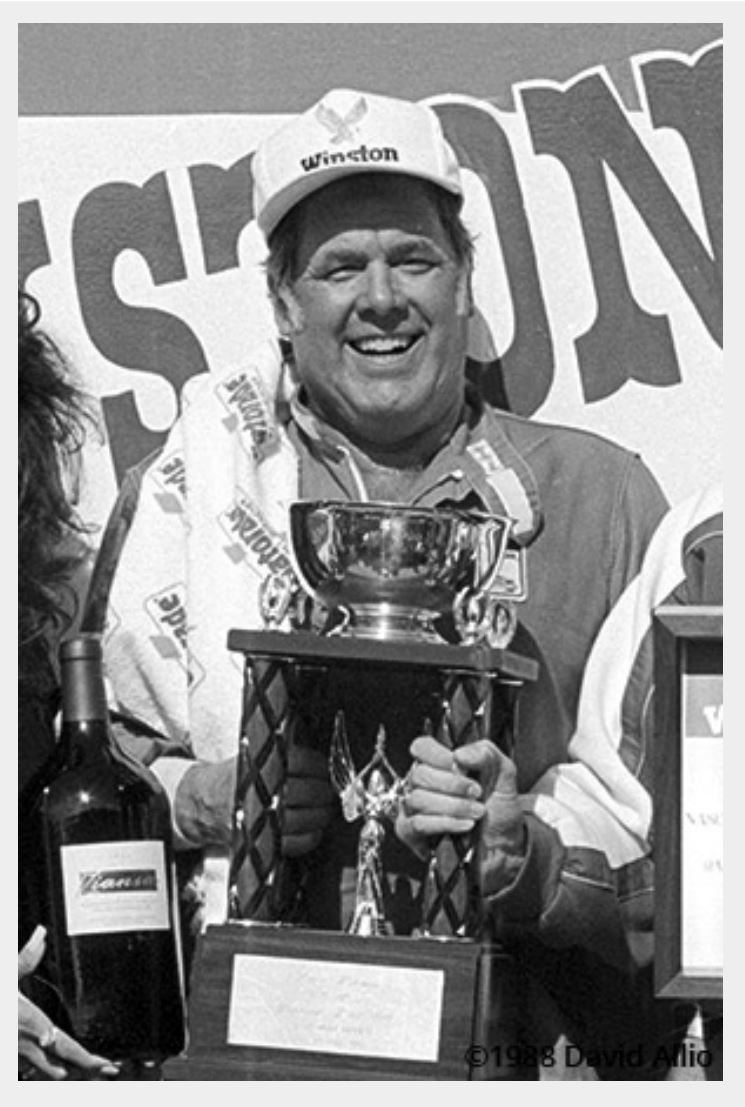
Victory Lane at Sears Point 1988 [photo courtesy of David Allio http://www.racingphotoarchives.com]
Official program for NASCAR at Calder Park Thunderdome, Mebourne Australia February 1988

OVER 200 MPH DOWN UNDER

On February 28 1988 Bill also raced in Melbourne, Australia, at the Goodyear 500. the first NASCAR race outside of North America. The race was at a newly constructed track, the Calder Park Thunderdome. The field included Bobby Allison, Neil Bonnett, Dave Marcis, Kyle Petty, Michael Waltrip and Hershel McGriff. Bill qualified 16th of 31 drivers but finished with a DNF on lap 31 due to engine problems.

“The promoter sailed a container ship in, loaded the car up and hauled our junk and made our way over there. We stayed an extra couple weeks, but we were over there almost a month. It was the first race they had. It was a mile and a half track and it was probably between a Darlington and a Bristol type track, and it was fast.”

At Calder Park drivers got up over 200 miles an hour. At Texas World Speedway 214 MPH. What were those speeds like?

“Now you go 230 down the back straightaway in Daytona, it seemed like you’re going 70. Till you’ve pulled up on someone!”

Bill returns to Victory Lane at Sears Point April 1988
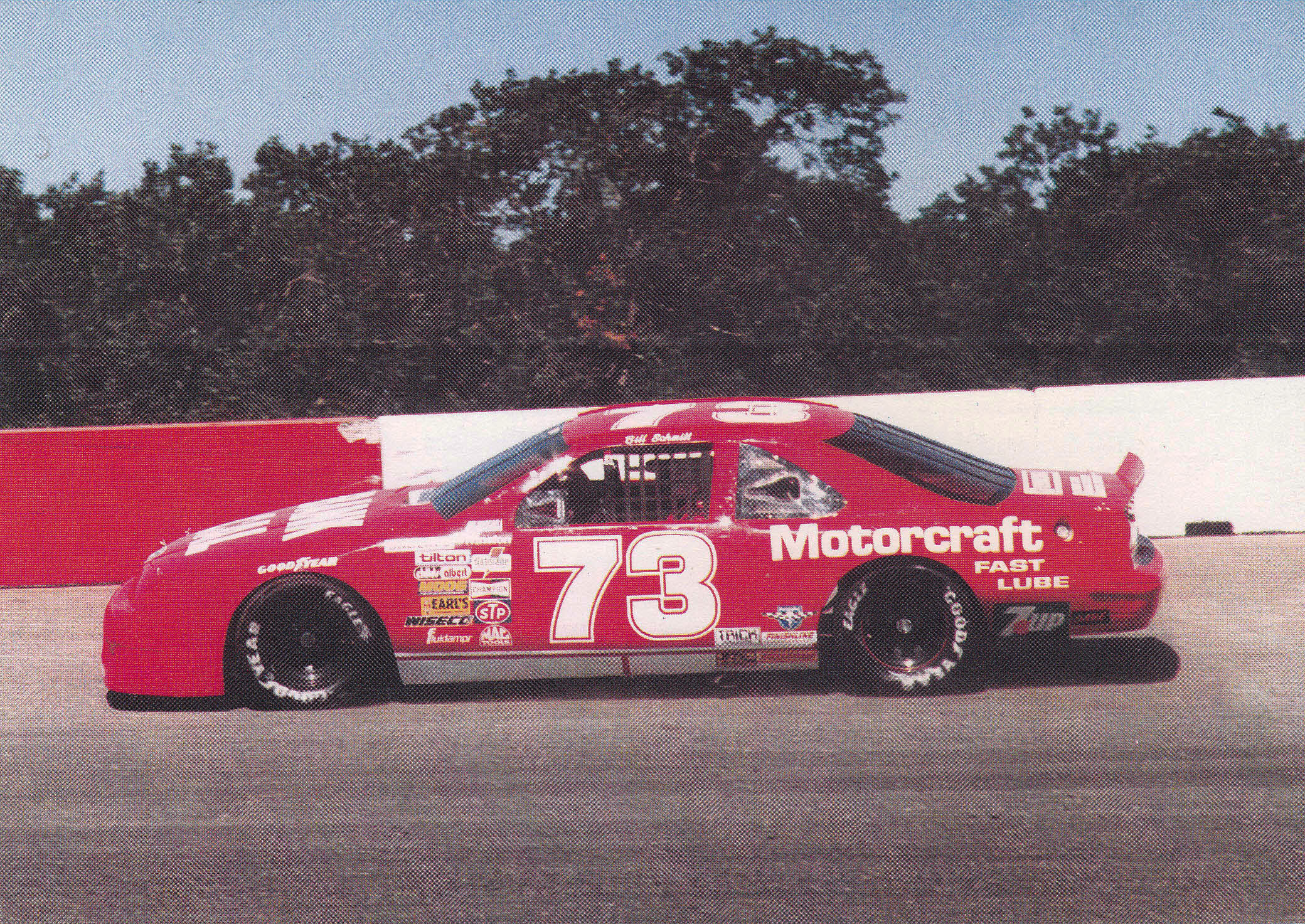
1991 postcard
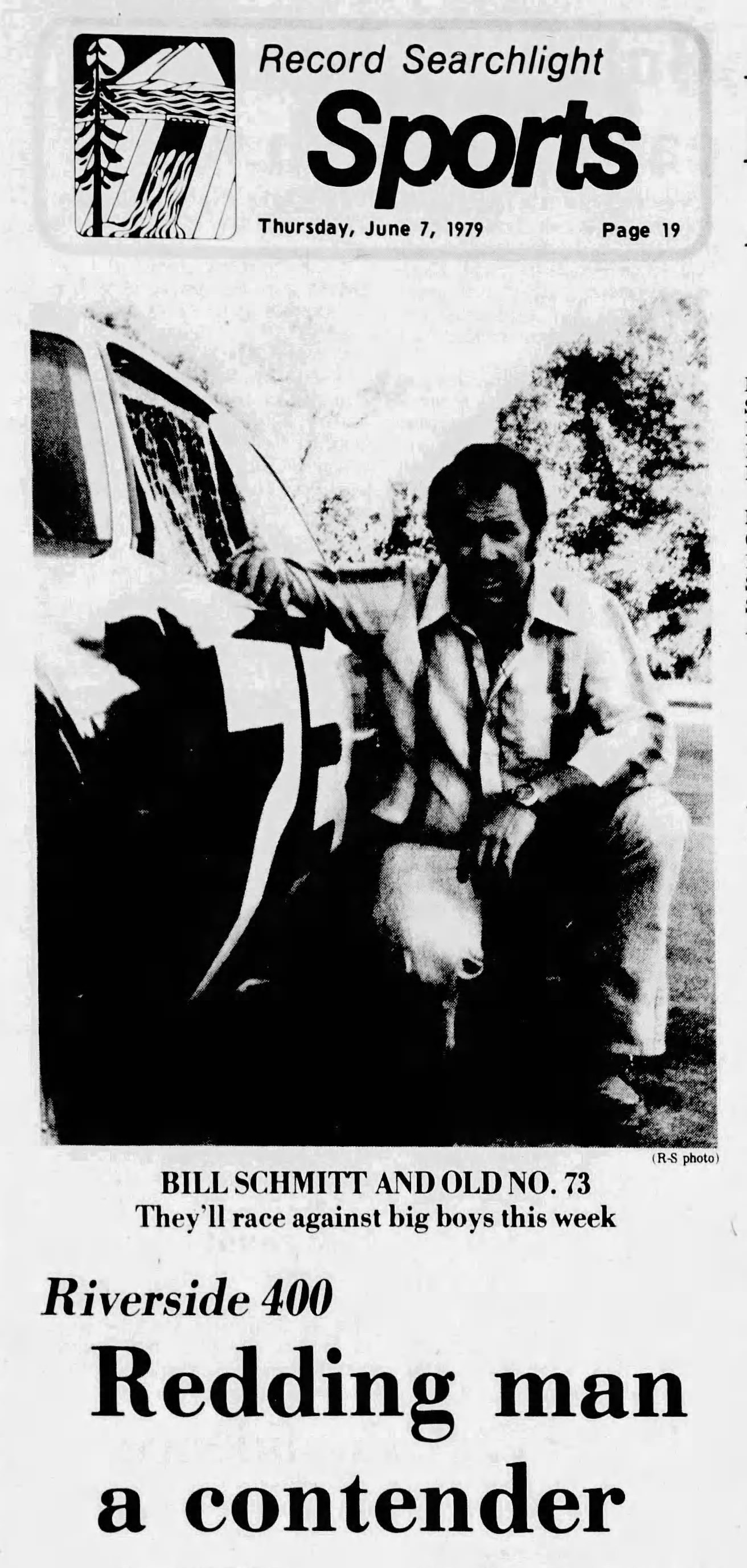
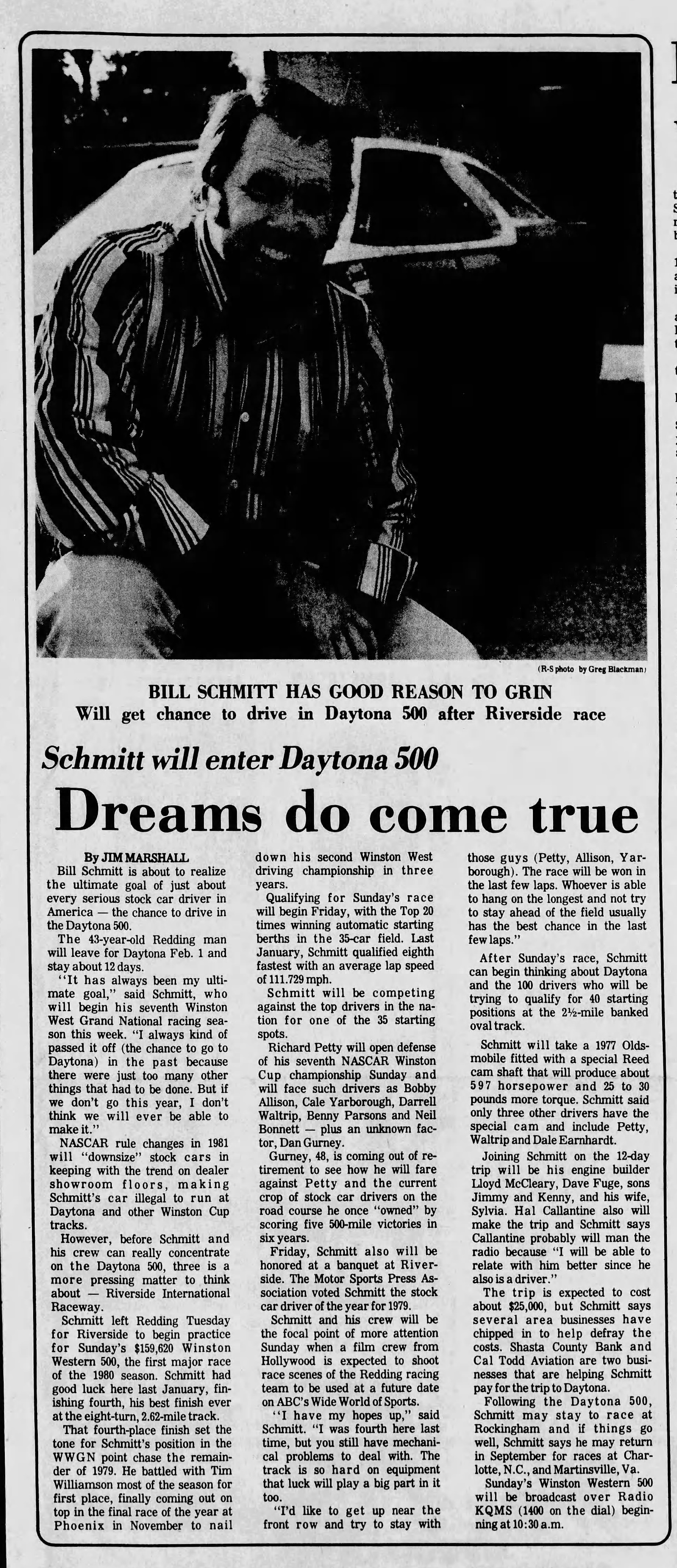
1991 article
1997 Grandstand trading card
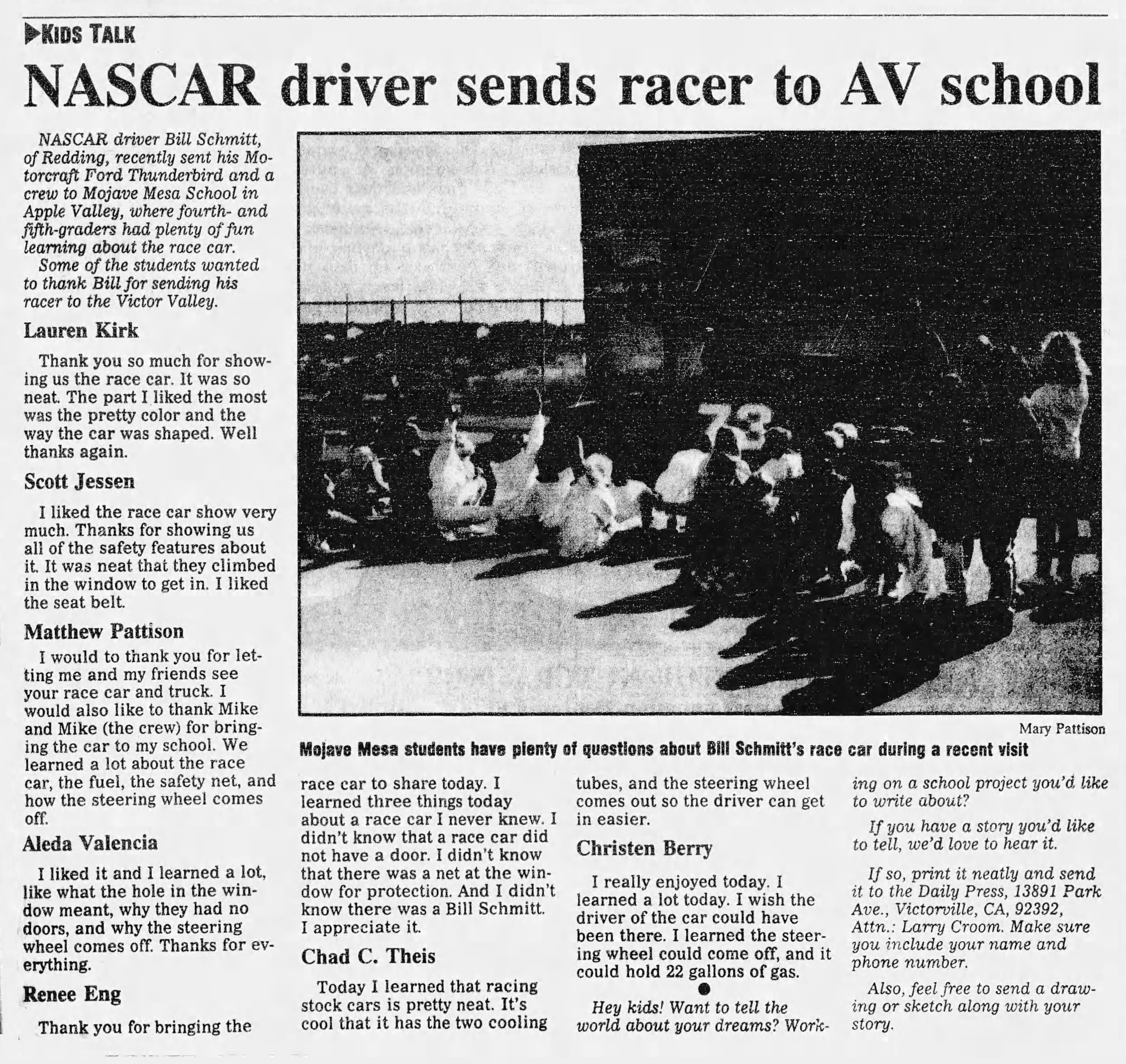
Bill often visited schools like this one at Deer Creek Elementary School in Shasta in 1978
Thank You messages from 4th and 5th graders at Mojave Mesa School,. Apple Valley CA 1991

LEAVING RACING

“I quit in 1994. Butch Schaeffer, he runs the West Coast Series now, they’re trying to put a race on down here at Shasta next year. And they said that the promoter wanted to get with me and wants me to drive. And I said, ‘You want me to drive? I mean, I don’t even go to a race anymore.'” (laughs) I said, I quit because it made me want to go race and I don’t wanna do this no more. I said, I’m too old to go do it. He said, ‘Yeah, but Herschel McGriff is still doing it.’ I said, well that’s Herschel. Look at it. The first 10 laps he was down 2. I said, I don’t wanna go out there and look like an idiot. I said, furthermore, I doubt when I could even get in the car because the way they got it built today. You know, like Gordon and those guys, you see pictures of ’em, but you never realize how little they are. About like a jockey.”

“My granddaughter got pretty well involved in it. My son was building her cars and she got pretty good at it. And she’d called me up, want we come down and help her out a little bit. So I’d go down there once in a while, finally one day said, you get in the car and see what you think of it. And I went out and broke track record first two laps out there,”

Bill said he won quite a few races and trophies over the years, usually giving them away to family and grand kids.

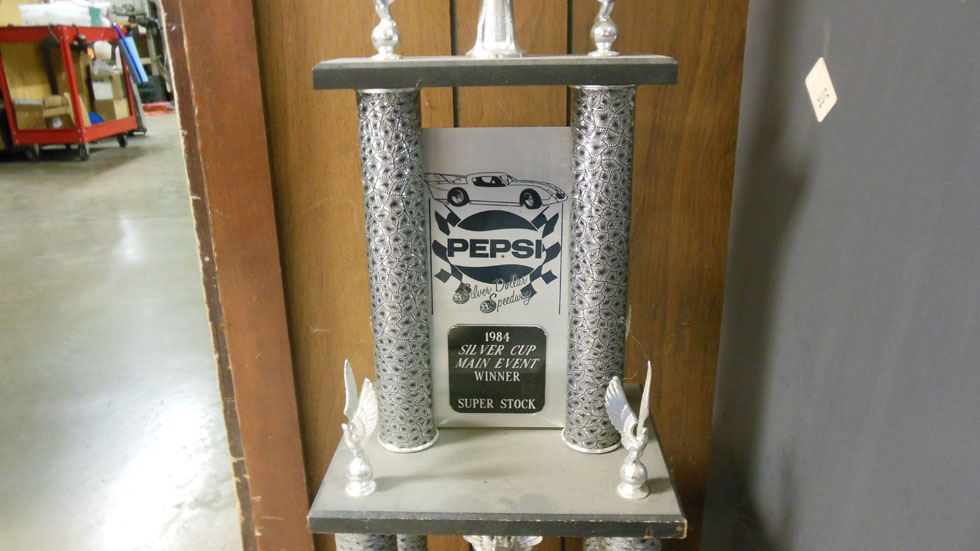
“The worst trophy I think I ever had is I won this Pepsi thing down here two or three times. And it was an eight and a half foot trophy. Wouldn’t fit in the car, I’d give it to Napa, they’d put it in their showroom.”

“I got involved with these kids and the Pinewood Derby Races and stuff like that. So they wanted me to come in and flag for them. So I’d go to those deals, and all they’d give ’em for winning was a ribbon. It was about once a month and I thought, you know, that’s not really good. So I started taking my trophies and I’d take the name off of it and I take them to give away to the kids. Then I got Goodyear to throw in sponsor coats and hats. And boy, I mean, them kids really loved that. (laughs) Pretty soon the dads were wanting coats, like sure, you know, bring some big enough to fit them.”

Bill Schmitt surrounded by trophies at his office, October 2013

Kind thanks to Bill and Sylvia Schmitt for their generosity in opening up their collection of photos and stories of Bill’s racing career.

Thanks also to Doyce Eaton, Mark Baldwin, Mike Marcelli, and other fans for their contribution of rare photos.

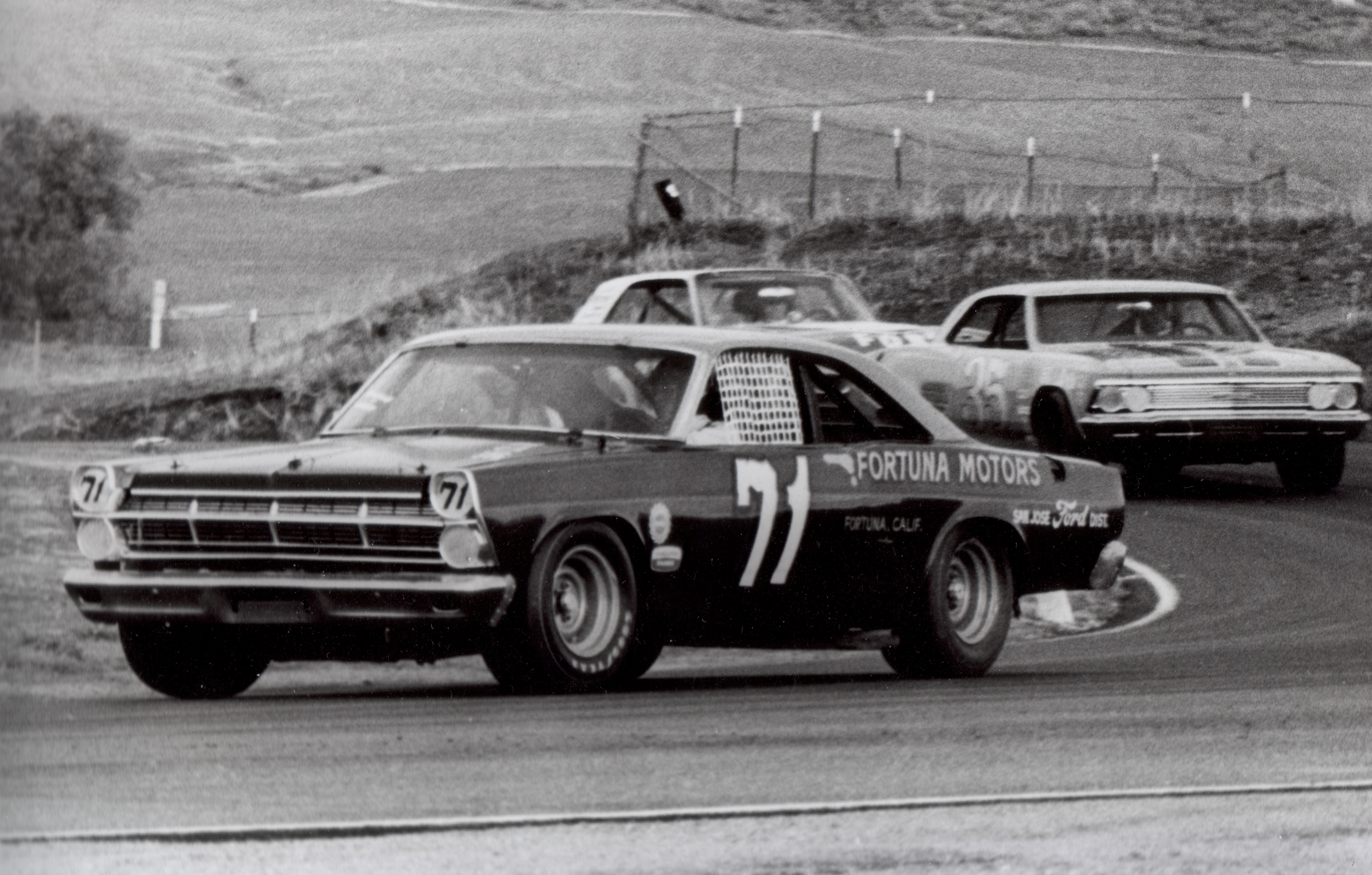
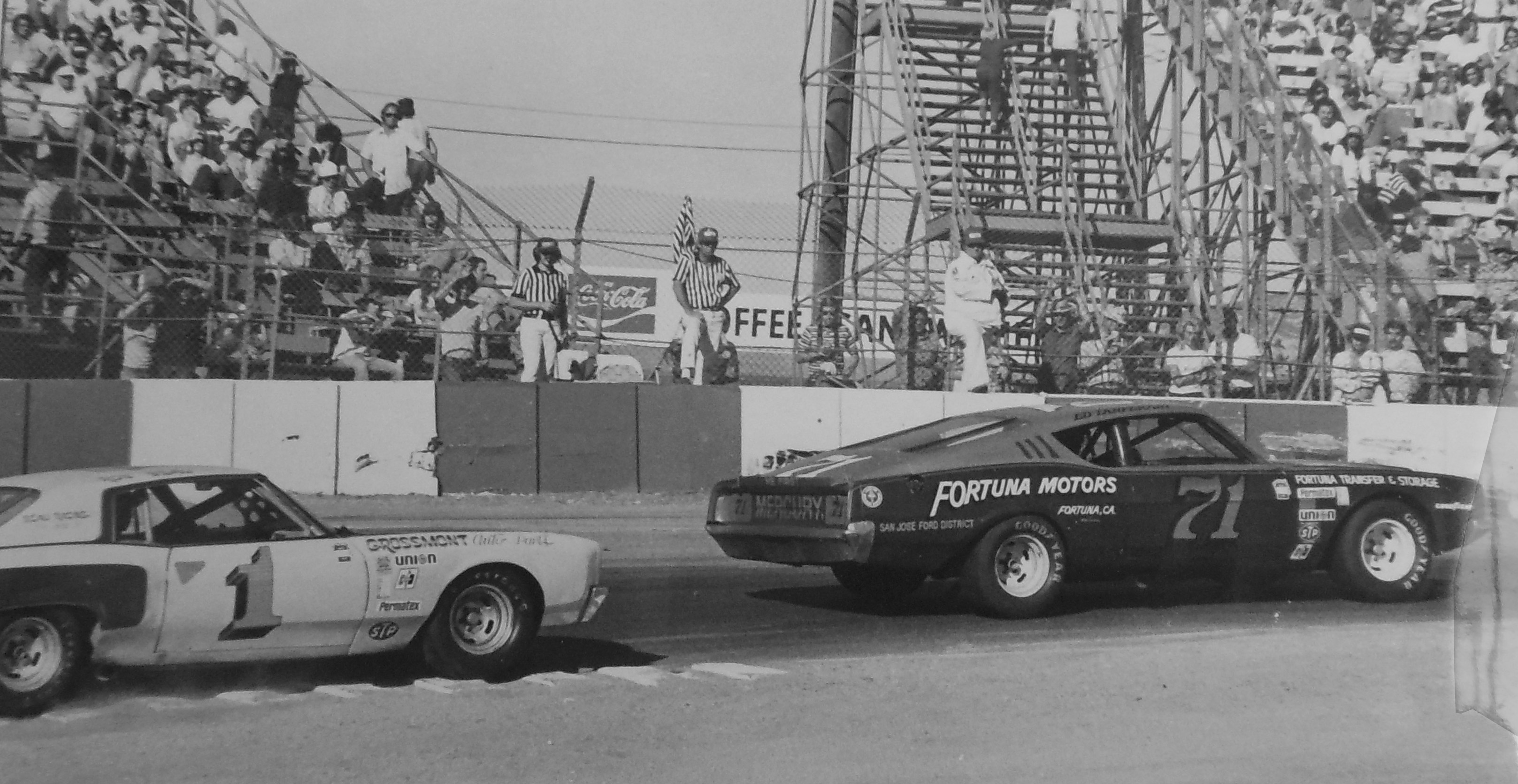
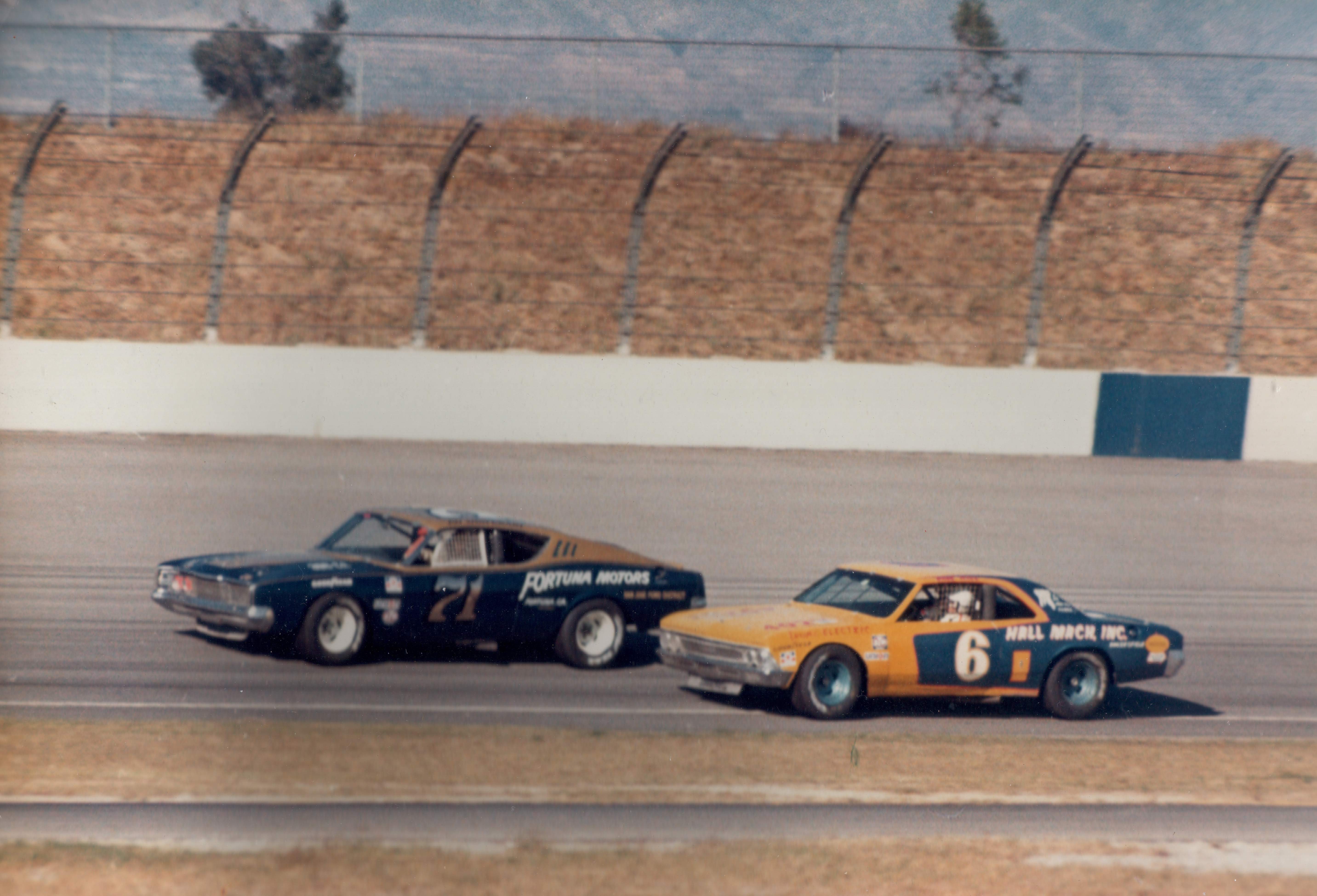
ED TANFERANI

CLOSING THE DOORS

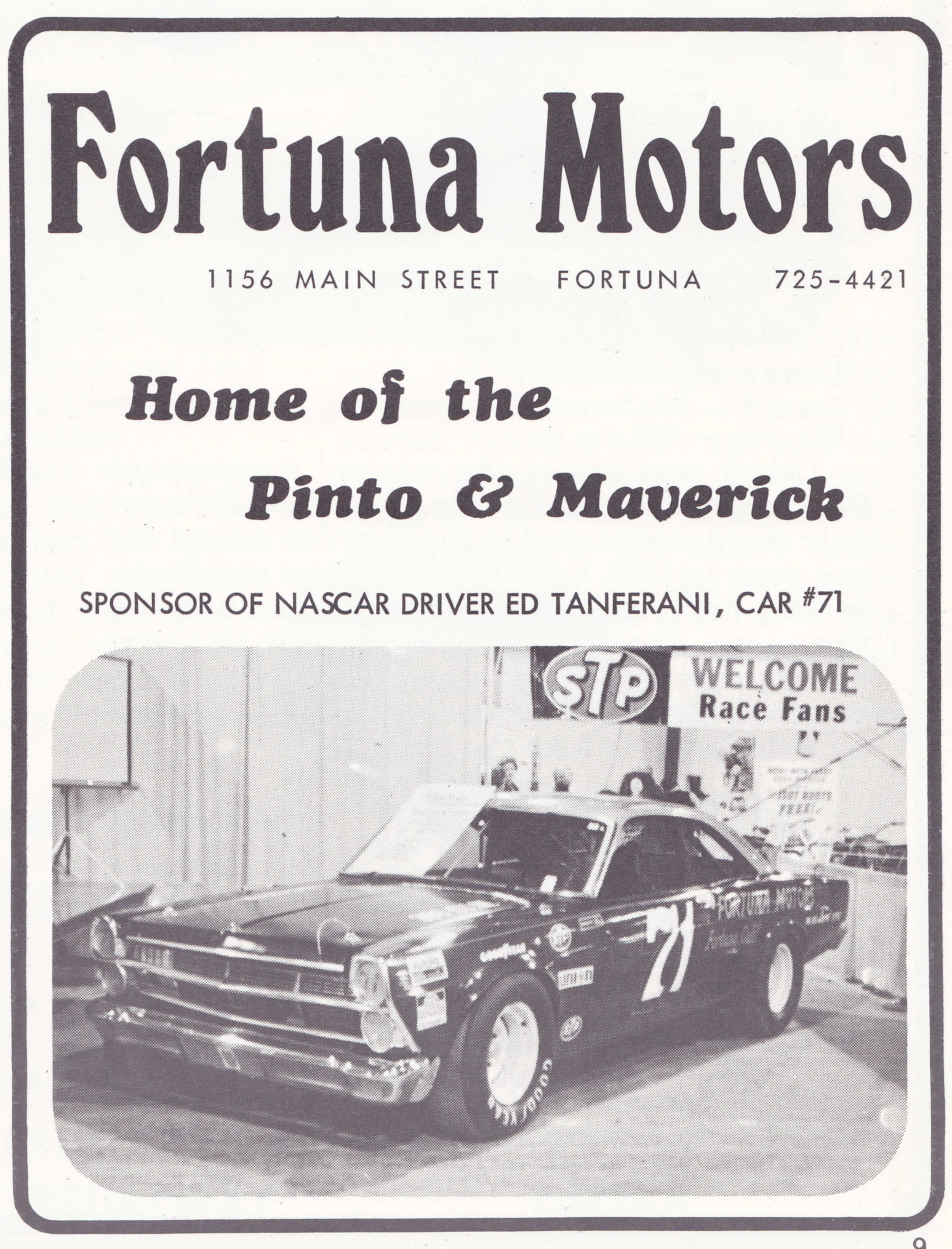
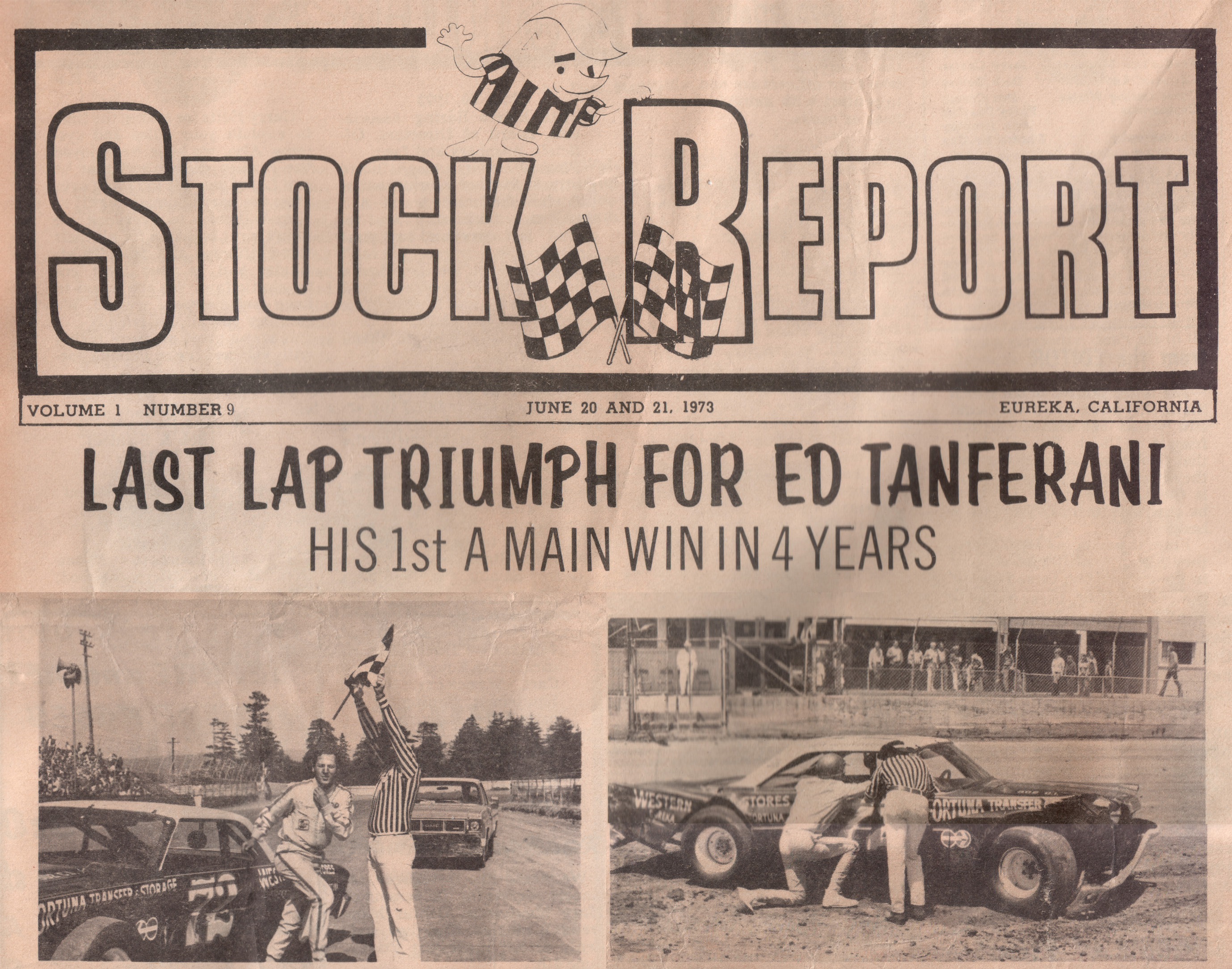
After over 50 years Fortuna Motors was closing its doors. “Lost the Chevy franchise due to the bankruptcy they declared, over 3,000 of them going away”, Ed Tanferani said in a visit to the recently emptied dealership in 2014. A young looking 71, Ed was retiring his car business and looked ready to get back out on the track, appearing no older than 61. “So far so good, huh? That’s right!” he replies with a laugh.

The ‘Rhonerville Rocket’ couldn’t get racing completely out of his blood. “My wife says every time we drive to Santa Rosa, ‘You’re not on the race track, just calm down!’ You just get in the habit of wanting to get around people. The police officers just don’t understand that though.”

Ed opened up his photo collection and clippings while answering questions about his racing at Redwood Acres Raceway in Eureka CA and his many trips to southern California to race at the legendary now extinct tracks like the road course at Riverside and the speedway at Ontario.

FIRST DRIVING EXPERIENCE AT REDWOOD ACRES:

A Traveling Carnival of Crashes

“I was born in Eureka, where they had a hospital, raised in Loleta, where my folks had a diary ranch.” His father owned a Ford dealership, and the old racing saying of Win On Sunday, Sell On Monday, was taken literally in the Tanferani family.

“In 1962 at Redwood Acres they were motorcycle racing a lot, 4 or 6 times a year, flat trackin’, and a lot of guys were into that. I think two times in ’62 some stock car guys came down from Portland and they’d get the word out in the local papers – ‘There’s going to be Jalopy races at Redwood Acres, winner takes all, all you need is a rollbar and a seatbelt, and all the glass removed’,” A reminder that you didn’t need seatbelts in regular cars back then, but they were going to be real safe for the races and have them. “So I get a ’53 Ford sedan we had on the lot, and it was a junker, six-cylinder I think we had in it, and I got a bunch of water pipe my grandmother had underneath her house in Eureka and I made a rollbar out of it, and they sent you something in the mail what it was supposed to look like. Nothing on the door, just front and behind the seat and front to back on both sides, and that was it, I guess keep the roof up. And these were shysters, they were barnstorming guys, and they’d come down here and they’d tow a trailer and bring a jalopy and they’d bring four cars. And the way it went, we all felt it was a race, but it was a show for the crowd and you’d be racing dodging through cars and I was in 3rd place trying to work my way through anybody and everybody, and here would be some guy going slow down the track and he’d pull out and hit you, and the crowd would cheer and that was the show. It was 50 laps or so and the second race I was really pissed off and I was going to dodge those guys still not knowing what they were doing, and when it was over I wrecked bad and we were all waiting around for the money, they all disappeared. They didn’t pay anybody.” Like a carny, they were gone, disappearing off into the night.

“Then I left for a year and a half and finished college, then I came back to Redwood Acres around ’66 and that’s when I started getting into races.”

On driving on the dirt, Ed said – “Like Harold Hardesty said, you could drive differently depending on what the dirt was, so you’d make the car adjust to the track, but on asphalt its the same every lap so you almost have to have a perfect car. Its an adrenaline rush, you get hooked on it. You just needed it. Once you hit it you hit it.”

SIX RIVERS RACING ASSOCIATION

For the 1965 season, the drivers at Redwood Acres formed the Six Rivers Racing Association (SRRA).

With the SRRA established, you had racers running the show, no single promoter. At that time Chevrolet was so prominent on the track that there were car classes based on which year of Chevy you were racing. “Part of the problem was I was running a Ford and it ran pretty good occasionally, and back then everybody ran Chevy’s, and if you beat a Chevy, people would get up in arms. People in the stands and everything. Nowadays they have to be all identical wheelbase. But what was neat about back then a guy could be low budget. Any guy could bring a race car out there one way or another, by hook or by crook. We’d go get parts out of the wrecking yard and from cars that had been thrown in the water at the turn in the river; get A-arms and sway bars that we needed, cut them off with torches and use them.”

Ed was on the SRRA board initially. “Oh, it was educational. You understood, from the organization side of it, but really what happens, you’re more trying to enforce the rules than you are worried about the crowd. The races would take all day sometimes. Because they’d be having these meetings during the race. When you have a promoter, really all he cares about is the crowd. He wants to keep the drivers happy. ’cause he needs the drivers to show up and he has to put the promotion on.”

Bob Britt’s 101 Speedway between Eureka and Arcata 1968

BOB BRITT’S RACE TRACKS

Bob Britt (of Britt Lumber) came to Redwood Acres to race in 1964 in a ’46 Ford that he would add a Chevy engine to, and became an early SRRA Track Champion at Redwood Acres. He then built the 101 Speedway on the hill over the lumber yard next to the Hwy 101 corridor between Eureka and Arcata, where the SRRA held races. “He had two tracks (the first was below next to the highway on Humboldt Bay in the lumber yard) and the north wind was always blowin’ the dust right into the stands, so he went up behind it on a flat and built another track.” SRRA races at 101 lasted for one season before moving back to Redwood Acres for 1969.

“The best thing is Bob had a lumber yard right next to Redwood Acres on Hubbard lane where they worked on the car and they wouldn’t even trailer them to the race, they’d just drive it across the road to the race. We were jealous, towing our car from Fortuna”, he says with a laugh. “We’d have a truck and they’d tow me from Fortuna all the way to Redwood Acres with a chain and I’d be sitting in the car with my goggles on hoping I didn’t get caught.”

Back at Redwood Acres for 1969, Bob Britt won 7 of 14 main events, with Ed winning 3.

“Bob had his own car for a few years but then he was driving for someone else, figured out not to always spend your own money. Bob was a real good driver; methodical and, uh, calm.”

Ed Tanferani at Medford 1968

NASCAR RACE AT REDWOOD ACRES WITH HAROLD HARDESTY SEPT. 1968

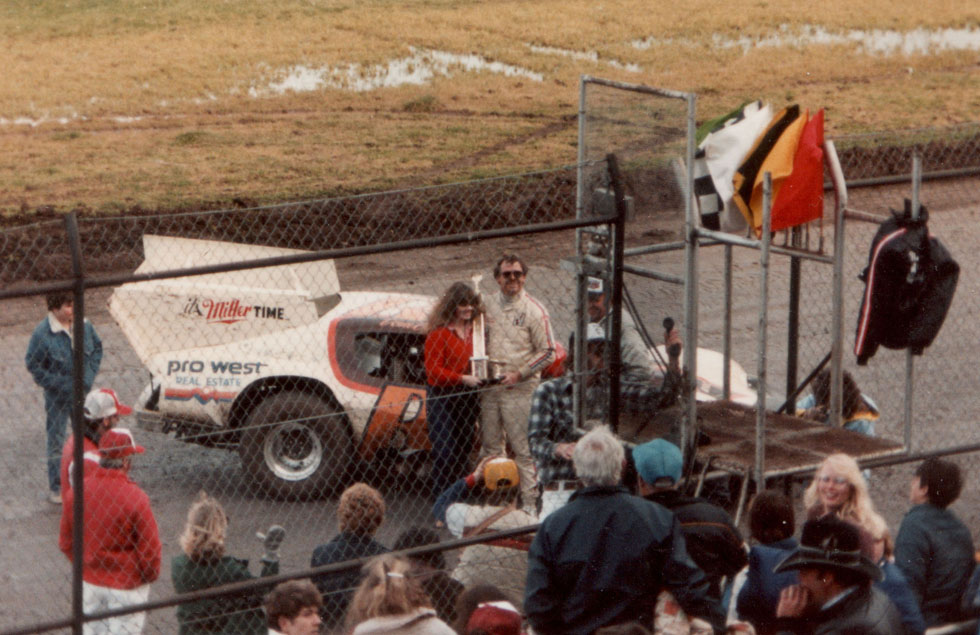
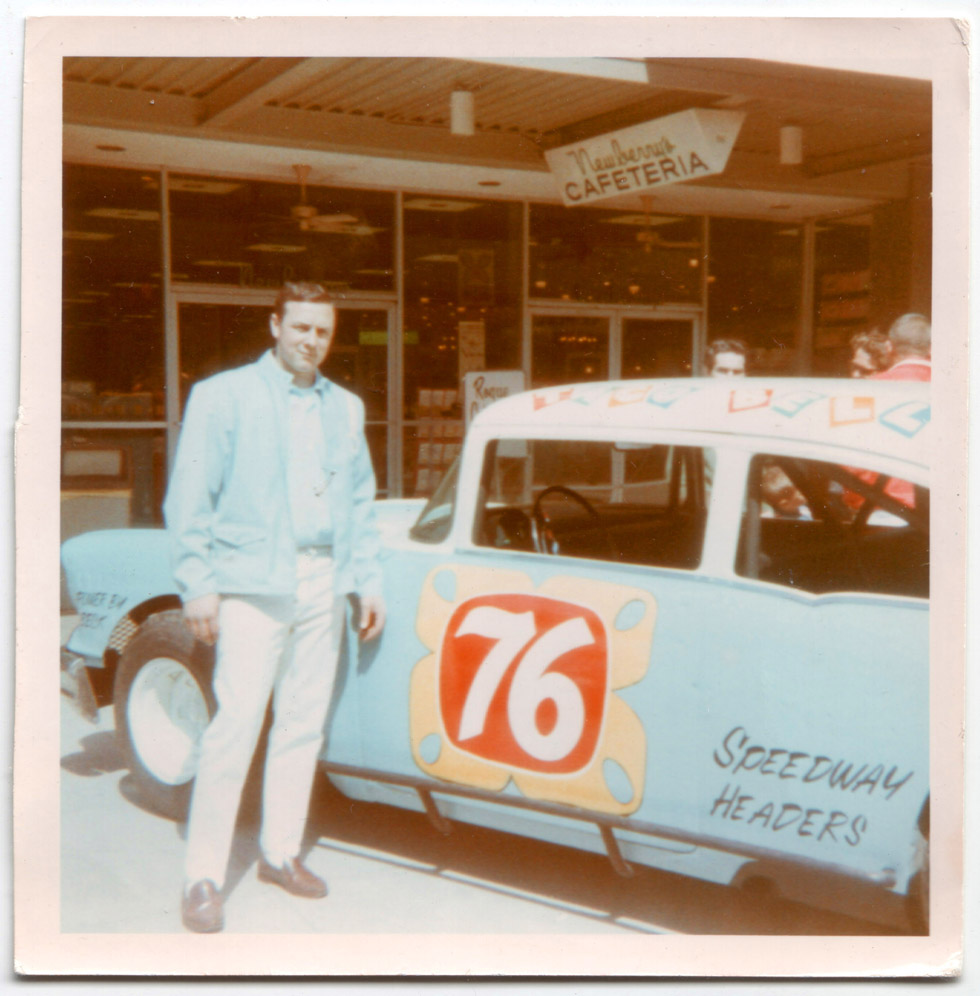
On the mystery of the 1968 NASCAR race at a rainy Redwood Acres won by Harold Hardesty of Ashland with a victory photo of Harold with trophy sitting in front of his car on a trailer, Ed clarified – “His car broke”. I asked Ed if Harold’s account in my previous article was about right, he said “You’re damn right!”

The race had a small car count. “They knew they were going to be short, so they called around and anybody who wanted to bring their cars in they were going to have a separate race and put on a duel show, give the crowd their money’s worth. And then two or three of the cars broke, and another guy wouldn’t run because the track was so muddy.”

“Harold wasn’t going to race, so they wanted us to race. And then Rudy Zeck and I, Rudy was there with me, he used to race but he didn’t bring a car out that night, and we thought shit, we might as well let Harold drive my car, he’s a NASCAR guy, we’d raced and had fun and we were over, and while it would have been fun to race with them, I didn’t feel comfortable, that’s what I told Rudy. And Rudy said ‘Why don’t we see if Harold wants to drive your car?’, and he said ‘Yeah!’ He didn’t think about it”.

Harold said he loved jumping into strange cars, said it was a special talent he possessed. “There you go” says Ed. “He loved Redwood Acres. The Medford track was a quarter mile but it was banked quite a bit so it was a bowl. We raced up there quite a bit. Harold loved Redwood Acres for the speed. And I’ll tell you, when the track was a certain time he’d get out there and put on a show during hot laps. He’d come down and throw his car sideways at the flag stand and keep it all the way around and shoot down the back straightaway, very impressive. He had a talent and he learned it on that short track, because once you figured out Medford you had to be crossed up most of the time up there.”

The track was transformed into a quagmire from the rains – “Real bad, they had to blade it down and roll it to berm it up high and low and they just ran in the middle of it. We ran in the middle of it in our races, then they needed cars to start the race with, told the locals to start in the back and pull in, but we never pulled in. Nobody pulled in, everybody was just racin’ – you know how racers are! And then it started spotty rainin’ and I think NASCAR just wanted to get the race over with, so they let it go.”

On Harold Hardesty, Ed says “He was a fine gentleman.”

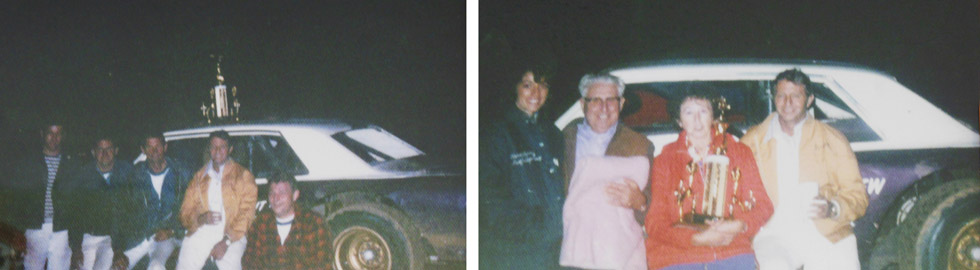
Harold Hardesty (in gold) with 1968 trophy
Redwood Acres Raceway October 1969
Ed Tanferani in his ’58 Ford 1969

FIRST 100 LAP RACE AT REDWOOD ACRES

“At the meeting of the SRRA they said we want to do 100 laps and everyone said we can’t even get through 30 laps – we better start a lot of cars! Walker was leading it, I was in 2nd, and I think he broke with a couple of laps left, and I won. In fact I found my hub was broke after I got home, so I would have only made it a couple more laps.”

It was detailed in the 1969 Eureka Times Standard story and Dirt Trackin’ At The Acres that due to a scoring mistake, the race actually went 102 laps and Jim Walker should have been awarded the victory. Yet true to his “Gentleman” nickname, Walker upon learning of the mistake called the SRRA and told them not to worry about it.

TEAR DOWNS AND TIME OUTS

In Tom Dilling’s book, Dirt Trackin’ At The Acres, he indicated that Bob Britt grew tired of having his car torn down for winning often, and left racing.

“Bob Britt was about 10 years older than us, or a little more. He raced a little bit when he was young, in the jalopies or the hard tops, so he had a little experience. They ended up the one year that I was doing decent, and they could let anybody tear you down if somebody in the stands put up money. So we got tore down about three times that year. You won, you must do something wrong. And anybody can argue it.”

“There was this restaurant called The Flame. The guy that owned that had a jar there so somebody told me that they can put money in it and tear somebody down. And I think what we complained to the guys that it cost money to tear down. So you’ve got $75, whether you’re illegal or illegal or whatever for gaskets and stuff to put a back together or something. 50 bucks, whatever it was.”

“But the problem was with me, I got in trouble and then I got suspended there too is because nobody knew a Ford. Everybody knew Chevy’s. So they tore me down, couldn’t find anything, but they wanted to keep the car another day so they could get somebody with Ford experience and come and figure out if it was legal or not. Everything measured out fine when we got the heads off and all that. I went the next morning with a tow truck and got the car and got it the hell outta there. One tear down’s enough, I’m not gonna leave it with you guys for a week. So they got off. Sent me a letter so I couldn’t race for about three races or something.”

“So I sold the car to Rudy Zeck, he was driving a Chevy, but he was kind of my buddy. And he says, well, maybe I’ll drive the car. So we taped paper numbers over the car and I told him that I sold him the car for a dollar and now he’s gonna run it tonight and show you that it’s right. Well, they got off and wouldn’t let him race. And it was big, they had a big time out meeting and everything. They wouldn’t let him race that night.”

MECHANICS OF FORD vs CHEVY and OPEN COMPETITIONS

“I wasn’t good as a mechanic because things couldn’t happen quick enough; you have to be meticulous and I’m sort of sporadic. And that’s how I drove up here too; I had a bad rap, sometime people call you the villain. I drove a Ford, that was part of it. The other thing Ford didn’t have a short stroke, Chevy had a short stroke, so I had to have that thing wound up all the time. So I’d get into the turns and I’d get right in it again, and found out as long as I kept the back end loose, I could come out and then run with them. But if you shut it down like they do and work your way through the turns, you’d only start running past the flag stand where it would really start pulling. So you got to where you tried to have a rhythm. What was so funny about it, we were all after horsepower; it was carburation, it was air, it was gears – but it was really about handling. And we were all trying to go fast. And its in the turn where you were making good time. The Open Competition races – Dave McMurray came out with fuel injection! Happy Boyd came over from Redding and he had this short little wheelbase and fuel injection on it – but he couldn’t get through the turns. The light came on when you dropped a cylinder and you were passing guys in the turns because you were going in slower instead of going in and sliding all over trying to gather it all up then get back on it.”

OUT OF TOWN RACING

“From 1970 to 1974 I raced down south. Jimmy Walker did too. Larry Pries went down there a couple of times. We had fun there for a while. There were about five of us who tried to race at the other tracks – there was a dirt track at Anderson, a dirt track at Medford, and then we’d go to Cottage Grove once in a while, to Klamath Falls once in a while, we did Marysville once.”

One particular race at RAR Ed ran afoul of the SRRA. “I think we had raced in Medford Friday night, Klamath Falls on Saturday, and then we had to work on the car and we loaded up and we came down here and we were about 20 minutes late or something like that.”

“I remember driver Fergy Ferguson was acting president, he was always trying to enforce the rules of the Six River Racing Association, so that was important for him. That was pressure because you had all these guys in the back pushing you out there and saying no, you gotta enforce the rule, and He said one time I came in a little late for qualifying or something, and he was like, don’t even take it off the truck. And then we had a big meeting in the middle of the infield, like, do we let Ed in or something? He said Ed was the hot shoe. So it was like, we gotta let Ed in. And they overruled me. He’s still like, ‘they overruled me, but I stuck by my guns’. But that’s how it goes. You know; you bring your car and you’ve worked on it all week. I was young then too, and you get hot.”

“Another time I got black-balled at the races, something to do with the fire dept. My transmission blew, the engine locked up, I skidded around over the bank. (There was no wall around most of the track back then.) And the fire dept. came and there was a little oil fire under the hood and they started spraying the fire retardant all over under the car and you don’t want that. All I knew about before pressure washers was all the work I was going to have to do before I could work on the car. So I grabbed the fire man to keep away, and Six Rivers Racing Association got a complaint from the volunteer firemen and they black-balled me for two races for trying to fight on the race track. I went over and apologized to the fire chief and the fire dept a week later.”

Ed in his ’65 Ford Fairlane at the Permatex 200 in Riverside January 1971

RIVERSIDE

“The hard time we all had when we first went down there to Riverside, California, the first year especially, is that we’d never been on asphalt, so we were intimidated. And the other thing was that we didn’t know the track. It seemed consistently that there would be guys from Idaho, Washington, Oregon, California, Arizona and Nevada there. There was a little over a hundred cars showed up to qualify. We always qualified, except one year I broke a clutch I think and I couldn’t qualify.”

“But the problem that I didn’t realize at first, if you get off the track at all and you had your foot on the brake getting ready for the turn or something, that tire would hit the sand and would lock up quick. So now you go around and around. You couldn’t release it, it’d lock up, you’re going so fast. And so you have to stay off the brakes and you have to use a lot of compression. And because guys would get off the track they in turn would put a lot of sand on the track. They would just let it blow off, you’d just keep racing. But what I liked about it, with the Ford still, again, you couldn’t get the RPMs, but on the bigger tracks I did better because you were wound up all the time. Where on the short tracks you had to almost use your fenders a lot in the turns or lean on somebody because you didn’t want to back off. You backed off, you weren’t gonna be competitive. And so the bigger tracks, you could think it out a little bit.”

“You figured out the road course pretty instantly, but I couldn’t get the rhythm down. They have a 250 mile in January, and then they had a hundred mile in June. And I went back in June, and then I realized it was like snow skiing or water skiing through the ‘S’ up there. You had to let that car move, don’t fight it. Just let the car run. And then you could see all the turns, about four of the turns up through there, and you would just do that.”

“And there’s that long straightaway, but that long turn on the way back, about a mile on the quarter. And it was a drag strip going this way, coming up the hill. But you’d come off that hill and the first time I got qualified, I didn’t have a good fuel line. I just had a cheap fuel line. But, Rudy Zeck being a good mechanic and a friend of mine, we got down there and I only made about three laps. And the next day we had to qualify, but the car was missing all the time at the end of the halfway down the straightaway. Well, what we figured out, we changed the distributor, we changed the carburetor going into the race, we got qualified with it missing. And we qualified right at the back, right at I think 39th or something like that. But we threw the book at it changed the carburetor distributor and the fuel line. And it ended up being the fuel line because sucking the fuel dead when you get up to about 130 miles an hour. So they start that race and I’m clear at the back and we come off that hill and the car is never missing and I’m back there with a guy that’s qualified slower and might have similar problems. Who knows, I’m just flying by these cars. So I go all the way to about 19th not even completing the first lap, going down the back straightaway.”

“Well, when we get into the final sweep and turn, all of a sudden you had to be in the one or two spots making that turn, even though it was six cars wide. Well now I had a problem. But with the dirt track experience, I was okay because I got sideways and I could skid and skid. And I remember they had turn guys on those road courses, guys on this wall and there’s a boiler cement and boiler plate wall, and I remember a guy’s feet right here. And I hit the wall, whoop whoop twice, and I was able to hit it kind of flush. And then I went by pit road and going up through the ‘S’ the whole car filled full of smoke. And so I think we’re out of the race on the second lap. So I pull into the pits and that was back when the pits were wide open, you’d come in a hundred miles an hour. No speed limit. So I come into the pits and the guys come around, well, one of the fender braces I caved the car in. It shows, and in one of those pictures how it was caved in, well the fender braces, it had buckled like that and it was rubbing against the tire and that was causing the smoke. So they just pulled the fender out, bent it off, and we took off. I think we finished ninth in that race. But we, we were running, we were cooking. So then I figured the track out.”

“Ron Honaday’s dad was a service manager for Galpin Ford in L.A., which is one of the biggest Ford dealers in the nation. He ran that at Riverside. And out of a 80 or 100 cars, only about 13 Fords had come to qualify. Well, he ran a Ford for the Ford dealership who was a sponsor. And I went over and asked him how to get through these turns. And he said, well, where you can make a lot of good time, it’s across the top, it’s short. He says, don’t shift, put it in third gear and leave in third gear. I said, I’ll wind out. He says, feather it back off. Don’t shift even if it feels like you’re wasting time, he says, because you’re gonna lose two seconds shifting into fourth and then shifting back to third and down into second to make that turn. When you get there, you pull it out a third and then the second and go around that turn, then you’re gonna make it, and now I picked up a lot of time right there.”

ADVICE FROM A.J.

“And my wife at the time and one of the pit crew wives, three of ’em were walking around the track on the Saturday race the first year I was there. And they ran into the Woods Brothers and A.J. Foyt, who was driving for the Woods Brothers. And my wife tells me on the way home, ‘AJ says you’re taking your foot out of it. You’ll never, never make a racer.’ (laughing) And I said, what the hell are you talking about? She said ‘He says, you don’t take your foot out of it going up through the ‘S’ you just leave it in wide open, put it in third gear and leave it there.’ So I went back the next year in June when we practiced and I left it in third gear instead of shifting in fourth and just wind it up and then just don’t lift. So I just left it all the way, and so this car sticks, and just rock it (side to side motion). So that was input that I got from, you might say, A.J. Foyt – ‘Boy, Don’t Lift!'”

SPINNING AT RIVERSIDE

There was a spin documented in photos at Riverside in 1971. “We were running sixth, I was in the June race, I think. You come around the blind turn, uh, you’re going up through a canyon kind of deal, and you come around a blind curve and there was a guy sliding, he’d lost it and was out in the dirt. So I thought I could get by, and he’d come around and caught it and slammed me, I think I spun it three times or something, but we still ended up finishing ninth I think.”

Riverside June 1971

ONTARIO

“I remember it was Southern California oval, and it was built identical to Indianapolis motor speed. Same turns, everything, same distance. We would clock out at about 160mph. We figured out with a gear wheel about 161, 162 or something like that at the end of the straightaway. And those were just iron cars. That’s stock, just street type cars back then everybody was running. We’d always did good there too for some reason; we always finished in the top 10 down there.”

Ed in the pits at Riverside 1973
Ed in the ’67 Mercury Cyclone at Riverside
Top of the hill at Riverside
Ed in the Mercury Cyclone at Ontario Speedway
“Don’t spend it all in one place.”
1972 and 1973 Redwood Acres Yearbook photos
Driving a Mercury Comet in the dirt
Following a tangle with Dave McMurray in the Heat race and bad damage, Ed made a high side pass to win the A-Main at Redwood Acres in June 1973.

LEAVING REDWOOD ACRES

From ’65 to ’75 Ed raced in the Super Stock class at Redwood Acres. “I didn’t compete all the time, it was a combination of racing down south for 4 or 5 years, and then I was in the National Guard for 6 years, and so I couldn’t make the races. We’d have a Weekend Warrior meeting of the National Guard. We built this dealership. I was focusing on Riverside and Ontario tracks down south, and then NASCAR opened their rules to disc brakes, and we were running drum brakes, and when they went to disc brakes it was $1400 and I only had $1000 in my whole car. So I had to make a decision, and I decided this is enough, I had a family, onward and upward. And it was so far to go race down there, but it was fun, we met a lot of neat people.”

Ed’s final car, a hard to tame Mustang.

A RIDE FOR RICH KELLER

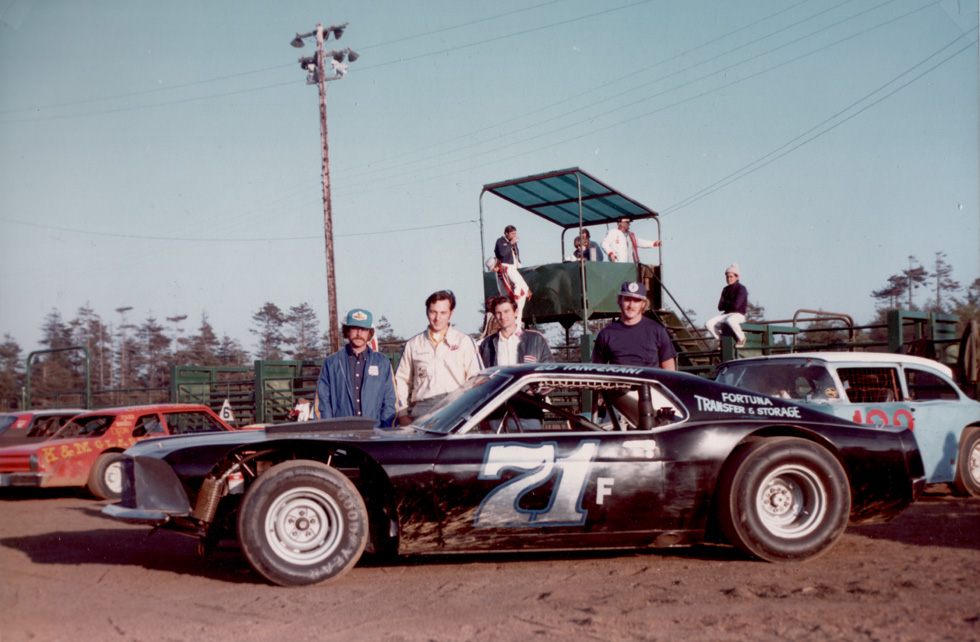
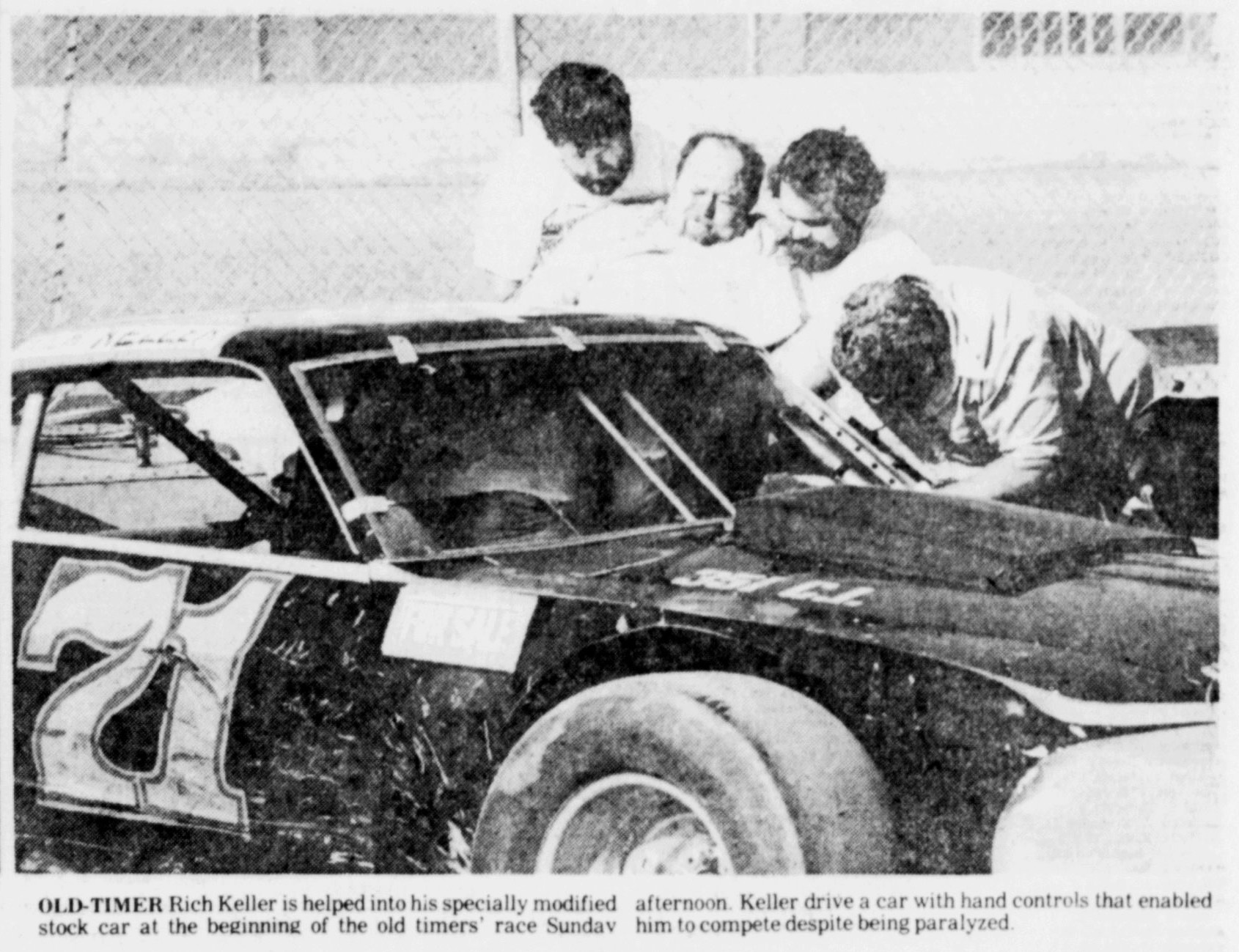
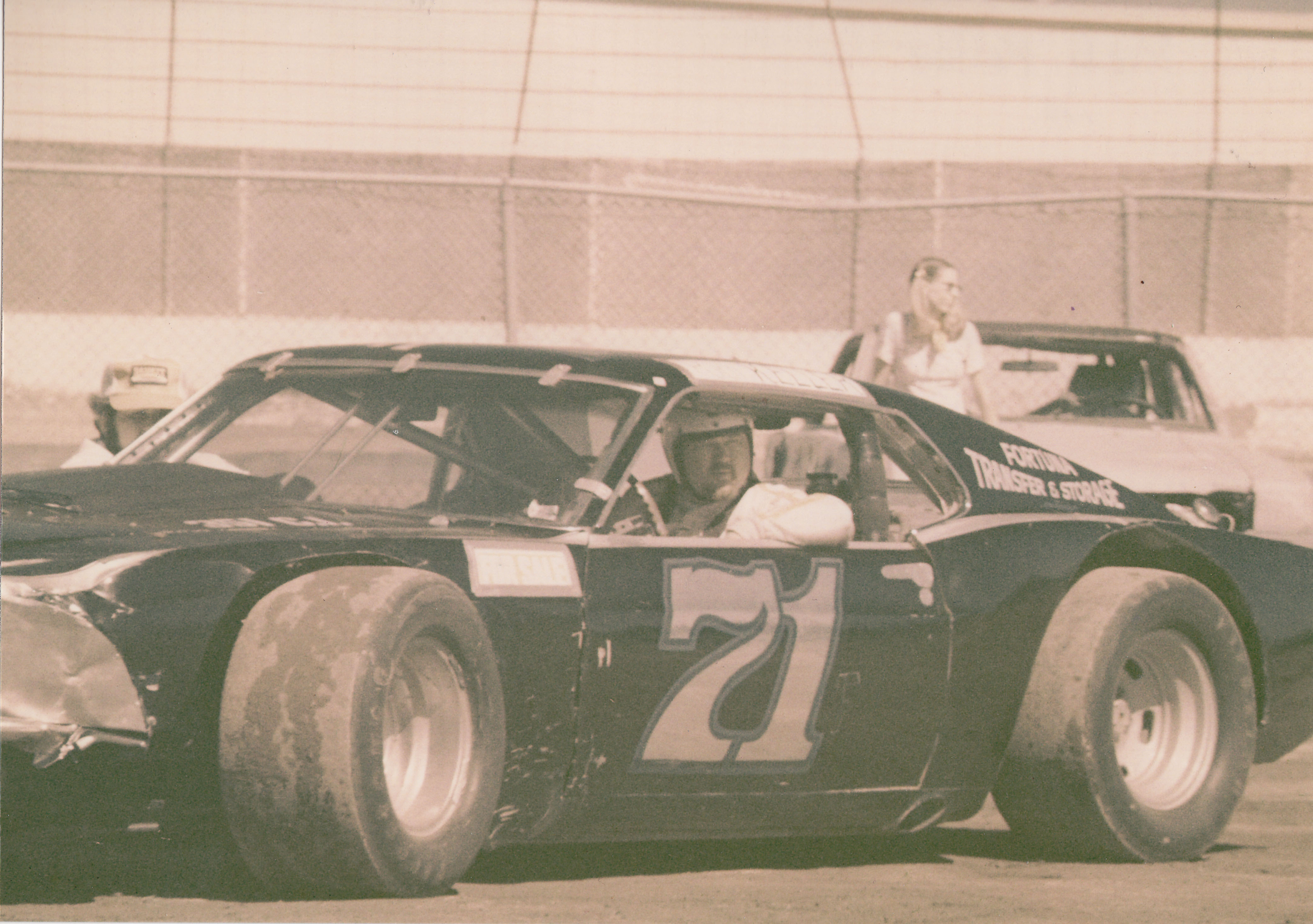
Rich Keller was an early star at Redwood Acres under the SRRA. “He went to Shasta College and started racing with all of us, he was in the mix of it. He served in Vietnam after racing, then came back and was in the Army Reserves, but got a job teaching at Shasta High School teaching Auto Shop, and he was a mechanic all the way through. He was coming back to an Army Reserve meeting over here and something broke on his hopped-up ’52 Chevy pickup; he rolled it and was a paraplegic.”

“In the mid-70s there was a ’69 or ’70 Mustang that I was racing that I built from scratch. That was the last car I had and I just couldn’t get that thing to handle. I had it parked, I hadn’t been racing then. And when they had an Oldtimer’s Race at Redwood Acres, I took it into Rudy Zeck’s shop in Eureka, and we worked on it for about three weeks. Rudy and I and another guy in Eureka got some of his hand controls, and Rich raced with us. He had a hand throttle, then we had to put a brodie knob on the steering wheel, so he could steer it with one hand. Changed the brakes and a hand throw on the clutch. Rich always remembered that, it was the biggest thrill.”

Rich Keller in the modified Mustang

RIVALS AND RESPECT

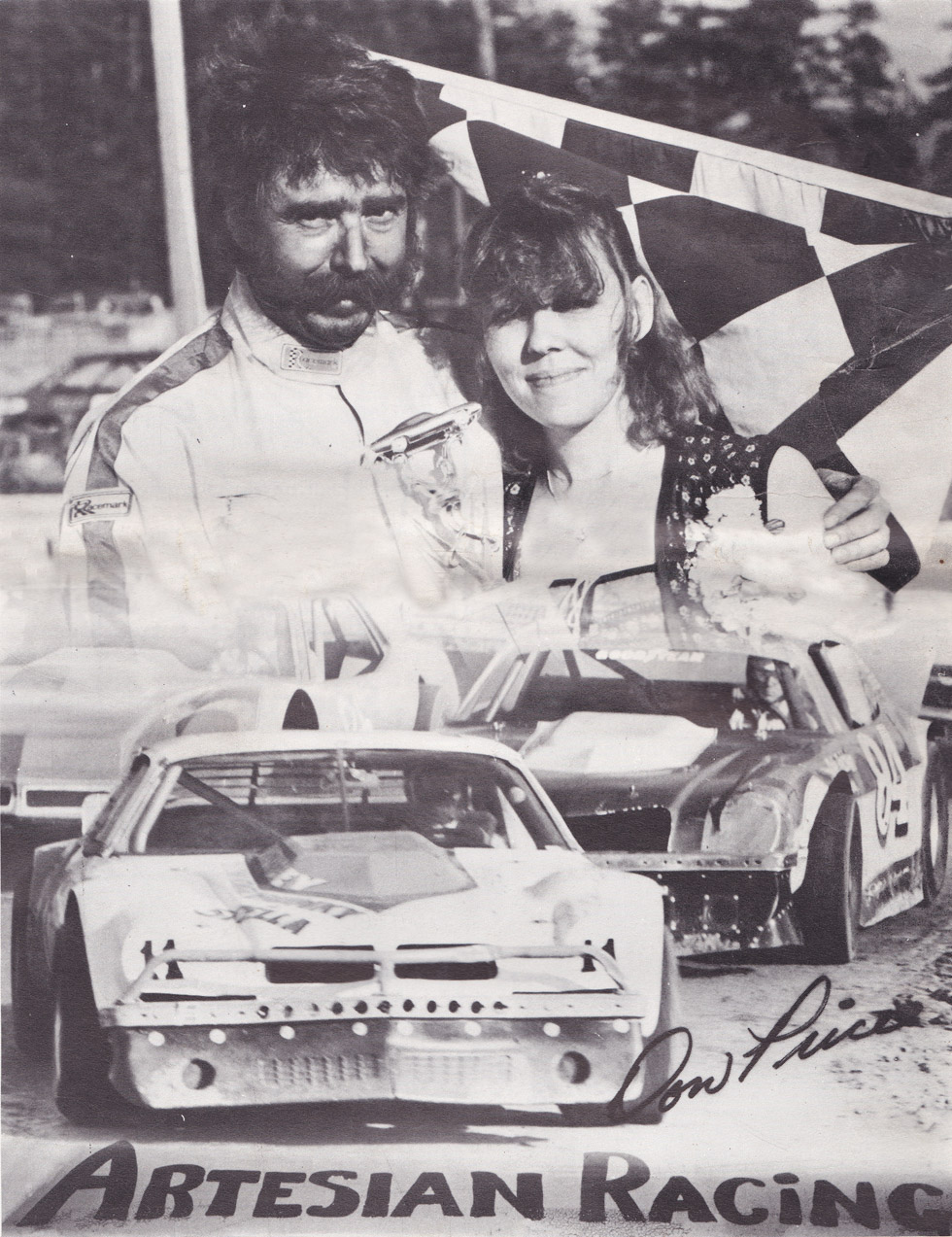
“I think Don Price and I got into it once. So Don kept screwing with me at every race, and I told him ‘Don, I didn’t like how you were racing me’ and I was yelling and we shined each other on but in my mind if he ever messed with me off the track I was going to plant one on him. So we went to Rich Keller’s bachelor party at Vista Del Mar (a sponser of Price) down there by the wharf, and I went to the bathroom and soon as I came out he challenged me and I planted one on him. He was up to no good, he’d been drinking, I’d been drinking I guess,” (Don’s side is he told Ed he was the worst driver out there, Ed popped him, and Don was proud because he still held onto his drink – see his previous article). Ed says Don had a ‘tiger in his tank’ after he fell against he jukebox, others jumped in, and Ed told the heads of the party it was best he left and bowed out.”

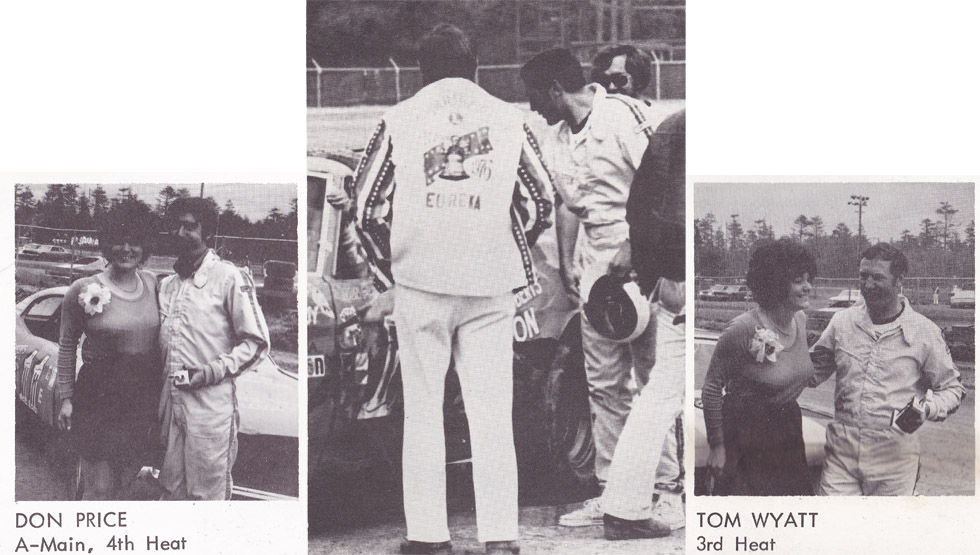
Ed says now, “You have to admire him and I do. Because he’s an individualist. He can make it with nothing and make something happen. And as fate would have it, the next week we were both in the Fast Heat at Redwood Acres, Don on the inside me on the outside. My guys said he’s going to want to retaliate, and they dropped the green and I was able to pull him high side, and everyone knew what happened the week before, and he didn’t touch me, he was a man about it. It was racin’. I never did have much to do with him, but I respect him for that. Very much so.”

It’s funny how often in all forms of racing an incident happens one week and the two drivers are right back starting next to each other the next week.

“Rudy Zeck was good. He was, uh, conservative, you might say, because he was on a budget. Wild Bill O’Neill; he always drove like he had a loose steering wheel. I liked them all. Walker, Pries, Bob Britt, Denny Meyers, those were all the first guys out of the hat. We fought, we argued, but at the end of the day we were fine. It was fun, all good guys.”

Ed Tanferani, 2014

Great thanks to Ed Tanferani for his fine hospitality and opening up his racing collection and sharing all the great stories.

HAROLD HARDESTY

Medford 9-2013 202

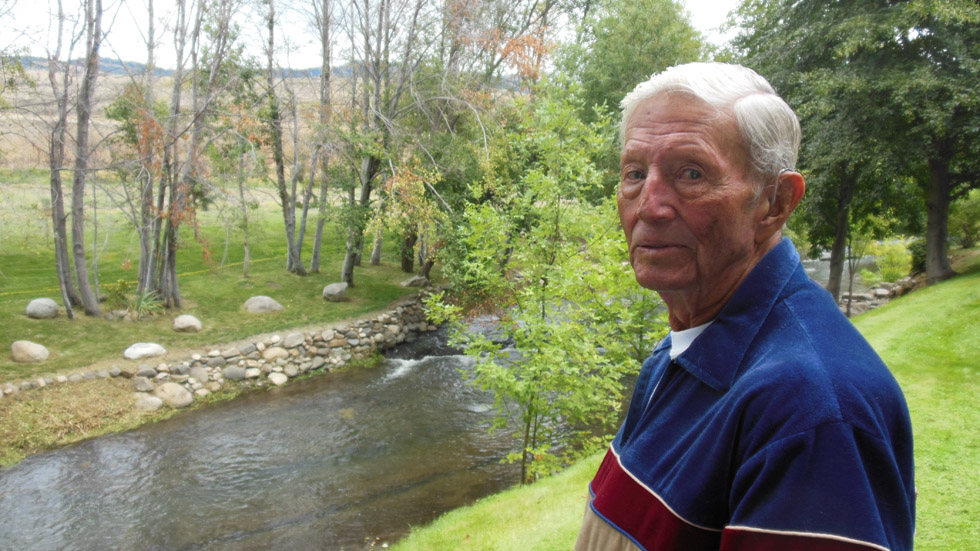
Born in Idaho and raised in Washington state before coming to Ashland, Oregon in 1960 where he lives today,  Harold Hardesty made his money in excavation and construction, and his pastoral estate on Bear Creek is home to the evidence of his passion; collector cars and the photos and trophies from his hall of fame stock car driving career.

In 1956 Harold drove in nine NASCAR Grand National races with six Top 10 finishes (inlcuding a 7th at Redwood Acres), only once finishing worst than he qualified due to a bearing failure in Portland, the only race he was not still running in at the end.  In 1957 he raced in four GN races but was plagued by car trouble and a crash, and only finished running in Eureka.  In sixteen Grand National races he had eight Top Tens which included five Top Five finishes.

In twenty two Pacific Coast / Winston West races from 1966 to 1973 he had sixteen Top Tens, inlcuding seven Top Five finishes and two wins; one coming at Redwood Acres Raceway in 1968.

A member of the West Coast Stock Car Hall of Fame, Harold by all accounts won hundreds of races around the country, a major factor in his being one of only a handful of west coast drivers, along with Herschel McGriff, that have been elected to the NASCAR Hall of Fame.

Harold owned and operated the track in Medford, and regularly traveled to races all over Oregon, Washington, and California, and was a frequent visitor to Redwood Acres Raceway in Eureka from the 1950s to the 1980s, where his reputation preceded him.

scan00079

“Back in the Hard Top days they’d run about five, six nights a week, so I got to race a lot, and that’s what I really loved,” Harold says.  “Up there in Washington’s Tri-Cities and Walla Walla, Ephrata, etc.  I had a ’34 Ford, purple and white, with a flathead in it.  I run it two years for a guy. But I had a lot of fun racing. I was lucky enough to be fairly good at it.   Never made any money,”  he says, laughing.

scan00077“You can see in an early photo I have a scar on my forehead” (shown in photo at right).  “In the 50s I was partying pretty hard and hit my head on the windshield of a 1940 Packard convertible.  Me and another guy was drag racing in Kennewick, and there was a passenger train stopped across the track and I went clear underneath it, clear to the windshield.  The other two guys got out and ran.  They only had two officers in Kenewick at any one time, and they took me to the hospital and the police chief called and said ‘Where are you at?’ and they said ‘We’re bringing Hardesty home’ and he said ‘Bring that sonofabitch down and throw him in jail!'”

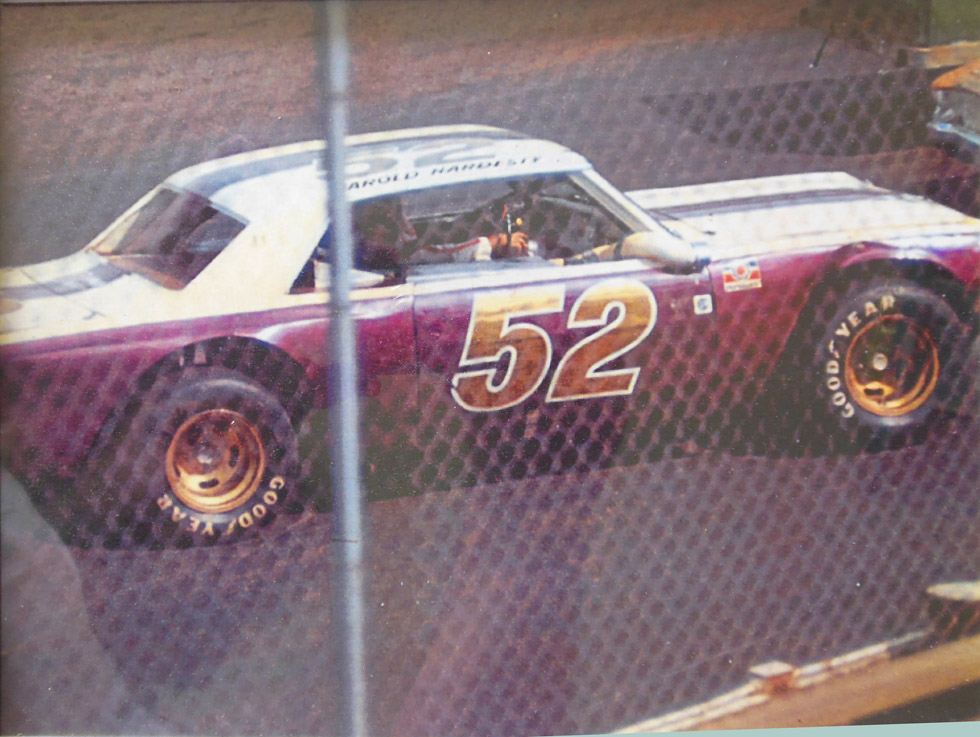
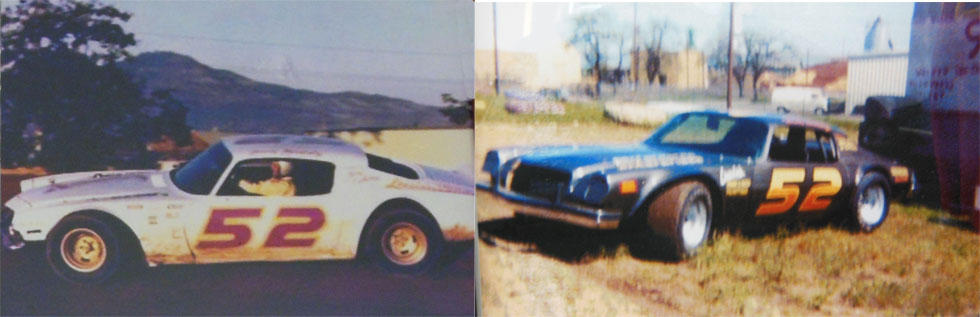
“The #52 Hudson, it was the second car after the ’34 Ford.  Everybody laughed about it, and I went out and won damn near every race with it.  I’d go from last to first to last to first again in one lap.  It had a super six cylinder Hudson engine;  270 cubic inches was the limit.  I won a lot of races, so they made us go back to 150 cubic inch and we put that pacemaker engine in and it was faster, made the RPMs quicker.”

“I’m not a mechanic, I can’t even change spark plugs hardly.   Wally Cannon who used to own my cars’ engines, he says ‘You let me work on them.  You can tear them up, go out, over wind them, do whatever you want to do, let me work on them.’  So I did”  he says,  laughing.

Harold Hardesty's first NASCAR, a '56 Chevy he first drove at the Portland Speedway May 26, 1956, finishing 6th (with car owner on right)

Harold Hardesty’s first NASCAR, a ’56 Chevy he drove at the Portland Speedway May 26, 1956, finishing 6th (with car owner on right)

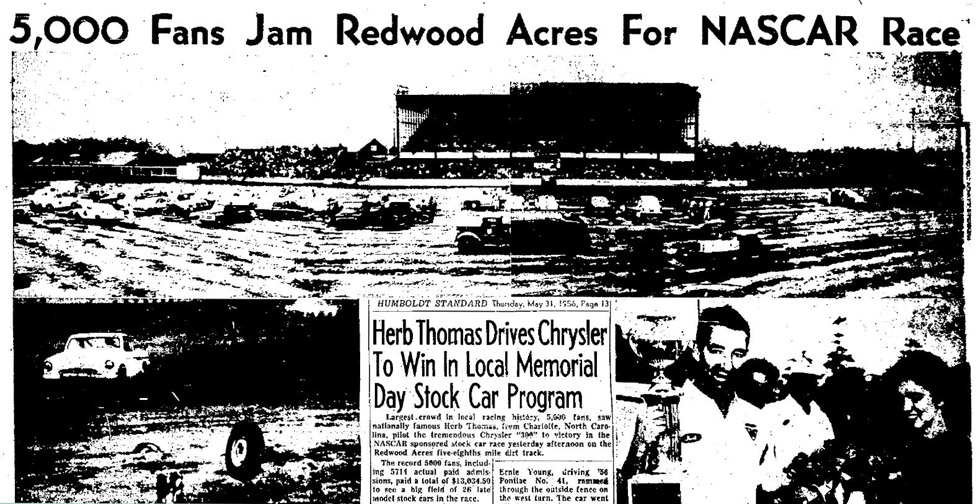
Herb Thomas brings his Chrysler 300 to Redwood Acres (Humboldt Standard May 29 1956)

Herb Thomas brings his Chrysler 300 to Redwood Acres (Humboldt Standard May 29 1956)

1956 NASCAR COMES TO REDWOOD ACRES

Harold drove in nine NASCAR Grand National races in 1956, including the Memorial Day weekend race at Redwood Acres in Eureka.  5,000 fans, the largest local racing crowd to that time, watched 26 drivers compete in the 125 lap 100 mile race on the 5/8 “Big Track” (which ran outside the normal 3/8) for a purse of $4600.  The field included two drivers from Eureka; Bob Havemann and Sam Steers.  1953 Champion and national point leader at the time, Herb Thomas of Charlotte, brought his Chrysler “300” to the race.

Eureka in the 1950s was known for its rough area of  town – 2nd Street – a notorious section of bars near the bay frequented by burly loggers looking to let off steam.

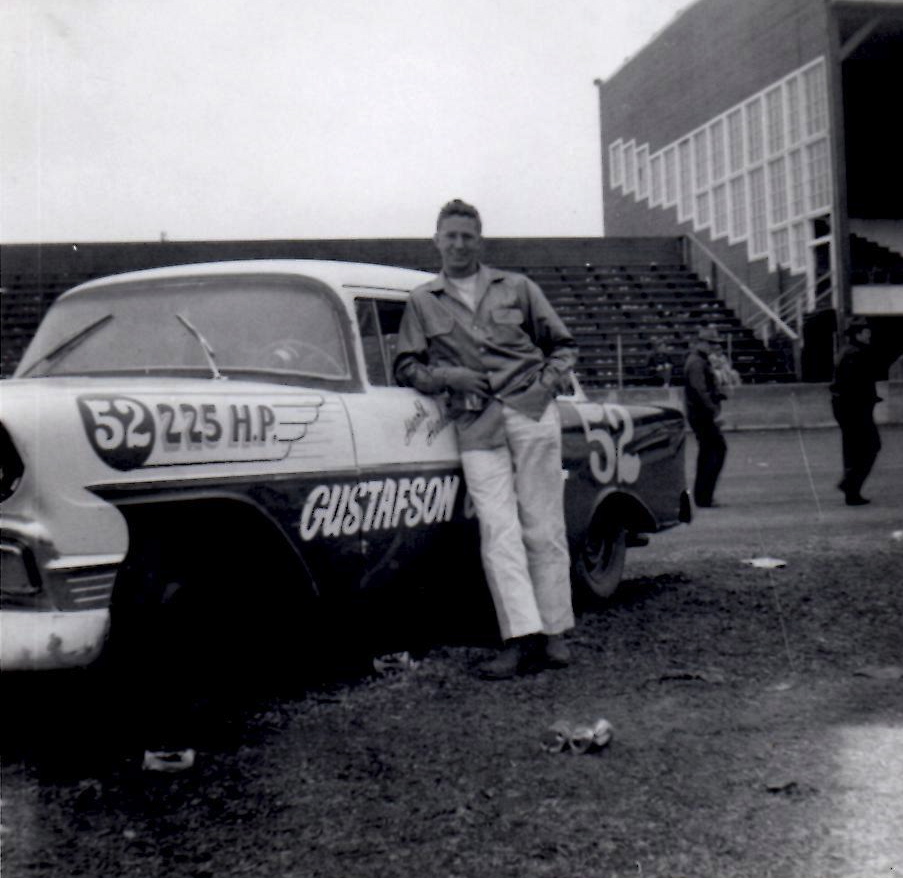
“My first race at Redwood Acres in ’56 was when Gustafson Chevrolet sponsored me.  I was working in their shop in Eureka, and I said ‘What do we do around here for fun?’  They said ‘Go into town but don’t go past 3rd Street.  Those god-damned loggers are there.”

“So Harold Beal and Bill Hyde arrive; two drivers from Portland, great big cussin’ guys – Beal used to break steering wheels in his hands in his race car.  So they get here and ask ‘Where’s the party?’, and we said ‘Right down there on 1st Street!’    They went down there and I guess they had a helluva brawl!”, Harold says now laughing.

Harold finished 7th, with Herb Thomas winning after early leader Clyde “Bad Boy” Palmer from San Jose dropped out due to engine trouble.  As for the 2nd Street brawlers; Beal would finish 19th and Hyde 20th, both perhaps a little worse for the wear from their nighttime excursion into roughneck 1950s-era Old Town, Eureka.

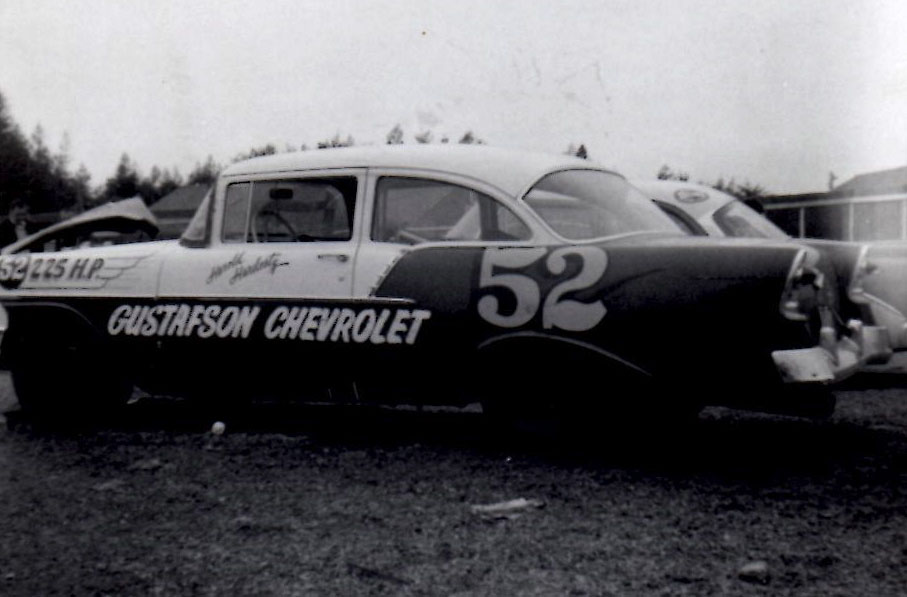
1956 3img220Rare photos of Harold and his car (above and below) in the pits at Redwood Acres in 1956 provided by Leon Warmuth of Leon’s Car Care of Eureka.  Leon remembers, “I worked in the parts department of Gustafson Chevrolet and I was recruited as a tire changer for him and a mechanic named Phil Derringer for his mechanical ability.  The big track was very dusty with potholes that broke two wheels on Harold’s car.”  (photos courtesy of Leon Warmuth)

img239

On June 3, 1956, reigning NASCAR champ Herb Thomas joins Harold after they battled in a 200 lap race at the 1/2 dirt track at the Merced Fairgrounds.  "I was changing the gears before the race so didn't have time to put on a shirt before getting in the car."1956 MERCED FAIRGROUNDS – BATTLING WITH THE CHAMP

Next after the race at Redwood Acres, on June 3, 1956 at the Merced Fairgrounds, reigning NASCAR champion driver Herb Thomas (above, left) joined young Harold (right, in tank top) in the pits after doing battle in a 200 lap race at the 1/2 mile dirt track, Thomas winning and Harold finishing 2nd.

It was a big honor for Harold that the champ would come over to him and pose with the winner’s trophy, and it remains one of his favorite moments in racing.  “I was changing the gears before the race so didn’t have time to put on a shirt before getting in the car.”

1956 SOUTHERN 500

The biggest drive of Harold’s career was at the 1956 Southern 500 in Darlington, South Carolina.  Or to be more accurate, his biggest drive was to, at, and back from, the Southern 500 in Darlington.

“Hurst shifters wanted to take a car to Darlington.  Beryl Jackson, who had a lumber business up there, had three 88 Oldsmobiles.  Herschel McGriff and Johnny Kieper drove for him, other Cup guys. He let me take this car.  We raced in Portland on Sunday afternoon, me and one pit man, two gas cans, three capped tires, and a tool box.  After the race we changed the rear end, drove it to Darlington (nearly 3,000 miles).  They put a new motor in it, because the motor had a Eldorado carburetor on it and it was illegal, so Oldsmobile put the new motor in it, and we did all this in a week.”

“Herb Thomas had come out and drove my car a couple of times after I had outrun him.  We got to be pretty good friends, and he told me how to time in at Darlington.  He said ‘Don’t try to go out there and break any track records, just get in one lane, one lane down from the top, don’t cross the yellow lines, just be consistent.’  And I passed my driver’s test.  I then qualified 39th and then we went out and we run the race.  I had one pit man.  I had a flat tire before the first pit stop.  And I hollered at my pit guy, I said ‘What happened?  Did I wear it out?’  and he said ‘Yeah.’   So I run pretty slow until the next pit stop.  And I come in and there’s this tire sittin’ there against the fence with a piece of chrome sticking out of it.  I said ‘I thought you said I blew it out’,  so I went back out and ran faster, ran pretty good.  I finished 18th out of 70 cars.  All those other drivers were driving factory cars.   Bill Amick was from Portland.  He was sittin up near the pole, and I didn’t even know him.  Anyway, he finished 7th.  And I bought that car, made a dirt track car out of it.”

Harold finished just behind Lee Petty and ahead of big names like Elmo Langley, Tiny Lund, Buck Baker, Parnelli Jones and Fireball Roberts.

“I was the first Oldsmobile to finish so I got extra money, I think I made $339 or so.  Drove the car out there, drove it home.  Drove it to Syracuse where they had a half mile dirt track, and I was running 2nd in the race, about 15 or 20 laps in and it started raining.  It rained out and I never got to finish the race. I think one of the top drivers was leading, might even have been Petty.  Petty was there.”

Not counting any side races, all told the 500 race and trip to and from Darlington put over 6,000 miles on the car that week.

scan00078

Late 60s Winston West Ford

scan00080

1968 & 1969 RIVERSIDE

In 1968 Harold raced a Ford for Bob Bristol in the Pacific Coast (Winston West) race at Riverside, but went out on lap 67 due to a crash.  He returned to Riverside in 1969, qualifying 29th in a field of 44 and finished 10th.

“I was the only one that passed Richard Petty, I passed him twice.  Passed him into turn 6, but he got back around me down the straightaway.  I couldn’t run with his car, I was in a two year old car.  I ran it for Bob Bristol for a couple of years.”

1969 Riverside: Pass on Petty

1969 Riverside: Pass on Petty

1968 Eureka Times Standard September 13, 1968 x4001968 PACIFIC COAST LATE MODEL WIN AT REDWOOD ACRES

“I knew Bob Britt (of Britt Lumber and 1969 RAR track champ)”, Harold recalls.  “I got to know him pretty good.  I don’t think I ever got to run the 101 track (that Bob built between Arcata/Eureka).   I won a lot of races there at Redwood Acres in Eureka, though.”

On Friday, September 13, 1968, Harold came down to race in the Pacific Coast Late Model Series at Redwood Acres.   Scotty Cain of Fresno, the eventual champ, won the A-Trophy dash with Ray Elder 2nd.  Ed Tanferani of Fortuna won the six-lap ‘early-model’ trophy dash, while Jim England won the late-model heat with Bob Britt of Eureka finishing 2nd. Unfortunately the rains had arrived all week and a low turnout of  11 Late Model cars resulted in the scheduled 100 lap distance being shortened to 50 laps.  Harold ended up borrowing local driver Ed Tanferani’s car for the Main Event.  The local paper reported that Harold took the lead on lap 35, taking the checkered flag.

The field of 11 cars was the fewest in Pacific Coast late model history.  Facts on the race are a bit vague, with only 7 of the 11 finishers documented.  They included Cliff Garner finishing 2nd, Ray Elder 3rd, and Bob Britt 4th.  Not mentioned in the records is Herschel McGriff, who Harold says was in the field as well.  It is reported that Harold’s qualifying fast time of 21.22 was a new track record, which considering the conditions, seems a minor miracle.

“I borrowed Ed Tanferani’s Ford”, Harold recalls.   “They let me drive it because they didn’t have enough cars to start the race.  They let me start in the back.  They told me run a few laps then pull in, because they needed more cars.  It was rainin’ and sort of slick, they were trying to get the race off.  So, I got to racin’ with Herschel and I won it.  And NASCAR came over and gave me an ass chewin like you never seen!  I won a NASCAR race in a ’58 Ford.  Oh, they were pissed.  They held up my money for a year.  And they wouldn’t give me credit for that race, and they give it to me a year later.  But I got paid!  Anyhow, that was sort of one of those things.”

Part of the lore of this strange race is that when the race was red flagged due to rain and the promoters did not offer fans a refund, “several local Indians” tried to burn down the grandstand in protest.  Another story was that they were just trying to keep warm and started a fire nearby.

Harold also brought his parents down to Eureka to see the race and they were able to celebrate the win with him.  “My parents had never been to Mexico and I had the motor home, so I picked them up in Pasco, Washington.  I took them down to Eureka and watched the race when I won.  My mother kept that trophy which is why it didn’t burn up in that fire.” [Not the fire in the grandstand during the race- there was a fire a few years ago in one of his offices which resulted in the loss of many of his trophies won over the years.]

The swapping of cars becomes confusing when figuring out the night.  The advertisement in the local paper shows Harold was bringing the #18 Holman Moody Ford, a Grand National car like the others that ran in the Pacific Coast series.  But he borrowed Ed Tanferani’s local car that Ed had raced earlier in the night, winning the main event in it.  Yet the winner’s photo that clearly shows Harold with his parents with the trophy appears to be taken in front of his #52 short track car with mud on the tires.  Ed says now he believes Harold’s #52 car might have broke (after qualifying on pole?) and that is why it was in the photo.  Either way, Harold won perhaps one of the strangest races in the history of Redwood Acres.

One thing is for sure, the show Harold put on that night made a lasting impact on those who witnessed it and has become one of the most memorable moments in the history of the track.  While Redwood Acres was normally a dry slick dirt track and cars used asphalt tires, when the rains came Harold got a chance to introduce the local drivers to some new kind of racing.

In his book Dirt Trackin’ At The Acres, Tom Dilling wrote-

Remember Harold Hardesty with Ed Tanferani’s Ford in the mud?  Harold would slam that thing completely sideways at about the flagstand, never take his foot out of it, and flat clean the turn – then do the same on the back chute.  He did this lap after lap.  Mr. Hardesty gave a little demonstration that night on how to play in the mud!

Long time Redwood Acres driver and mechanic Casey Dungan remembers:
“Hardesty was sliding around backed into the middle of the straight at the flagstand and everyone thought he had spun out, nobody knew what he was doing.  So everybody thought we better learn how to do that.”

On dirt track racing, Harold says-
“Herschel McGriff and I used to kid about this.  He was super on the road courses.  Him and I was just about equal on asphalt.  But he couldn’t catch me on dirt.  Dirt seemed to be my specialty.  On the slick tracks, I could get crossways and in two laps I could figure it out.  That’s when I won that race in Tanferani’s car, NASCAR just about had a fit.”

Howard sees dirt tracking on mud as the great equalizer.  “On the wet and slick, power didn’t mean much.”

In the pits after 1968 Pacific Coast Late Model win at Redwood Acres

Harold Hardesty (in gold jacket) celebrates in the pits with his crew and parents after the 1968 Pacific Coast Late Model win at Redwood Acres

Medford 9-2013 229

Medford 9-2013 1941972 REDWOOD ACRES OPEN COMP RACE

In 1972 Harold won the International Drivers Challenge series which took place at several tracks in the Washington and Oregon pacific northwest.

In October the Six Rivers Racing Association open finale at Redwood Acres saw several drivers dominate from the Medford area.  Markey James won a 25-lap “Race of Champions” between association titleholders from different areas, over a field that included local racers Ray Luzzi and Jim Walker, and Pappy Boyd from Anderson.  Tom Wyatt of Medford drove the car of Eureka’s Clyde Carlilleto to win the 75-lap B Main.  And Harold Hardesty held off Bill Schmitt of Redding and Ray Luzzi to win the 100-lap main event.

1970s Hardesty Dirt CarEVEL KNIEVEL

Harold operated the Medford track for a period of time in the late 60s/early 70s, and one of his promoting adventures at that track involved the most famous daredevil of all time.

evel knievel“I met Evel Knievel in Spokane Washington way back in the 50s.  He’s from Butte Montana right close there.  Then I hadn’t seen him in a while and he was doing a jump in Yakima where I was at a race.  He missed his jump; he missed more than he made.   I won the race.  He came limping over and told me ‘I hear you own the Medford Speedway.  I’ll make a jump for you’.   So he came in on a big limo.  He had to build a track in the infield.  He jumped 12 buses or so.  You could hear a pin drop in that crowd.  He made that one.”

“He was quite the character.  We went out drinking the night before.  Every time we went to a bar someone would call out ‘Is Evel Knievel in the crowd?’ and he’d say ‘Yeah!’ and he’d go to the phone.   And I couldn’t figure out where in the hell they were finding out where he was.   He finally told me he’d hired four girls to page all the bars and ask if Evel Knievel was there.  He was quite a promoter.”

“He got in some sort of jam down in Riverside.  He got thrown in jail for something.  Then for all the inmates that got out for daytime shifts he was renting limousines to pick them up and drive them around and the judge found out about it and he really got on his ass.”

Camaros

AMAZING HIMSELF AT MEDFORD

“One thing happened and I sort of amazed myself”, Harold says.   “You know I won a lot of races there at Medford.  I owned the track, late 60s, early 70s.   They always complained about me; that I was grading the dirt track to suit me.  I was sitting in the grandstands because I was letting my step son run the car.  And I’d grade it and get it all ready.  Sometimes I’d go race somewhere else.”

“One night I was sitting in the announcer’s booth at Medford, and the guy from Grants Pass set a track record, and I had the track record.  I was sitting up in the booth and everyone was yelling that I should have the chance to beat him.  But there was a guy, Carl Wolfe, that just built a Dodge, only it’s second race, it was the only Dodge out there.  It was in the B-Main, so I walked down out of the grand stand and got in that Dodge.  They give me one lap to warm up, and I reset track record.  So he come back out and broke it again.  So I went out and broke it again.  I broke it three times in one night and ended up with the track record that stood for a long time, in a car I had never set in the seat.  I think that was the most amazing thing I’ve ever done.  I don’t know what it was…. I could get in strange cars.”

“In fact in the 70s people would call me from Washington- Seattle, Spokane, Wananchi – and want me to drive their car.  At four o’clock in the morning I’d get up and get on a plane, fly to Portland, fly to the race track and I’d be there before ten o’clock.  I did that for about two or three years.  So I was awful lucky about getting into strange cars.  I did well enough to have them call me up and drive their cars, I don’t know if I won them all, but I won quite a few of them.   And I enjoyed doing that.”

“Every car is different.  I could get into a strange car and get the feel within a couple of laps.”

1981 North Coast Dirt Track Classic results from the Stock Report program (left) and dirt car at Harold's shop from that era (right).

1981 North Coast Dirt Track Classic results from the Stock Report program (left) and short track car at his shop from that era (right).

1981 NCDTC Hardesty

1982 North Coast Dirt Track Classic win at RAR.

1982 North Coast Dirt Track Classic win at RAR.

TECH TEAR-DOWNS and ONE CYLINDER SHORT OF A V8

Along with Hall of Fame recognition, winning so many out of town races can bring other kinds of attention as well.

“When I won in Salem or Roseburg they’d tear you down to determine if you were legal or illegal, and they’d come up with the phoniest damn things.  I got tore down quite a bit.”

“Then these guys built me a Chevrolet,  a ’60-something.  I went to Klamath Falls, a 1/4 mile asphalt, I passed Ray Elder and Jack McCoy on the outside in practice, they come over and measure my car, it was a quarter or half inch short on the driver’s side and they told me they wouldn’t let me run if I didn’t change it.   I’m not a mechanic.  So we loaded the car up and me and my partner had an airplane we flew to British Columbia and raced it out of state,” he says laughing.

“We went down to Anderson when it was still a dirt track.  I took my car out there and I was playin’.  I had fast time, and somebody broke my time, and they let me go out and try again.  I broke a timing chain, bent two valves, so I called Wally Cannon (the You Drive It I Fix It mechanic), and we got it started.  One cylinder was clear dead, one had a little bit of compression.  It was a pretty good pay race.  I could get in the lead, but if they had a yellow flag about four cars could get by me on the restart before I could get my speed up again.  I lost the lead four times that way but we won the race.  But they came over and gave me shit for running on seven cylinders and still out running them.”

RACING ON DIRT IN THE 80’s

“They went to wedge cars and I never went much into those.  But Dane Smith, and his wife, used to follow me.  If I was going to Sacramento, they’d follow me down.  I don’t think he won too many at that time but then he started driving that wedge car, and he was doing good out there.  Dane Smith, Don Harper…Tom Wyatt was pretty popular out there. But they came after me,  when they started doing good.”

Harold and former Redwood Acres driver Don Price and a dirt car, one of the "Early Lates",

Harold Hardesty today with former Redwood Acres driver Don Price next to an old dirt car, “One of the Early Lates.”

Medford 9-2013 289

Harold on a break from a day of yard work on his property next to Bear Creek in Ashland.

Harold and some of his collector cars; a Thunderbird in the foreground and a '57 Oldsmobile in the back

Harold and some of his collector cars; a Thunderbird in the foreground and a ’57 Oldsmobile in the back

While he says he never really made any money from racing, Harold’s excavation and construction companies and other business interests “Keep me in beer money”, as he likes to put it.  He still enjoys maintaining the grounds and puttering on his old cars, with several restoration projects in the works.  And he still watches the NASCAR Cup races with keen interest on TV from the bar at his house on Sundays.

Medford 9-2013 192Harold has hosted many large parties over the years at his Ashland estate, with different car clubs passing through, often having their classic cars photographed in front of the vintage gas station he moved from main street in Ashland.  He restored the gas station and outfitted it with Gilmore signs and memorabilia as a nod to the company’s connection with racing in the early days.  “Several car clubs have stopped here.  I’ve had 225 Model As on the property.  Cruise of Oregon would stop here and we’d feed them hamburgers.”  Neighbor and former character actor Jack Elam was a frequent visitor to poker games at the house over the years.  “I’ve had a great life, and met a lot of interesting people” he says.

“There weren’t too many race tracks around where they didn’t know me…. a little bit….so that makes me feel pretty good.  I can’t say too much about it; I was just too damn lucky.”

Medford 9-2013 200It was an honor to meet Harold and I want to thank him for his generosity in opening his home and museum of collector cars and race memorabilia.  He definitely strikes you as a guy who has been around the world a time or two, and has some great stories he’s collected along the way, and enjoys telling them.  And he’s one of the very finest pure racing talents ever seen at tracks out west.

DANE SMITH

1970s In Car

Oregon’s Dane Smith is at the top of an elite class of Pacific Northwest drivers who began racing in the golden era of the 70s.  Regularly traveling to races from Washington to California and Nevada, he made a name for himself as the man to beat when he came to your track during those Saturday night shootouts.  When Dane was in town, the local boys would have a battle.

Dane began racing 42 years ago, a year after opening Mr. Smith’s Bar & Grill in his hometown of Medford in 1971, and he’s not done yet.  Lately he’s been inspired to get back out there, as he says, “to see if I can still do it.”

Medford High Sports

EARLY ATHLETIC CAREER

A stand out basketball player and All-State in football at Medford High where a coach referred to him as “a great leader” and teammates elected him ‘Team Savage’, Dane went on to play starting linebacker at the University of Oregon before injury ended his career.  (The back up LB at Oregon at that time was Gunther Cunningham, who would go on to be defensive coordinator for the Raiders and head coach of the Kansas City Chiefs.  Another teammate was eventual Vikings WR Ahmad Rashad.)

“My career ended with a head injury.  I busted a helmet, had a couple of bad seizures, so it ended before I wanted it to.  I had letters from the Detroit Lions, Cincinnati Bengals, and the Green Bay Packers, that were looking at me.  So I went from thinking I’d play football some day, maybe professional – don’t know if I’d had been good enough – to not being able to play, and not by my choice.”

Mirroring his racing rival, Ferndale’s Jimmy Walker, Dane also went into stock car racing after college football, searching for a fix for the that competitive desire.   Dane was not a car guy per se, but he liked the driving and liked to compete. “So I stumbled into racing and like Jimmy Walker, that competition thing is hard to get out of your blood.”

Dane Smith #55 LB for Oregon gets in on a tackle of Stanford's future Heisman Trophy winning QB Jim Plunkett in September 1969 loss to Stanford.

#55 Dane Smith LB for Oregon gets in on a tackle of Stanford’s future Heisman Trophy winning QB Jim Plunkett in a September 1969 loss at Stanford.

Dane's first car: a 1957 Chevy #86- a reference to "getting 86'd from the bar", specifically Dane's Mr. Smith's Bar & Grill

Dane’s first car: a 1957 Chevy #86

“The ’57 Chevy, that was my first race car”, Dane says.  “That’s the one I paid $600 for, ‘race ready’.  I’ll never forget- I got ready to race and the battery was dead, and I think I had to pay $33 for a battery and I didn’t know where I was going to get the money.  Now a helmet costs more than that car cost.”  The car number – #86 – was a sly reference to his bar & grill; “as in ‘getting eighty-sixed’ from the bar”, he says.

Dane's second car:  a '64 Chevelle circa '72 or '73 at Medford Raceway

Dane’s second car: a ’64 Chevelle circa, ’72 or ’73 at Medford Raceway

#86 Chevelle with son Tommy and trophy won in Chico, early 70s

#86 Chevelle with son Tommy and trophy won in Chico, early 70s

1977 race program ad for Mr. Smith's Bar & Grill

1977 race program ad for Mr. Smith’s Bar & Grill

A 300 bowler, a 3 handicap golfer at Rogue Valley Country Club, who in 1985 while the Medford High golf coach hit a double eagle during a tournament at Oak Knoll – a trait handed down to his son, Tom, who at age 13 hit a double eagle at Rogue Valley four years earlier.  In the town’s centennial year of 1985, Dane was inducted into the Medford Sports Hall of Fame.

So Dane Smith seemed the perfect person to ask:
Are race car drivers athletes?

“Yeah, I really think so”, he says.  “I play golf also, and it’s the same question; ‘Are golfers athletes?’  It’s different athletically, obviously it doesn’t take great strength.  Women are becoming race car drivers.  Hand-eye coordination is really important in racing, and that’s part of being an athlete.   And it’s physically taxing- probably mentally more than physically.”

Dane's 3rd car - the Nova - he raced at Medford, Anderson, and Redwood Acres.

Dane’s third car – the Nova – that he raced at Medford, Anderson, and Redwood Acres.

1977 Medford:  #86 Dane Smith locked up bumpers with Jack Webb during the fast heat race as depicted in the Medford Raceway program and the local newspaper (below).

1977 Medford: #86 Dane Smith locks up bumpers with Jack Webb during the fast heat race as depicted in the Medford Raceway program and the local newspaper.

Getting ready to drive the Pete Cartwright owned Camaro at Anderson

Getting ready to drive Pete Cartwright’s #22 Camaro on the asphalt at Anderson

1977 Heidelberg 100 Medford collageIn 1977 Dane won the Heidelberg 100 at Medford.  The previous winners were Jimmy Walker (1973 / 1974), Jack Keck (1975), and Markey James (1976), and all were in the ’77 field of 24 cars.  Dane started on pole and lead all 100 laps, with his Medford rivals Tom Wyatt 2nd, Dave Machado 3rd, and Jim Walker of Ferndale driving Charlie Charlton’s #88 car 4th.  Jack Keck was involved in a crash along the front wall that ended in turn one.  Dane says it was one of his more memorable race victories, because the winner received $1,000 in silver dollars.

Mid 70s Chevy Camaro, the car of choice in the Super Stocks on the short tracks in the late 1970s.

A classic mid 70s era Chevy Camaro, the car of choice in the open tour Super Stocks on the short tracks in the late 1970s.

1978 Medford Muscles Flexed 980REDWOOD ACRES RACEWAY

The Redwood Acres program Stock Report reported the April 23 1978 races as a sort of “Medford Invasion”; with the grid for the A Trophy Dash: Pete Cartwright on on pole, Tom Wyatt on the outside, and Harold Hardesty lining up in the back (top), with the race won by #86 Dane Smith (above).  Pete Cartwright would win the A-Main.

“Redwood Acres was my favorite track”, Dane says today.  “I liked coming down because of the competition.  I liked racing against Jimmy Walker.  He was my favorite guy to race against, because he was clean, he was a gentleman, and he was the best.  We were the two guys to beat; me in Medford, and him in Eureka. Jimmy is a class act.  I raced with a lot of good racers but he was number one in my book.”

“One time after a race at Roseville, a guy came up to him and was saying he was trying to take him out, and Jimmy just smiled at him, and that said it all.   The guy backed off.  I remember at Ukiah in the pits once he had to put a guy down, he had no choice.  You didn’t mess with him; Jimmy was strong.”

1978 at Redwood Acres: A new track record and a backwards victory lap with local rival Jimmy Walker of Ferndale.

1978 at Redwood Acres: A backwards victory lap with local rival Jimmy Walker of Ferndale.  On the back of the photo Dane wrote at the time: “My favorite dirt track”.

At Redwood Acres, the dry slick track could be dusty.

“That was the scariest race.  One day we raced a day race because it had rained out.  Going down the back stretch, going 90, close to 100 mph,  I couldn’t see shit and the guy had wrecked and I just missed him.   Ended up I won the race but it was scary.   I thought we shouldn’t be doing this, you couldn’t see.”

“My favorite one at Eureka: for some reason everyone went on the bottom of the track, and I was on top.  I came from the back.  And it was like I was in a different race.  I was like ‘What are you guys doin’?  You’re all down there’, and I just took off around the top.   I don’t know why anyone didn’t jump up and go follow me.  I don’t know if it was a comfort thing.  I just found a groove up there, a cushion.  It was pretty slick, you had to tip toe, around the dry slick.”

The track was paved in 1988.  With a nostalgic tone, Dane says, “I wish they would add dirt to it now so I could bring my modified down there and race it.”

#86 Dane Smith racing against #25 Dan Press at Redwood Acres Raceway

#86 Dane Smith racing against #25 Dan Press at Redwood Acres Raceway

Evergreen 1979: the lineup of cars in the "105 mph Club" (left) and the patch given to the drivers (right)

Evergreen 1979: the lineup of cars in the “105 mph Club” (left) and the patch given to the drivers (right)

105 MPH CLUB

The “105 mph Club” consisted of six drivers who broke the track record July 1979 during Speedweek at Evergreen Speedway in Monroe, Washington.  The drivers included Ron Easau, Jimmy Insolo, Mike Miller, and Dane Smith.

“We pinched a transmission line, we were running an automatic back then” Dane says.  “We had the transmission out of the car before the race when we were heading up there.  Somehow the line got under the frame or some cross member, and when we rolled it off the trailer it pinched the line and ended up losing it some time during the race.  Mike Miller won, he was big in ASA back east.  He ran an Oldsmobile or something, it almost looked like a station wagon, it was really different.  Those guys were a little more advanced than we were.”

The Real Estaters car, early 80s

The Real Estaters car, early 80s

May 1982 win at Medford

May 1982 win at Medford

Chico 1982: Dane on the high side in turn four (top left) and with the winner's trophy (below).

Chico 1982: Dane on the high side in turn four (above left) and with the winner’s trophy (below).

1982 R Car Chico Trophy

The distinctive "R" car - originally named for a real estate sponsor and unique for appearing in programs signified with a letter rather than a number

The distinctive “R” car – originally named for a real estate sponsor and unique for appearing in programs signified with a letter rather than a number

1984 Silver Cup Trophy in Dane's shop.

1984 Silver Cup Trophy in Dane’s shop.

SILVER CUP RACE OF CHAMPIONS

In the 80s Dane had great success winning the Silver Cup Race of Champions at the Silver Dollar Speedway in Chico, California.  He won the Silver Dollar Cup four out of five years, with future dirt legend Scott Bloomquist winning it the year Dane’s car broke.  “I didn’t know who Scott was, he was only 18 years old back then, and he told me that there weren’t enough races out here and he was going to move back east, and I thought ‘yeah right’,  just some kid spouting off.  Next thing you know he’s Scott Bloomquist, winningest driver in history of racing back there.”

Did Dane ever think of going back east and racing dirt?  “No, I never.  I mean, I’d love to, I had a chance to go to Australia and race in the winter.  But between owning my sports bar, being married, I couldn’t just pick up and go, so I had to pass.”

Due to traveling to a variety of tracks from Oregon to California, Dane had one track championship, that was in Medford in 1984.  “That was the only track championship I ever had, I never ran for points.  I always tried to race where the good races were.”

Building the Bullitt

Building the Bullitt

1985 ad in Racing Wheels

1985 ad in Racing Wheels

THE BULLITT CAR aka “THE I-5 BANDIT”

The 1984 “Bullitt” chassis car by Vern Gilmore with Dane behind the wheel was track record holder at Medford, Yreka, Eureka, and Chico, with Open Show wins at Chico, Yreka, Eureka, Medford and Skagit.

It was known as the”I-5 Bandit”, in part due to the sponsor, KOBI-TV Channel 5 in Medford, and also because it raced up and down Interstate 5 highway to tracks in Washington, Oregon, California and Nevada, setting fast times and winning races.

1984 July Open Comp Outlaw Showdown Day 1 A Main Winner

1985 July North Coast Dirt Track Classic - Racing Wheels 1 - Clipped 400In July 1985 Dane won the Dirt Classic at Redwood Acres in Eureka.  On Day One he broke the front end going for the lead.  On Day Two he set a new track record, and won the 40 lap feature.

At the Fall Classic at Redwood Acres later that year, Dane held the track record going into the race, set fast time, and led the 30 lap feature wire to wire.

“Vern Gilmore was my crew chief and I think that one year we won 32 out of 36 races or something like that”, Dane says.

When asked what made him so fast on dirt – he quickly answers “I had good cars”, crediting his mechanics. But in 1986 Central Point driver Tom Glover was quoted as saying “Dane Smith could drive a wheel barrow and still win.”

When pushed further, Dane said the seat of your pants feel, the quick reflexes; that skill known as ‘car control’, is just hard to explain.  You either have it or you don’t.

“It’s funny- when I’d watch other cars out on the track, I’d think ‘God, I can’t do that, they’re going so fast!’.  But then I get out there and I’m in the car I can do it somehow”, he says, with some amazement.  So do things slow down when you are in the car?  “Well, it still feels like you are going fast.”

When asked about fellow Medford driver Tom Wyatt’s description of racing as an addiction, Dane totally agrees.  “Probably once you get away you realize how much time, money and work it took for a little bit of fun, and you think…. shit.  And that’s where I’ve been fortunate, most of those guys did all their own work on their cars.  I’ve always had a guy that did the work.  I’m not a mechanic.  I can do anything with a ball; played all the sports, but as far as turning a wrench, I’m worthless.  That’s always been a good thing, that I’ve had good mechanics.”

“Tom Wyatt and I were heated rivals.  We lived two houses apart at the time.  He was a helluva talent.  He built his own cars, and they were great cars.”

The Bullitt car at Fallon, Nevada

The Bullitt car at Fallon, Nevada

FALLON, NEVADA:
LOST IN THE DUST

Dust could be a problem at other tracks, not just at Redwood Acres.  “One time in Nevada – Fallon I think – up in the mountains.  I’m leading and it was so dusty you can’t see the flag man so he moved over to the backstretch.  I was the only guy who knew it because everyone behind me were in the dust and they thought I was jumping the restarts, not knowing they had moved the flag man over on the back stretch.”

Dane Smith in Rick Singler's #4 at at Florida Speedweeks

Dane Smith in Rick Singler’s purple #4 at Florida Speedweeks

VOLUSIA, FLORIDA – SPEEDWEEKS

Dane recalls, “I went back there to Florida and drove a car for Rick Singler, who was from here in Medford.  He asked me to come back there and drive it.  Rick died just this past year.”

“We qualified about middle of the pack, this was Bloomquist, Moyer, and everybody.  We were going around taking the tires they’d take off their cars to use in our race” he says, laughing.  “We were like 37th out of 60 cars.  We qualified pretty good; car was older.  The motor blew up in the heat race, so I didn’t get to run the main.”

“I flew out there, went to Speedweeks, had a great time.    But we were definitely out-classed.  I knew what the guys around here in Medford felt like when they raced against me- I had better equipment.”

Dane Smith in the Butch Jump Oldsmobile at Ukiah

Dane Smith in the Butch Jump Oldsmobile at Ukiah

PAVED TRACK LATE MODELS

Dane drove a number of paved track late model cars for different car owners in the late 80s and 90s, as well as fielding cars of his own.

“I drove for Butch Jump on asphalt, the red #5 Oldsmobile.  Finished 3rd to Jimmy Walker at the 150 at Anderson.  Not sure the year.  Jimmy won it, went wire to wire.  I started 5th or 6th, ended up 3rd. ”

scan00002In 1999 Dane drove the Cross Creek sponsored #9 car.  “I drove that car for Ed Fleury.  We won a Carson City race.”  On the back of the car was painted the useful advice to trailing drivers: Eat Your Veggies.  “That was from Cross Creek Trucking – they hauled produce.  That sure as hell wasn’t my diet”, he says now, laughing.

1999 Redwood Acres Open Tour race

1999 Redwood Acres Open Tour race

2000 in the Redwood Acres pit Area: Dane and wife April

July 2000 in the Redwood Acres pit area: Dane with wife April

2004-6-25 NSCS Fri Fair Nights 1

2004

In 2004 Dane Smith arrived at Redwood Acres as part of the North State Challenge Series tour for the traditional Fair Nights races sporting the ‘Mr. Smith’s’ logo on the hood and his old car number, #86.  [Shown at top in practice and below in the pits after the main event, a little worn out, sitting in his hauler.]

2004-6-25 NSCS Fri Fair Nights 2

North State Challenge Series reporter Peter Moss recalled pointing out to Dane one time in the Redwood Acres pits that back on the wet clay Dane actually drove faster than they all did now that it had been paved- “Dane was very modest, and he said ‘Aw, well, they must’ve made the track longer when they paved it.’ ”

“I never won much on asphalt”, Dane states today.  “I loved Redwood Acres when it was dirt – it was just awesome.  And its a good asphalt track too.  I liked it better dirt.  It’s harder passing on asphalt than it is on dirt.   You can’t pull a slide job on asphalt too well.”

Still, there were some dramatic moments at The Acres during his later years of paved racing.   “At Redwood Acres when it was paved one night I was following Eureka’s Tim McCracken and Rusty Olson, and Rusty just drove right through Tim and took him out into turn three.  I was pissed, so going down into turn one I just drove right into Rusty and took him out.  The crowd cheered like I had won the race!”

Dane's car he raced in the North State Challenge Series in 2005.  By July of that year word was he had sold the car with plans to go back to a dirt car with a schedule of occasional races in Oregon.

Dane’s car he raced in the North State Challenge Series in 2005. By July of that year word was he had sold the car with plans to go back to a dirt car with a schedule of occasional races in Oregon.

#1 Ledford Construction Rogue Valley Oil Modified

#1 Ledford Construction Rogue Valley Oil modified

Dane back on dirt in the Cross Creek Trucking #1 modified

#1 Cross Creek Trucking modified

RECENT YEARS BACK ON DIRT

Dane explains:  “That #1 modified was a Bruce Rayburn locally-built car.  I’ve had three or four since then.  It went pretty good, first or second year out of Medford.  I hadn’t won a lot in modifieds.  I think my age is catching up.”

In 2006 during a test & tune night, Dane got a chance to take a powerful Sprint Car for a few practice laps around the track, bringing both smiles and rumors.  He says it wasn’t in fact an official tryout but rather just for fun.  “I just hot lapped it.  I was going to take it easy, then thought ‘what the hell’ and stepped on it”, he says, grinning.  “It was pretty awesome.  The adrenaline kicks in, the competitiveness, I guess; once you’ve stood on the gas it’s hard not to.”

Lonnie's Auto Body Dirt Late Model #55 (his Oregon football jersey number) - Dane: "That was my last dirt late model car, around 2008 or 2009."

Lonnie’s Auto Body Late Model #55 (his Oregon football jersey number) – Dane: “That was my last dirt late model car, around 2008 or 2009.”

Medford 9-2013 142NEW MODIFIED ARRIVES IN SHOP

On a Friday night in October 2013, Dane Smith was eager to get out of the kitchen where he was the cook at his bar & grill and get to his shop in an industrial section of Medford.   His new modified was being delivered from car owner Don Roemmer.  The last car he had suffered from “too much motor”, and after an absence from the track, this was the first step of getting back into racing.  “I want to see if I still have it”, he says.

As the new car is backed into the shop, Dane comes back to his office and reports “It doesn’t have any bumpers on it, no lettering, the thing is pretty ugly.”  His mechanic, Joe Davison, then begins the process of tearing it down piece by piece, adding new parts that will be legal for the series they will be running in.  “We are planning on taking it to Las Vegas”, Dane later says.

Medford 9-2013 148When the car was finally race ready, the first time out they took the car to the track in Fernley, Nevada, and in the qualifying race Dane says “We crashed big time.  Got caught up in a wreck of two other cars and had nowhere to go.”  They decided to take the car to the Brooks-Shaw Driving School in Bakersfield and got it sorted and going faster.  “We found a lot of front end stuff that was messed up”, he says.  “They put their guy in it, Wayne Brooks, a fast driver, and he went fast.  Then I got in it and I went as fast as he did.  They were surprised that a 65 year old guy was that fast.  I felt like for an old guy I could still do it.”

Medford 9-2013 151Now in 2014 Dane says “We don’t really know yet where we are gonna run.  We’ll try and go to Vegas at the end of the year, and Reno Fernley.  And probably run local here in Medford a little bit.  I’m not going to run a big schedule.  I don’t know how we did it years ago, between work and everything else.  When you’re young you can have that energy.  When you get older, I don’t know, between work and family and everything else.”

One thing is for sure, on a given night on a dirt track, Dane Smith has still got it.

I want to thank Dane Smith for his kind support and for opening up his home and his shop and office for access to a great collection of photographs and racing history.  And he personally cooked me a fine burger.

If you are in Medford drop by Mr. Smith’s Bar & Grill at 401 E. Jackson street.  There is a nice collection of portraits of historic Medford athletes on the wall, including cars driven by a racer I don’t hesitate to call an athlete, Dane Smith.  And Dane might even be in the the kitchen cooking for you.


Mr. Smith's site logo - Blue

TOM WYATT

Medford 9-2013 169My first call to a Thomas Wyatt in White City, Oregon, began with “Is this the former race car driver Tom Wyatt?”  The voice on the other end of the line said reluctantly, “Well…….I guess so…..”

One of Oregon’s top drivers, Tom had an interesting racing career worth looking back on that included championships at different tracks, a big win over a NASCAR legend, and disputes with a promoter that eventually lead to the end of his desire to keep racing.

Tom said that once he stopped he really didn’t have a desire to go back to the track just to watch others race.  “When I stopped in 1986 I stayed away from it.  It’s addictive; like a drunk going in the bar- you can’t have just one drink.”

With a tone that is humble and down to earth, Tom definitely comes across as a thoughtful man of principle, picking his words wisely while also honestly calling it as he sees it.  He was one of several top Oregon drivers to travel down to Redwood Acres during the golden dirt era to test our local hot shoes, enriching our driver fields while creating new rivalries in exciting races in the process.

scan00061b Oldsmobile

Early Oldsmobile raced before going into the service

“I was born in Medford, here in Camp White, a military facility in WWII”, Tom says.  “I was Drafted in November of ’66, I had raced an Oldsmobile before that.  Two years in the army, then came home.  My boss here at Boise Cascade in Medford was racing too; he built a car and I run a couple of races on leave here, just to keep the bug chewing on me.”

1956 Ford Tom raced before being drafted by the Army 1966

1956 Ford Tom raced before being drafted by the Army 1966

“I built a race car in Texas where I spent 18 months in Fort Hood.  I got acquainted with an old boy who had a junk yard down there, and he had numerous rentals, shacks, and said something one day about wanting to get them plastered.  Well, my dad was a plasterer and I knew how to sling mud; he just wanted them brown coated, chicken wired then sealed.  I said I could do that.  So I got free run of the junk yard.  That was right up my alley because I only had $245 a month income from the service and my wife was living with me.  I built a two door ’57 Chevy painted a beer bottle reddish brown with a white top, and I brought it up here and raced it at Medford.”

'56 Chevy which was also driven by Don Hood

’56 Chevy raced in the 1970s, which was also driven by Don Hood

MEDFORD SPEEDWAY

“On the old Medford Speedway they put on this black sticky orchard mud is what I call it; you get it to the right consistency and you can put all the horsepower you can make down.  But you get it dry it is the most tire-eating damn thing, just shreds tires.  It’s volcanic ash from Crater Lake when it went off.   I’ve got it in my back yard.  When you dig down, which I’ve done for ditches, you run into hard pan like bedrock.  You’ve got rocks, I call them big old agates, they were blown out of the mountain too when it went off.”

There’s an image: racing cars on dirt left by a volcano.  “Well, several thousand years later”, he says smiling.

Tom did well at tracks all over Oregon and northern California after the service.  He was Medford track champion in 1970 and at one time held the track record for fast time at both Medford and Cottage Grove.

“Cottage Grove was a place, when you broke in up there, they weren’t bashful.  They were real aggressive.  They’d gang up on out of town cars, put them out of the race.  I got beat up pretty good for a while.  But after a while you earn some respect, get to be part of the group.  I didn’t run a wing, but they all run wings up there. You couldn’t be fast without a wing.  Bert Beck and Don Hood, they all run wings.  To me the wing was a crutch; yeah, you had down force down the straightaway, but it was dragging coming off the corner.”

“I developed a diamond driving style; to where I could just bury it in the corner and then turn it and shoot off.  And I was in the road for them maybe coming off the corner, because they had more down force with the wing.  But then I had a lot more speed on the straightaway and I went in so deep, I’d go way in ahead of them get turned and here they’d come with their wing and they’d have to let up or drive through me, and it was frustrating for them.”

Tom and '57 Chevy later sold to Clyde Carlisle down at Redwood Acres.

Tom and the ’57 Chevy later sold to Clyde Carlisle down at Redwood Acres.

DRIVING STYLE

Tom’s son Steve Wyatt remembers his dad’s style of driving around the track at Medford:  “His style was so smooth; he wasn’t floggin’ the car in the corners- he was almost driving like pavement most of the time”.  Tom adds:  “Well, it was faster to drive around the corner than to slide around it.”

“I preferred the dry slick dirt race track (over sticky clay).  It made it more finesse- it wasn’t brute strength and awkwardness; you had to know what the car was doing and adjust the car accordingly.  To me that made it a lot more challenging.”

“I got into a rhubarb down there in Eureka one night, in fact I think Jim Walker was involved in it.  Two cars were going around the corner and there was enough room in the middle, and that’s where I went.  And I left doughnuts on both cars but they were clear up into their numbers.  Walker’s pit guy jumped all over me.  I said look where the tire marks are, I was clear up there that far when they come down on me.”

“What happens on Saturday night is forgotten about pretty quick on Sunday, but still in the moment, it’s devastating.  Some people can handle it and some people lose their perception of what actually happened.   But then you talk to as many different people in the grandstands and you’d get just as many different views.”

THE BUSINESS OF RACING

“All those promoters look at it as- what am I going to put out, and what am I going to get?  They don’t want to do any more than they have to, yet they want the maximum amount of income out of it. You have to find somebody that is well-heeled, and is looking at the long haul of the interest of the people who are patronizing the place, and it won’t happen very often.”

“The fans want to see the biggest and the best and they don’t want to pay more than they have to for it.”

“It’s the same way with the cars; the promoters always blame us; ‘You guys want to keep outrunning each other all the time, spending more money, and that’s your problem’.  Yet the people flock to see that, and the promoter benefits from it, but they aren’t doing nothing to really promote it.”

“Racers – we are our own worst enemies; we are going to beat the other guy wherever and however, and some of them no matter what it costs.  Racing is a sport of kings, not paupers.  Speed costs money – how fast do you wanna go?  I went as fast as a lot of them and didn’t spend near the money.”

'70 Nova driven in 1976 - "beer bottle brown, metallic, with a pearl white top"

’70 Nova driven in 1976 – “beer bottle brown, metallic, with a pearl white top”

CONFLICT IN MEDFORD

“The Rogue Valley Racing Association was made up of drivers and car owners.  I was on the board of directors for years but didn’t want to be president, just wanted a little bit of input to steer it so the average guy could be competitive.  Damn near all of us worked for a living.”

“In the mid 70s NASCAR started a grass roots movement.  Roger Baer come out to Medford on a promotional thing for Winston cigarettes.  Ron Smith, my mechanic and right hand man, called him up to see if we could have a meeting after the race he was here for.  We had breakfast and asked him what are you promoting besides the race- at Medford you can fall through the grandstands, the restrooms are deplorable, money changing hands but nothing spent on facilities.  He politely listened to us and offered a little bit.  Later it got back to us that all we did was snivel and cry about insignificant things.  I later saw Roger at a track down south and apologized for bending his ear, Roger said no hard feelings.  I just wanted to enlighten him as far as the promoters.”

Dennis Huth promoted the races at the old Medford Raceway at the Posse Grounds in the 70s and 80s.

“Promoter Dennis Huth took our sport and made a business out of it, but didn’t include us in it.   He had three separate businesses; the back gate was one, the concessions was another, and the front gate was the third, of which we didn’t’ receive any of that.”

“Huth was charging fans at the back gate and keeping the money.  So I wrote a letter to NASCAR asking why two tracks fifty miles apart, both NASCAR tracks; one you had to be a NASCAR member to go in the back, but in Medford fans paid 5 dollars and got in the back gate and he was putting it in his pocket.”

“So he made a big announcement at the pit meeting one night:  ‘From now on everybody who comes through the back gate has to be a NASCAR member’.  And there was some groaning and moaning going on, and he said ‘It’s because somebody up here likes to write letters’.  And I said ‘Yeah, I’m the guy who likes to write letters!  You’re puttin that in your pocket, you crooked so and so..’. and that started the turmoil.  But I didn’t care after a certain point.  I’d almost dare him to treat me different than other drivers on the race track so the grandstand could see it.  He knew better not to monkey with that.   It was just a head beatin’ deal all the time.”

“I got told more than once I needed to concentrate on driving and leave politics alone.  Just get out of the way of it.  But I couldn’t; I felt I had some insight into where it was going, and it wasn’t productive.  I had a sense of responsibility that I felt I needed to exert to try and keep this all together.   Not that I was going to do it single-handedly, but I was trying to steer it in a general direction so that it would last.”

“I was at odds with the local promoter here, so decided it was a lot more fun to race some place else”  This lead Tom to spend more time at tracks around Oregon, including Redwood Acres Raceway down in Eureka, where he was track champion in 1976.

#2m Chevy Camaro in 1978

#2m Chevy Camaro in 1978

Tom would eventually gravitate back to the tracks closer to home.  Out of the grass roots project by Winston, NASCAR sanctioned both tracks at Medford and Coos Bay.  “I would compile points at Medford, and was usually in top 6 or 8 at Coos Bay.”   He accumulated enough points between the two tracks to be Oregon NASCAR Late Model Champion in 1978.

scan00069

By the 1979 season, Wyatt and Huth buried the hatchet, or at least agreed to disagree, and Tom resumed racing at Medford and Yreka full time.  The event was detailed in a local article in the Mail Tribune.  Huth had resurfaced the Medford track to add more racing grooves around it, and Tom enjoyed having two tracks so close together to race different nights a week at.  Quoted in the article, Tom said:  “I enjoyed racing at all the different tracks in past years because it was quite a challenge racing on foreign tracks against hometown drivers who were familiar with tracks and had an advantage on you.  But with the gas situation being what it is, its just getting too darn expensive to be traveling up and down the highway every week.”

Eventually Dennis Huth would move on, and due to his relationship forged with Nascar, would be instrumental in the Nascar Trucks series, before working with the ASA.

#2m Tom Wyatt racing #49 Ken Wallan at Redwood Acres -  Tom: "He was a gentleman.  He was like Jimmy - didn't go home with a mark on his car."

#2m Tom Wyatt racing #49 Ken Wallan (in Jim Walker’s old car) at Redwood Acres circa 1976- Tom: “Ken was a gentleman. He was like Jimmy – didn’t go home with a mark on his car.”

RACING AT REDWOOD ACRES

Tom took his Texas-built two-door ’57 Chevy down to Eureka to race at Redwood Acres for the first time in the late 1960s, and it certainly was a strange day at the track.

“I came back from the service in ’68.  Must have been ’69 or ’70 when it was the first time I came down there. There was an old boy passed away down there, think it was during hot laps or qualifying.  He just pulled into the pits, said ‘I don’t feel good’, checked out right there.”

“I was used to a tiny bullring in Medford, and here was this big track.  I thought I’d just go from first gear to second gear.  It was fine off the turn to the flag stand, but from the flag stand to the corner cars were zipping by me.  I had a three-speed Corvette transmission, so we put that in while they packed the guy off.  Then we went out and run it in low gear like we had it in Medford.  Boy, what a difference.  It was pretty tight at the other end, but coming off the corner, it was a whole different ballgame.  I think I won the B-Main that night, it was the first night I had been down there.”

“Bob Britt was the class act at Redwood Acres before Jimmy Walker.  They’d show up at Medford and their car always looked brand new.  Not many came up to Medford, it was a tough playground.  Most didn’t even make gas money.  There were eight, ten, maybe a dozen drivers who could win on any given night.  For an outsider to come in and be competitive, it just didn’t happen very often.”

“I always enjoyed racing down there in Eureka.   You had time.  You’d almost look up into the grandstand down the front straightaway, it seemed like it went forever.  There was so much of it – 3/8 mile on the pole and damn near a half a mile on the outside.  At Medford our top speeds were maybe 65, 70 mph into the corners.  Someone came in with one of those sports radar guns and one night Walker and I were gettin after it and they said they had clocked us at over 100 miles an hour into the corner, on the dry slick dirt.  And it really didn’t give you any sensation that you were going really fast because everybody’s all together.”

“It took a lot of time in preparation getting the track ready to go.  The only squawk I had about it was that the day races were dusty.  I remember one Sunday Roger Lorenzini and I were running real close together.  We come off the second turn and I seen a car going into three down there spin so I moved up and here come Roger underneath me and we went down and I heard this CRASH in my ear – the dust was so thick he couldn’t see.”

“And then there was the fog- in the night races some times you couldn’t see from one end of the race track to the other.  I just didn’t race from the end of my hood; you gotta pay attention to what’s going on ahead of you.”

1976 Tom Wyatt Fair Nights program

1976: RACING THE ACRES FULL TIME

In 1976, disillusioned with the goings on at his local Medford track, Wyatt joined the Six Rivers Racing Association and came down to Eureka to race Redwood Acres often enough to be in the running for the championship.  The local race program Stock Report would note how much they appreciated his effort in making the weekly 200 mile tow to the track.  But there was a method to the madness of making the frequent treks south.

“We’d call Six Rivers Racing Assoc. Treasurer Clyde Carlile when we got to Crescent City to see how the weather was down there and if it was worth driving the rest of the way.  It was a coordinated effort.  Later we acquired a wing number off of an aircraft in Arcata so we could call down to the airport with that wing number to get a more accurate report; how low the cloud ceiling was, how much moisture was in the air.  We got good accurate information that way”, he says smiling.   “There were a few times we turned around and went back to Medford.”

Tom Wyatt and Charlie Crile at Redwood Acres 1976, the day of Tom's close finish with Don Price (from the Stock Report)

Tom Wyatt and Charlie Crile at Redwood Acres 1976, the day of Tom’s close finish with Don Price (from the Stock Report)

SETTING AN EXAMPLE AT REDWOOD ACRES

One of the most memorable moments at the track, and one which received heavy coverage in the race program the next week and in the Tom Dilling book Dirt Trackin’ At The Acres, occurred after a May 1976 A-Main.

At the start of the 35-lap race, Wyatt was on the pole with local driver Don Price starting 10th and Larry Pries of nearby Ferndale 11th.  All three had won races earlier in the day.

Wyatt got off to a big lead over the pack for the first 22 laps.  Then Price and Pries moved through traffic to narrow the margin.  On lap 33 Wyatt went high to avoid a turn four wreck, Price went low, and Pries had to stop to avoid a collision.  The result at the finish line was 1. Price 2. Wyatt 3. Pries.  It was the first ever A-Main win for Don Price.

After the race was over Price was parked at the flag stand to receive his trophy, and Wyatt pulled up in his car and got out.  The following week the race program Stock Report chronicled what happened next-

Over the years we’ve seen many second place finishers come charging up to the finish line, ready to take a poke at the winner, or at least chew on the flagman and lodge a protest.  However, that wasn’t the case with Wyatt.  He came out of the #2 car grinning, with his hand outstretched, in a gesture of true sportsmanship.

In his book, Tom Dilling later wrote:

I was present when Wyatt came to Don’s car and I just assumed he was going to punch Don in the nose and I wanted to have a good seat; but he didn’t.  He just shook his hand and sincerely congratulated him for a fine race.

Wyatt explains: “We had a helluva race to start with.  What I understood at the time there was a lot of controversy amongst the drivers; there was thrashing and banging going on, so they expected a confrontation.  We are all legends in our own minds.  I got along with all of them, I never had a problem with anybody.  Don hadn’t won in a while they said.  It was just a gesture, that I appreciated racing down there and I appreciated running against good competition, and he filled the bill on that.  And the fact that he beat me fair and square.  He was a good racer.”

“The stands got quite a kick out of it, I know that”, he says laughing.  “They expected me to get out and start swinging at him.  I guess there were a couple of incidents prior to that where it almost come to that.”

Price (left) and Wyatt (right) after wins that day, and (meeting at the flag stand (center).

Price and Wyatt after wins that day, and meeting under the flag stand after the main event (center)

The display of good sportsmanship certainly made an impression on the Eureka racing scene at the time.  A profile of Tom in the program the next week stated “Tom’s biggest fans are his wife and two sons, age 7 and 2, though his support is great here.”

Tom remembers: “I commented in a speech at the track in Eureka that it was really a pleasure to race down there with the guys from the SRRA with as much coordination and effort put forth on a private basis to make that work.  It took a lot of sacrifice and a lot of effort to put on a race.  You know out of towners sometimes don’t get the benefit of the doubt when there’s a questionable call, and I never felt like that there at all.”

[On a side note; it turns out Tom Wyatt and Don Price now live just down the road from each other in White City and neither of them even knew it.]

1976 Fair Nights Stock Report

The Fair Nights program told the story of the previous week’s battle between Wyatt and Walker.   Tom (left) and his mechanic Ron “Zipper” Smith are shown working on the car in the infield pits.

1976: WYATT BATTLES WALKER / WINS REDWOOD ACRES TRACK CHAMPIONSHIP

At the June 1976 Saturday night race under the lights the week before Fair Nights, Tom out-dueled Ferndale’s Jim Walker in what was described as one of the best A-Main races at the track ever.

Wyatt started last in 14th; was up to 4th by lap seven, 3rd on lap twelve, 2nd on lap fourteen, then took the lead over Gordon Kuhnle on lap seventeen.  Walker meanwhile had started in 12th, up to 4th by the tenth lap, then tangled with points leader Don Price on lap fourteen and both were sent to the back of the pack.  But Walker was all the way up to 2nd on Wyatt’s bumper by lap twenty six.  The final eight laps were a race between the two with Wyatt winning, Walker 2nd and Ken Wallan 3rd.

Tom Wyatt would finish the 1976 season on top of the points in the Super Stock division as Redwood Acres Track Champion, followed by his friendly local rivals Don Price and Ken Wallan, in 2nd and 3rd respectively.  Trophies were actual burl slabs, all cut from the same tree, with the champion getting the biggest slab and each place down getting respectively smaller.

The July 1, 1977 Stock Report noted Tom's first race at Redwood Acres following his championship year was met with enthusiasm from the local fans.

The July 1, 1977 Stock Report noted Tom’s first race at Redwood Acres following his championship year was met with enthusiasm from the local fans. (note partial windshield, presumably to reduce drag)

WHEN UP IS DOWN

Not all races end in victory lane of course, or even right side up.  Tom found that out at Redwood Acres during a trophy dash,  driving his red Camaro.

“I went into the turn on the outside and the other guys figured if I could go around that fast they could too, and come underneath and hit me and I spun and went off backwards end over end off the first turn.  That was a long way down back then.  And I saw daylight-and-dirt, daylight-and-dirt, several times, finally ended up on my wheels, and it beat the car up pretty good.   They packed it back to the pits with two wreckers, and we started in.  It rung my bell.  I’d look at the car and see what I wanted to fix and then turn and go to the tool box, then I’d go back to the car, and finally they said ‘You sit down’.   It was a jarring experience.”  Tom was able somehow to get both he and the car in running condition and made it back for the main event.  “Back then without the wall there was a  25 to 30 yard buffer around the track.  I’d seen them go out through the outer fence into the parking lot.  I didn’t want to experience that.”

Quick change at the Acres infield pits (Photo courtesy of Jay McCleary)

Quick change at the Acres infield pits (Photo courtesy of Jay McCleary)

THE ACRES ENGINE SWAP

On another occasion,  some mechanical detective work lead to a brash move in the pits, further pushing the limits of what you could accomplish in the Redwood Acres infield pit area.

“Redwood Acres had a polished dry slick down there that you could be more competitive with a smaller motor against some of the brutes that showed up to race.  I know one weekend we were down there and we had a 406, it was one of Durnford’s motors.  We hot lapped and qualified with that motor.  We had an Oberg oil filter, which was a square thing with a hundred micron screen.  We had a dry sump in it, and all the oil came back and went through that and went back into the reservoir to be pumped out to the motor.  And there were aluminum shavings showing up in there.  100 microns is very small.  So we determined the spring retainers were going on it.  We had a roller cam in it with a rev kit,  valves probably had 300 pounds on the seat.  And then opened half an inch they had nearly 600 pounds on it.  At any rate, the springs were eating the retainers up.  The motor was salvageable but to run it would do more damage, so we loaded it up.”

“We had been carrying a pretty good 327 around with us in the corner of the pickup all year, ready to plug in.  My mechanic Ron said ‘We’ve been carrying that motor around, why don’t we put it in?  It don’t take too long.’  So we drained the water out of it, brought the wrecker over and swung the boom and took the motor out, set it on the ground, get the other motor and swung it over there, put it in and it was ready to go.  It only took us half an hour to change that motor.  It was more of an effort to keep people away to get back to it.   They had never seen nothing like that go on there.”

“Jimmy Walker’s mechanic Rick Harper come by and asked ‘What are you doing, putting a bigger one in?’ ‘Oh Yeah, this one’s a real killer, Rick’ ” he says, laughing now.  “Then he found out it was a 327 and we were running on Walker’s bumper all day.  He’d pull me a little bit off the corner but I could go just a little bit deeper on the other end.   It was a good little motor.   You could almost flat foot it where the big motor, you couldn’t do it, you’d just spin the tires.”

1981 Dirt is for Racing

1981 NORTH COAST DIRT TRACK CLASSIC

In 1981, Tom came to Redwood Acres with a bumper sticker that proclaimed ‘DIRT IS FOR RACING – ASPHALT FOR SISSIES’.  “We had another bumper sticker on the red Camaro placed where it wouldn’t be rubbed off that said: ‘THAT’S HOWE’.   This was a reference to Howe race cars – Dane Smith, Ron Martin had them – just to show them it didn’t take a Howe car to do it.”  Tom’s aim was to keep all other drivers behind him so they would have a good view of that sticker.

The 1981 North Coast Dirt Track Classic at Redwood Acres would become a weekend-long shootout between two popular drivers, Tom Wyatt from Medford and local favorite Jimmy Walker from Ferndale.  Two full days of racing with points accumulated throughout the weekend would determine the winner at the end, and it came down to the wire.

On Saturday Wyatt won the Dash, Fast Heat, and the Main Event.  After Day One he lead the points 93-91 over Walker.

On Sunday Wyatt won the Dash, was 5th in the Heat, and at the midday break was tied with Walker 133-133.  In the Main, Tom swapped the lead with Walker who edged him out to win the race, and by the narrowest of margins, won the overall weekend 173-172.

Wyatt (left, foreground) leads Walker (right, background) in the 1981 North Coast Dirt Track Classic

Wyatt (left, foreground) leads Walker (right, background) in the 1981 North Coast Dirt Track Classic

Reflecting now on the battle, Tom says “I wasn’t keeping track of the points.  That was the grandstand; that didn’t concern me.  We were there to win.  That was my philosophy: Winning’s Everything- 2nd Sucks.”

“I liked the outside and Jimmy would stay in the bottom.  As I’d rim-ride the thing and catch up with him, coming off of four he could get up underneath and he’d keep traction- that was the preferred line out of the corner with the slick track with the slick tires on the car.  You could pass three, four, five cars at a time round the top at RAR while everybody was all bumper to bumper down on the bottom, that’s just the way they raced.  When we showed up and ran high then they started venturing up- and you had to, either that or you’re gonna get beat.”

“Jimmy Walker was the class of the field most of the time.  He was a class act, there was no question about that.  Just to be competitive and close to him was a sense of accomplishment.   He was a gentleman racer; you could depend on him; his car never hardly went home with a mark on it.  I was a little more aggressive but still I respected him for the way he drove and I didn’t want to do any different when I raced against him.”

Walker (left) and Wyatt (right) after wins at the 1981 North Coast Dirt Track Classic

Walker (left) and Wyatt (right) after wins at the 1981 North Coast Dirt Track Classic

FROM DRY SLICK TO STICKY CLAY

In the mid 1980s Redwood Acres went from dry slick to wet clay, and Tom quickly discovered the difference with the new track.  “There as a guy from Sacramento who’s father was a racer, his family had Tri City Buggy and tire dealerships, the kid was pretty good if a little on the wild side.  One day down there at Eureka I had a 350 in my car, just after they put the heavy clay on the track and we had that same stuff in Medford so I had a rough idea of how to set the car up.  But he was following me one day and coming off the corner he come underneath me and pulled me about five car lengths down the straightaway and I thought ‘what the hell am I doin’ here, he’s going to be lappin’ me in ten laps!’  He had a 406 on alcohol.  I was always on gasoline, and it did make a helluva difference.   The old adage money talks and b.s. walks.  Well, that was a helluva wake-up call there – the heavy clay.”

“They couldn’t keep it wet enough.  It was good clay, they dug up a street down town and run into a big vein of that so they hauled it up to the race track and put it on there.  But it didn’t polish off as smooth and slick as what was there before.  The older (dry slick) really wasn’t that hard on tires.  I run a 100 lap race down there on a brand new set, I still had 50% at the end of the race.  And if you had run 100 laps on those softer tires on asphalt, you’d be down to the cords.”

“I went to one race down there after they blacktopped it (in 1988), that tour race was in there.  It was all high dollar deal,  fancy 18 wheelers.  I liked the old dry slick.  You didn’t have to have the most horsepower.  You had to be able to read the track; where the moisture was on it, and of course where the other drivers weren’t, and that was the challenging part of it that made it fun.”

#86 Dane Smith (standing, left) and #69 Tom Wyatt (in cap on right next to his Durnford car) line up for a start at Anderson 1978 (Photo courtesy of Dane Smith)

#86 Dane Smith (standing, left) and #69 Tom Wyatt (with cap on right next to his Durnford car) line up for a start at Anderson 1978 (Photo courtesy of Dane Smith)

RIVALRY WITH DANE SMITH

Popular fellow Medford driver Dane Smith describes he and Tom as “heated rivals” who ironically lived a couple of houses away from each other at the time they were competing.  Both raced up and down the I-5, at Medford, Anderson, Cottage Grove, Eugene, Roseburg, Lebanon, and elsewhere.  Dane now notes that besides being a “Helluva talent” as a driver, Tom “built his own cars, great cars”.

“Oh, we had our moments”, Tom says now.  “Dane has great eye-hand coordination.  He’s a 300 bowler,  and I don’t know what golf handicap he plays under.  So he has that ability.  But back when we built our own cars, he didn’t know one end of the crescent wrench from the other.  He had some pit men who were scrupulous.  For the most part Dane and I got along pretty good.  He was a good competitor.  We were both aggressive; there was room, sometimes if there wasn’t even quite enough room, you made room.  But my brainset was to see how many cars I could pass, not how many you could keep behind you. So if I got behind somebody who was running all over the race track, they usually got to see where they came from pretty quick.  I wasn’t bashful about it.” he says laughing.  “We were out there to win, not play follow the leader.”

The #69 Camaro and custom trailer owned by Phil Durnford.  Tom:  "He was into grandstanding"

The #69 Camaro and custom trailer owned by Phil Durnford.   Tom: “He was into grandstanding”

THE DURNFORD CAMARO

“This was a car Ron Smith and I built for Phil Durnford.  Phil had cars, he raced cars at Redwood Acres on a limited basis.  Got into logging in Medford area.  Come into money and took a liking to Ron and I and next thing you know I was driving for him and he built a shop to keep the car and it was almost like a fairytale.  Money doesn’t always guarantee success, I don’t know what in the hell runs second place to it, but it’s not always the answer.  Things weren’t always going as well as expected, so we went back to having our own car.  So this car had been built by him and then run by Bobby Allison.  An asphalt car.”

1980 BOBBY ALLISON Headline

RACING BOBBY ALLISON AT MEDFORD

By August 9th, 1980, the Phil Durnford owned car was being driven by Mark Beasley and was borrowed by Bobby Allison for a race at the dirt track in Medford.

Tom recalls:  “This was a big deal.  Had heard a lot about the guy, of course seen him on TV.    I got to talk with him for a while. I’m sure he knew about most of the competition he was going to be facing, he’s as competitive as anybody else.   He didn’t want to enter into something that he didn’t have a chance.   He said ‘I get beat, no question about it.’  But it’s tough to go in on a home track against guys who’ve been running on this thing forever, know all the nicks and crannies.  He said ‘I don’t come in here and expect to kick butt, but I want to make a good showing’.”

In the main event Allison moved up through the pack quickly and had taken the lead on lap 16.  Tom had gone wide on lap 2 and found himself at the back of the pack, but made it all the way to 3rd, trailing Rollie Elsea in 2nd and Allison in 1st, on lap 22 of 35.

“Allison was leading the race, and there weren’t many laps left, I was running in 3rd at the time, I figured I’d best get with it here or I’m going to run out of laps. I got a good restart; I have a habit of watching the flag man and the moment he starts to raise his arm I’m gone.  So I jumped one car on the restart and they squawked about that; but it was legal.”  This put him into second behind Allison.

“Allison didn’t try to block; I followed him for a couple of laps.  I got up to him, he had his line out of the corner, I decided on which was the best place for me to set up and make my move,  and I passed him on the outside so they couldn’t yell about getting in underneath and muscling my way through.”

For his part, Allison offered to the reporter of the Mail Tribune that night; “I came close, but close only counts in horseshoes and hand grenades”, he said with a wink.  “This is my fun stuff.  Oh, I wanted to win all right; I always try to do my best.  But I’ve won 450 races in my career, so I don’t really have to win to enjoy myself.  I would have rather won, but Tom hooked up getting a better bite on the racetrack.  I was a little conservative and he got me.”

The paper reported Allison climbed into the pilot seat of his twin-engine Aerostar jet and headed for Portland to race in the G.I. Joes Portland 200 NASCAR race, saying “It was a good night- I got to enjoy what I like doing.”  Tom’s words to the paper on beating Allison: “It was an honor, so to speak.  He’s a pro to start with and that was an added incentive.  But on the other hand,” he added grinning, “the guy puts on his fire suit the same as I do.”

Tom says now: “After the race they run him back around into the grandstand where he could sign autographs, and we got the trophy and were back in the pit in our area and I never saw him after that.   I figured oh well, it is what it is, I got the win.”

“He had his own plane.  He raced at Medford Saturday night then Portland on the half mile and laid it on them up there.”

Tom’s son Steve remembers:  “When they opened the Southern Oregon Speedway in the late 90s or so and they knew me as a little bitty kid, that was our family’s claim to fame; we took down Allison and won.”

1981 Red Camaro

THE MECHANICS OF RACING

Known as an excellent race car builder, Tom is quick to point out he did not work on the cars alone, that his partner in the garage was Ron Smith.

“I had a guy, Ron Smith, we called him ‘Zipper’, a long tall drink of water, skinny guy, he was a good mechanic, good motor man.  It was just a good combination.  Ron was the nuts and bolts guy.  I did the suspension work and pretty much called the shots with what we did at the race track.  The car was at my house.  I couldn’t stand a dirty bench, and Ron couldn’t stand a dirty floor, so we worked together, it went hand in hand.   We were together and successful at it for ten years.”

With racing, especially on dirt, the innovations are not always just under the hood.

574849_439487602730971_1352825526_nIn 1982 Tom was running the “whale tail” on the back of the red Camaro. [pictured at right]  Steve remembers: “There were two pieces of aluminum that were molded and there was a wire/cable from the top up to the roll cage to hold it.  I dug that when I was a kid, thought that was pretty cool.”  Tom adds:  “Just a different idea.”

Another addition to the Camaro were the sideboards. [pictured above]  Tom:  “We used Lexan, and around the corner it acted as a wind break to keep the car from sliding.”  Steve notes: “You also covered the passenger side window, sealed it.  Towards the end- there was the For Sale sign on the side – while the newly built blue car was ‘in the hanger’.”

Something Old, Something New; Tom in his blue outlaw style Camaro racing his old red Camaro, which had been sold and driven by Tom Glover, “an up and coming talent at the time", Tom says.

Something Old, Something New; Tom in his blue outlaw style body Camaro racing against his old red Camaro, which had been sold to Medford Plating and driven by Tom Glover, “an up and coming talent at the time”, Tom says.

“Another trick” Tom says “was these guys were spending a lot of money for these little bitty lightweight clutches, six to eight hundred bucks.  So I got a yoke that was splined, that went on an inboard boat, and took a clutch disc, took the center section apart, and took that hub, that the splines go into, and mated that to the end of the crankshaft, and used a flex plate for an automatic transmission and bolted that on there.  And I always used a high-torque starter.  So that you put the car in gear, start, and it was gone.  Because it had no clutch.  It was real responsive” Tom says, smiling.

“This stuff was going on in your head all the time, 24-7”, he says now laughing.  “Rules were only good to be … maneuverable around, through em, whatever, to your advantage.   Very seldom would they write a rule you couldn’t see two or three deviations to make it more advantageous to you.   If you didn’t, then you just…. followed… I guess.”

“The guy who bought my last car was a truck driver, and he watched me many times from the grandstand.   I guess he thought he’d get right in there and would do the same thing.   He had a helluva time and he even put Dane Smith in it, and it was foreign to him.  I only had one brake on that car, that was on the left front.  And I’d pitch the car into the corner and tag that brake, that front wheel would grab, and that car would pivot and my foot was flat to the floor, it sounded like I had never let up on it in the corner.  But that was for qualifying.  So it was tough for him to figure out how the car worked.  If you drove it around the corner it was going to push.  I didn’t use much stagger; my rear tires were pretty much the same size.  That way I could control where the car went.  When you ran stagger you were committed to the arc that you had to turn, and if you upset that it would tend to loop the car and spin it out.  It was just something I picked up on and it worked good.”

While many who sell race cars make sure to take all the geometry settings out of the front end, the ‘good’ setups that made it run well on the track, before handing it over to the next driver, Tom says he always left his cars ‘as is’, the way he drove them.  “If you bought a car from me it was the way I left it.”

scan00064

Wonderfully atmospheric post race scene at Medford Raceway

Tom’s final car was an Outlaw style ‘wedge’ Camaro body that was a distinctive light blue.  “We found that light blue in a spray can.  B&C, or sponsor, had a gel coat the same color.”

“The front end clip came from the Midwest, lightweight aluminum GM calipers, we were trying to get rid of unsprung weight.  That was the evidence of ideas and engineering from the middle of the country working its way out west.  That stuff wasn’t cheap either, but you had it in your head that was going to make it.”

“Things were pretty competitive around here until the store bought stuff started to show up. Tri City Buggy, Howe Race Cars, CJ Rayburn.  Stuff that was fast out there started coming out here, the magazines were the beginning of the downfall of the backyard competitor.  I got acquainted with a guy from Missouri who did well back there and since I wasn’t going to be competitive with him he opened up and gave me a lot of  insight with rear suspension; using leaf springs instead of coil springs, coil overs; the traction arm you bolted right to the rear end, there was another coil up in the front with the transmission that arrested the roll so that it let the car get a hold of the race track better.  Just a lot of little things, but it was all home built.”

“Everything in the car was built offset.  I was going to sit on the other side of the drive line and move everything to the inside but they dictated the rules that all drivers will sit to the left of the drive line.”

scan00065

“Then in the middle of the 1986 season I finally got fed up with the politics and Huth, and I told my mechanic Ron Smith that with all the time and effort and money we put in this deal, it just isn’t fun any more.  He said ‘I gotta agree with you’.  So we sold everything and went different directions.”

Tom placed an ad in the racing magazine Wheels which read:
#2 CAR FROM MEDFORD FOR SALE –  TIRED OF PROMOTER’S BULLSHIT

“You wouldn’t believe how many phone calls I got over that.  That’s just the way I felt about it.  Some of them thought that was great-  said ‘I wouldn’t have the guts to do that!’ and I said ‘Well, I don’t care anymore.  I’m not trying to kiss anyone’s hind end or nothing, that’s just the way it is.’ ”

“The promoter from Cottage Grove asked what was going on down there, and I said ‘You can tape this if you want so you won’t miss none of it, and give it back to Dennis, but he’s well aware of what’s going on and I’ve just had enough.  I’ve spent too much time doing this to be negative all the time about it.  The best thing to do was get the hell away from it.’   And that was the end of it.   It was right at 20 years I had spent racing.”  Midway through the 1989 season, the Medford Raceway at the Posse Grounds closed down for good.

Back when Tom was in the service in Missouri he was in basic training in Ft. Lewis, and took training to be a crane shovel operator in Ft. Leatherwood.  “Every hole in the wall back there had a race track; Gold Hill, Rogue River,  Central Plains.”  Tom still lives in the Medford area in White City, and though retired works the crane now and then.  At this time he is putting that license to good work, as an independent operator setting concrete for a bridge for Pacific Power & Light.  “It keeps me in beer money”, he says.

As Tom reflects on his racing career; he noted he had a lot of spirited battles, both on and off the track.  “It was a lot of fun.  Looking back on it…. I’d probably do it again”,  he says, laughing with his family.  “When I think of the money spent, it probably could have been better used”, he says with a smile.

Tom Wyatt today with his redwood burl slap trophy won for being Track Champion at Redwood Acres in 1976

Tom Wyatt today with his redwood burl slab trophy won for being Track Champion at Redwood Acres in 1976, displayed in his living room

Thanks to Tom Wyatt for being so open to talking about his racing history, and for making the long tow down to Redwood Acres all those years; and to his two sons for supplying all the great photos.

Thanks also to Tom’s son Steve Wyatt for joining in and adding his own perspective and passion to the conversation.  It made for a great visit with the family.

DON PRICE

Medford 9-2013 155

At Redwood Acres he was known by various nicknames:  Frito Bandito (“I had the big mustache”), Duck (“Donald Duck – that came from Jerry Koval”), Capizone (“that came from Gino Marcelli”), Ralph (“I never heard that one”), and Don Price In Living Color.  (There were others that he didn’t want to share with me).  He’s been a car mechanic, a builder (he even built the track flag stand), a welder, a commercial fisherman, off-road race race promoter, and a race car driver.  He is the all-time ‘character’ of the track, or as Strother Martin said in Butch Cassidy and the Sundance Kid – “You probably think I’m crazy, but I’m not; I’m colorful.”  He’s Don Price – In Living Color.

Originally from Porterville California, in the foothills between Bakersfield and Fresno, in the family were a cotton farm, alfa alfa, and a chicken ranch.  “I quit school when I was 16 years old because I was smarter than everyone else,” he says with a sly grin.  “I was a farm boy.  My uncle and dad spent 14 years hunting and would never get a buck because they were all drinking.  Partied hearty.  Most of their pack was whiskey.  First time I ever got to go I killed a deer the first day- first time we had ever brought any meat home from a hunting trip.”

“We had a fun life, you couldn’t have a better life.  We were free, worked on a farm.  I had a ’48 Ford coupe. We had those straight roads in country, and we’d build cars and drag race.”

1972 Don Price SRRA Yearbook“I moved up to Eureka in ’61 or ’62 when I was around 21.  I had been visiting my uncle Paul Price who ran Paul Price Tires up there.  Later Danny Bradbury’s sister and I were an item. Danny was racing, and I had never been to a stock car race before.  I was telling her ‘I gotta do that!  I’m ready to get me a car!’  A week later I was at the track with a car.”  This was 1971.

“You just went and got an old car, a car that was halfway whacked up, and put bars in it.  I got ’56 Chevy, #70, painted it metallic brown.  Mixed up a bunch of paint, that’s what we got.  We had a body shop, there was nothing to it, always had extra paint around.  We were painting used cars for the car dealers for $25 each.  My first car was in the Street Stocks; they were always beat to death, they beat each other up.”

1972 #70 SRRA Yearbook Car and Ad

“I then got a car from Rich Hansen that had previously been the car driven by Dave McMurray, a ’64 Chevelle which was basically a Grand National car when McMurry bought it.  We painted it black and white with red trim, #70.  It was sponsored by Vista Del Mar, which was owned by Bill Christensen, my roommate back when and friend to this day.   Vista Del Mar was the hangout for drivers after the races.”

Don Price, Rocky Peterson, Dennis Martin, brother James Price, Bill Gillespie

Don Price, Rocky Peterson, Dennis Martin, brother James Price, Bill Gillespie

In 1973 Don brought a striking new white Chevelle Super Stock car to the track with a flag colored #11 on the side.

1973 Driver Photo“Somebody had wrecked a 70 Chevelle, I incorporated newer trim, a 72 grill, etc.  So it really was a ’70 Chevelle body but we put all ’72 stuff on it, the newest car on the track at the time.  I was the first guy who ever had a car less than two years old out there.  Body was pretty good.  The front end was gone, annihilated, but we put front end clips on anyway.  Nothing underneath it was Chevelle, all of the chassis was modified.  For all apprearances here was Joe rich guy with a Chevelle, that’s what it appeared.  In all reality it was a bunch of junk parts put together.”

“The #11 came from Tom Dilling. He raced motorcycles and his number was 11.    He gave up the car number so it was given to me.  My girlfriend at the time had shirts and big floppy hats her sister made that had all red white & blue on them.   I’m a redneck from the git go, I don’t care –  it should be God bless the flag, etc.  It was the Bicentennial coming up at the time.”

“We won with that car.  I was always in the mix, let’s put it that way.  You don’t win them all, but a lot of the time I was the first loser”,  Don says laughing.

scan00023 ChevelleAmerican Auto Body

“I had various businesses, (some with driver and SRRA president Joe Hamilton), including American Automotive, American Auto Body, American Auto Racing.  I’d take a van to the track and sell fuel, gaskets, misc. race parts to sell drivers.”

“I promoted motocross with Joe Hamilton.  We built and promoted an off-road track at French’s Camp in the woods behind Garberville in the middle 1970s.”

“Jim Shipley took a photo of me at the buggy races at French’s Camp.  I’m sitting there half drowsy with a cigarette hanging out of my mouth, full of mud.”    In the photo Don is looking like a turn of the century flight pioneer, or mad inventor.  The photo looks like it is from another time.  Don says, “Kinda is….”

Don Price Off Road Buggy

“When Joe Hamilton was Six Rivers Racing Association President and I was Vice President, we kind of run the thing with an iron fist to be honest with you.  When it was time to pack the dirt track –  some Goody Two Shoes didn’t want to get their cars dirty.  If they didn’t go out we punished them, made them start in the back.  The Fairgrounds didn’t want new lights.  Howdy Thurston brought their equipment out, poles, lights, we made it all work.  It wouldn’t be there if we didn’t all do it. Clay was going away, we had to get clay. We worked together to make the track.”
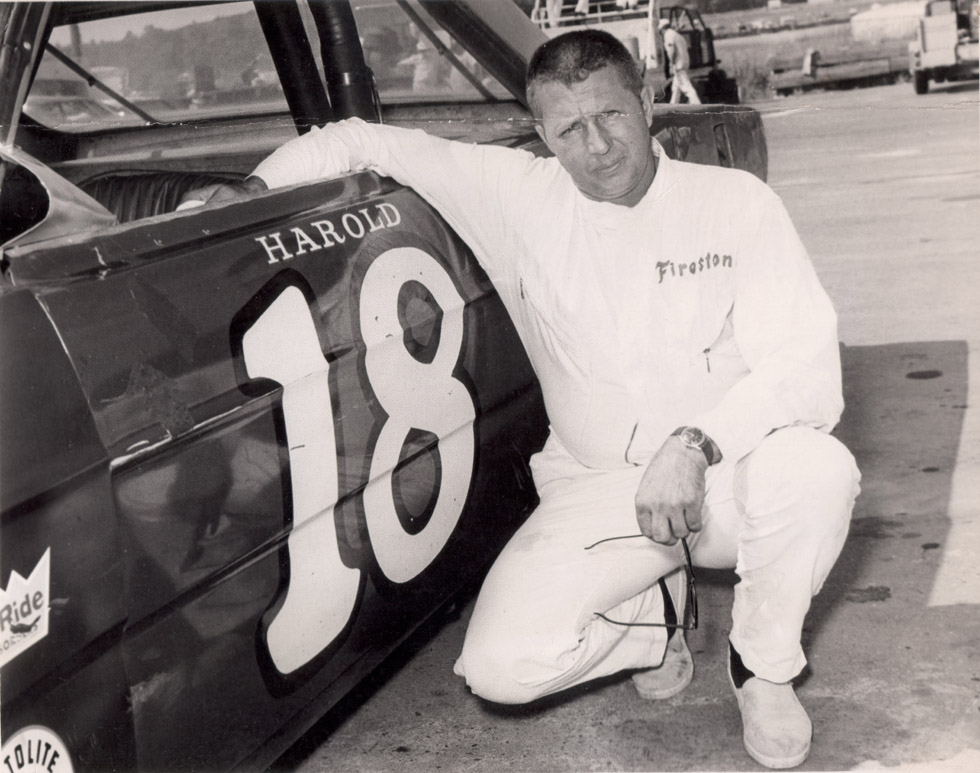
“We had so many cars back then.  A, B, and sometimes C Mains.  Back then you qualified first, you started in the back.  You learned to drive in traffic.  Some drivers are good qualifiers but poor racers.   Out by themselves you give them the track, they’re great.  Me, I was a shit qualifier, very seldom was I fast time.  But when it come to traffic, I could maneuver traffic.”
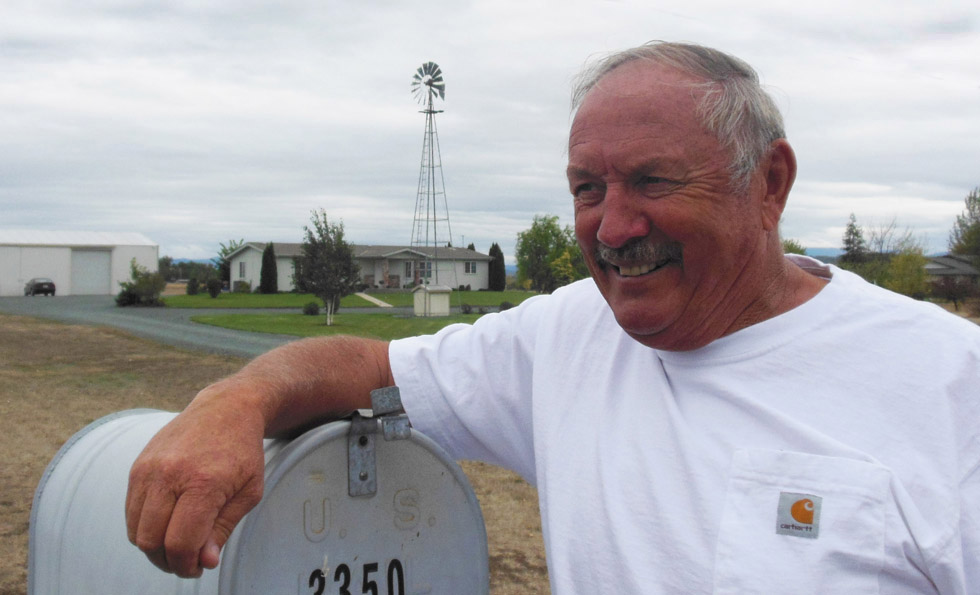
Don in traffic, Shasta program circa 1975

Don in traffic (Shasta race program circa 1975)

Goofy The Clown Photo

GOOFY THE CLOWN

In 1975 at Fair Nights races one of the surprise attractions was Goofy the Clown who started a race in Don’s car while flailing his arms out the window in a panic trying to get out.  It was one of the more memorable moments in the track’s history, and the behind-the-scenes story found its way into Tom Dilling’s book Dirt Trackin’ At The Acres (subtitled History, Memories and Related B.S.) (1979), and is an excellent example of his colorful writing style –

Goofy the Clown, oh, yes, Goofy the Clown. He was supposed to be some kind of racing entertainment specialist. This cat showed up at a Board meeting one night and we fell for his Iine – hook and sinker. We hired him for two Fair nights and I would be ashamed to tell you what we paid him.

Coincidentally, just a short time before Goofy’s appearance, my wife and I had discussed and decided that it would be hospitable to offer some of the out-of-town racing people our extra bedroom, since her daughter had eloped with an unemployed, semi-professional quail hunter. So Tom offered. Goofy accepted.

Goofy showed up about four days before his scheduled performance and Aldyne was just a little surprised when a plump little man walked in the back door of our house with a suitcase in one hand and a rubber chicken in the other and said, “Where’s the bedroom?” (I had neglected to tell her that we were going to have company.)  So, old Goof got settled and started making long-distance phone calls all over the God-damned country.  He reassured me that he would pay us for them and I was not concerned as I knew that he had a bundle of money coming for his performances.

The first night he was to perform he informed me that he had invited his girl friend to come up and catch his act and would I pick her up at the bus depot?  Sure.  I had to leave my job as lap counter just before the B Main started to go retrieve Goofy’s financee, Angel. Well, she got off the bus with a real good-looking dude that she had met on the ride up. He came equipped with a God-damned bicycle that he was going to ride someplace.  He needed a motel room and could I give him a ride?  Sure.  I drove to the nearest motel and unloaded new boyfriend and God-damned bicycle. We all said our goodbyes and I was about to drive off when he came back out and reported that the room was too expensive and could I take him to another motel?  Sure.  About the third motel, the son-of-a-bitch broke the inside door handle of my pick-up, so at each stop I had to get out, unload bicycle, open the door, and then stand there like a damned fool while he and Angel tried to swallow each other.  He would trot into a motel office, trot back out with the same complaint, throw the God-damned bicycle in and get right back to trying to chew Angel’s face off.

About the seventh motel, I unloaded the God-damned bicycle, opened the door for lover boy, and drove off and left him – and the God-damned bicycle.  Angel and I arrived at the track just in time for the end of the A Main.  There stood Angel with lipstick smeared all over her face, there stood my wife with a strange look all over her face, and there stood yours truly with a stupid look all over my face.  I couldn’t tell what kind of look Goofy had on his face as he was wearing all that clown makeup.  It took me quite some time to get things half-way straightened out.

In the meantime, Goofy and Angel moved right in with us and played huggie bear all night and half the day.  When they weren’t trying to wreck the mattress on the bed they were taking turns seeing who could make the most long-distance phone calls.  We tried every excuse in the world to get rid of them (we even discussed murder).  Then, just about in the middle of the honeymoon, Bicycle Lover-Boy hit town again.  He had made it up the road a piece and someone had run over him (wished it could have been me).  He was on death’s door in a motel (low priced I would imagine) and could Angel come down and help sooth his terrible injuries?  Sure.  Away she went, while Goofy napped the rest of the day to regain his strength.  He sure as hell could use a little rest.

Well, after five or six days, they finally left.  Aldyne and l sealed off the extra bedroom.  And, Goofy, if you are out there, we are still waiting for you to pay the phone bill, plus interest.  Don’t bring it in person—just put it in the mail.

On the infamous Goofy The Clown race, Don sets the record straight-

“It was a Trophy Dash.  Kind of a one lap thing.  We fictitiously started the trophy dash, I might have been in the lead.  All a put-on deal, all for show.  Never really raced with him in the car.  Come around and started the race, he leaps out the window, waving his arms, if you didn’t pay attention you missed it.  Me, Joe Hamilton, all the rest put that thing together, a funny bit.  We did one lap, came back around, he got out.  Just a show to get the people excited.  We thought we were promoters.  There was a danger factor to what we did, but then again there’s a danger factor when you go out the front door.”

1976 PRICE HALF BREED WINS

In September 1976 Don brought a new car to Redwood Acres, a “Mustang with a Camaro-Conversion kit” as the Stock Report put it, and in his first race with it he managed to “sift through perpetual clouds of dust that made racing miserable for all the rest of his competition”, winning a heat and his third main event trophy of the year, sitting 2nd in points to out-of-towner and eventual ’76 track champ Tom Wyatt from Medford.

1976 Half Breed Wins Trophy“It was a Camaro body with a Mustang motor in it.  Joe Hamilton had a Mustang.  I probably did some really goofy things, but I look back on it and it was cool; anything I could do to put something together.  You couldn’t integrate parts- Ford/Ford, Chevy/Chevy Studebaker/Stude was how it had to be.  The rule was you had to have a 115 inch wheelbase.  Camaros are 108.  Had to modify the rules to do that, or stretch the frame and build it accordingly.  Things evolve as time goes on.  I changed many of the rules.  Because I had some hair-brained idea in my head…”  Ultimately the power band of the Mustang engine was not getting the job done so the hybrid car was another creative (though somewhat successful) experiment that was finally dropped.

Nuts N Bolts 980 left

A regular feature in the Stock Report was a piece called ‘Nuts ‘N Bolts’, mostly cryptic one-liners that only those behind the wall in the pits could truly appreciate.  In a 1981 issue appeared the line:
-The hell with Price and all his funky ideas!

“I hate to say it but it’s true” he smiles.

“I was the first guy who ever run a powerglide transmission at the track.  Tried to kick me out – no automatic trans in those days.  There was a big debate in the SRRA meeting, finally got it approved.  I’m the guy they talk about – pushing the rules…  I’m that guy.  I built all my own stuff.  Everything was hand made, that’s just how we did it.  Walker and McMurray buy all the fancy stuff from stock car products.  I had the welder and the piece of iron, put it all together.  I did pretty well actually, when I look back on it.”

Don and his friend Paul Masten, who owned a logging company in Hoopa and sponsored his cars.  They traveled to Daytona in 1976 to watch Jimmy Walker race, and Don ended up being the lap counter.

Don and his friend Paul Masten, who owned a logging company in Hoopa and sponsored his cars. They traveled to Daytona in 1976 to watch Jimmy Walker in the Parmatex Late Model race, and Don ended up being the lap counter.

In 1977 Don took his Chevelle down to race in the Permatex 300 at Riverside.  “I heard Jimmy was going down and I thought hell, I want to go down too!”

“We had watched the race somewhere down the line before.  I mostly remember Jimmy Wilson (of Wayne Wilson’s Radiator) at the club that night when they had the hypnotist there.  We were all in the audience.   Jim Wilson had been at Redwood Acres track officiating.   Jim was used to going fluffo.  We all did a little bit of drinking in those days…”  [Looking through the old Riverside program Don’s attention was taken away from telling this story and unfortunately, or fortunately for Jim, we never returned to find out the conclusion of Jim going fluffo and the hypnotist in the night club.  You will have to fill in the story yourselves.  My version involves a chicken impersonation.]

“I remember going around the Riverside track the first time, and it’s a mile on the back straightway.  It has a hook that goes like this, then a big sweeper.  Beginning of practice I was going down that straightaway, balls out pedal to the metal.  They have these signs that say 4-3-2-1 and it makes this little dogleg, and I’m going down there and I see these signs there so I let off the gas and about five guys go by me!” he says, laughing.  “Because I thought I’d have to slow down for this little curve in the track.  It didn’t take me long to figure it out, by the second lap I was into it.   You just don’t know what you can do until you get out there and do it.  I’ve never been anywhere that was so fast- average speed was just over 100 miles per hour a lap.”

“I was last qualifier.  Transmission was going out, and I managed to qualify.  The drive line was the problem and virtually broke the transmission, I barely qualified – 40th – I was on the bubble.  In the race I was running very good, was carving through the field, passing cars.  Went to 17th when I finally broke.  Had never been in a road race.  I did good, for me.”  (smiles)

“Bobby Allison was there, cool to go into the pit meeting in there with Richard Petty and all those guys – ‘Hi, I’m Don!’,” he laughs.

“Coming back from Riverside with Dusty Mausa and some others, the hitch come off the motor home, struck the car and trailer sent over, on the long stretch on I-80.  There was some truck parked alongside the freeway with a bunch of pallets on it, trailer hits the truck, trailer separated from the car.  Trailer sitting in lane 5 or 6 or whatever.  Jerry Holtz with his ten cell flashlight trying to flag traffic down.  Some drunk comes down, hits the side of the trailer, jumped, landed on the trailer.  Dusty’s tool box was on the trailer; we picked up sockets a half mile down the road the next day.”

“You talk to guys who went traveling with me, we never went to a race and nothing happened.  We’d all pile in the motor home going to Shasta or Oregon.  We are going to Carson City once and the wheel on the trailer comes off, I yell to everybody ‘WATCH THAT TIRE!’.  At Susanville got a guy to weld the axle so we could get to Carson city and go racing.  I had forgotten my fire suit, had to borrow one. In the race I got into an accident or something.  The tow truck guy stuck the hooks through the radiator, had to borrow a radiator to get racing again.  We all celebrated in Reno, some went to the whore houses, some drank and gambled, we didn’t have any money left.”

1976 Stock Report cover after A-Main (note Don's ever-present boots he wore instead of driving shoes)

1976 Stock Report cover after A-Main win (note boots instead of driving shoes)

MAYHEM ON THE TRACK (and in the bar)

“The only guy I ever had an issue with at Redwood Acres was Ed Tanferani.  We were in a bar after a race talking about what had happened and he asked me what I thought and I said “I think you are the worst driver we got on the track” and he popped me.  Hit me.  I never even dropped my drink though.  I fell back on the bar, and I still had my drink.  Then I got up and we went at it.  If you don’t want to know what I think don’t ask me.”

“One time I was ahead of  Mike Chase in the Open and he started banging into me.  So I came out of turn two and I powered out and I just locked it up, smashed the whole front end of his car.  If you can pass me, you pass me, but don’t beat me up.  I don’t like it, I don’t do it to people, I don’t want it done to me.”

“I went to Roseville the only time they qualified, they had a draw every year except one, and I set fast time so started on pole.  Oren Prosser wrecked me third or fourth lap.  I had a crew guy Bob Griffitts, it was all we could do to keep him from killing him.  Another one of the highlights” he says laughing.

“Come to Medford one time, got off the trailer, running around like a bunch of maniacs, qualified and got fast time.  In the race this guy was pounding me around the track from behind, spun me out, and back in the pits Ron Marcelli was running around the car with the jack, I yelled ‘Just put it under the bumper!!’, and he yells back ‘THERE AIN’T NO F^@&ING BUMPER!!!'”

1981 NCDTC Crash quad

Speaking of bumpers, there was a very memorable incident at Redwood Acres involving Don Price, a bumper,  and Bill O’Neill,  at the 1981 North Coast Dirt Track Classic.  After an absence of several years O’Neill was driving Randy Olson’s car and won the Day Two 2nd Heat, with Don Price finishing 2nd behind Harold Hardesty in the B-Main, transferring on to the main event.  Paraphrasing the story in the Stock Report – In the A-Main on lap 54:  ‘Don Price dropped his bumper on the track.  Bill O’Neill ran over it.  The bumper had cut his brake lines.  O’Neill’s car climbed right up on top of Price’s and the two of them slid off the end of the track between turns three and four.  Price, who just recently rebuilt his car after a roll-over and fire, was left with nothing but the chassis of his car intact.  Fortunately no one was injured but the cars were heavily damaged.’

Don’s in-car view of the action was different.  “The bumper didn’t fall off until he hit me!  He ended up on top of me.  Holtzy and the guys run out to see what was going on.  The bumper wasn’t laying there.  We were in traffic.  Into turn three and he just never stopped, ended up on top of me.   That’s my story.  We’ll always live with that story, my opinion and his opinion.”

1981 May A Main Win injury photo1978 Track Champion Car

1978 Don PriceIn 1978, in the words of Tom Dilling, “My hero, Don Price, ended up SRRA Track Champion.”  He finished just ahead of Larry Pries by 11 points.  “You never know you are there until they boo you.  I won the championship and I hear these boos,” Don says, adding that he remembers his crashes more than his wins.

Throughout Tom’s book, in detailing the nicknames, the wins, ribbing him about his rough days at the track when he ‘forgot to turn left’ and found every wall, Tom just loved writing about Don.  “I always thought he didn’t like me.  It took me a while to figure Tom out.”   But it all came out in the book, it was pretty clear there.

There was something in Don’s mad inventor personality and disaster-filled road trips that appealed to Tom’s borderline Gonzo writing style, and the appreciation went both ways.  “Tom was the world’s best.  He had such a way of telling stories.”   Don also appreciated Tom’s character.   “He was just that guy- a gruff character.  I pride myself on being up front and saying what I think.  That’s Tom – if he had something to say to you he didn’t hold back, an up front kind of a guy.  Nobody like him I’ve ever seen.”

1981 Redwood Acres Memorial Race Winner

1981 Redwood Acres Memorial Race Winner

Olympia car with Jody (Bill Gillespie's son, on left) and Billy (Don's Price's son)

Olympia car with Jody (Bill Gillespie’s son, on left) and Billy (Don’s Price’s son, on right)

The Chevy Lumina owned by Al Berkey, shown here driven by Angelo Marcelli  (photo courtesy of Angelo Marcelli)

The Chevy Lumina owned by Al Berkey, shown here driven by Angelo Marcelli (photo courtesy of Angelo Marcelli)

“Last time I drove was for Al Berkey in ’89 or so.  Bought my boat in ’88, I was commercial fishing, would take off in the Summer.  I would come up for three or four races.  The car was fast, I was fast in it, but something always broke.  Angelo Marcelli ran Berkey’s car a couple of times.  I ended up in top 10 that year.  Just couldn’t finish races, the SOB would break all the time.  Had a good motor, I set the thing on fire, it was fast.  My last race started in back, passed almost all the field going into turn four and got up in the marbles and hit the wall” he says, laughing.

“Angelo and I became friends through the racing stuff.  To this day we are still buds.  He still harasses the shit out of me,” Don says laughing.  “Angelo always talks about beating me in that 1978 B-Main.  I don’t even remember.  He’s shown me this article for the past 10 or 20 years.  Highlight of  his career.  That race means more than any of his championships.  He thinks he can bug me.  We’re like brothers from different mothers along the way.  It’s an ongoing rivalry and it will probably go on until we’re a hundred.” [By the way Angelo, Don told me to tell you he still has that race engine in his garage that you want; I saw it and it looks really nice.]

In the years since racing, true to his nature, Don has continued to be a jack of all trades.  “I was a commercial fisherman out of Humboldt and Bodega Bay. Met my wife while fishing in Fort Bragg.  The fishing business got whacked, so in the early 1990s I started a computer business in Santa Rosa, ran that for 11 years. We had checked out Medford and bought property in 2000, and moved permanently to Eagle Point in 2009.”  For the last several years he has been caring for his wife Kriss who was diagnosed with cancer.

Don is currently owner and operator of Rock N Tractor and Custom 4 Less in Eagle Point.  If you want something hauled, cut, or built, Don’s your guy.  He still stays in touch with Humboldt via Facebook; with his old racing friends and on the Remember In Eureka When page.  One of his many projects is a 1960 El Camino restoration that has been in the family forever that he finally has in his home garage.

Once out of the driver’s seat, Don stopped following racing, local and national, and only began watching again in recent years.  “Once he pulled the pin, that was it” his friend Angelo says.  He did return to the Redwood Acres pits in 2012 to visit old friends, and has been following the weekly soap opera that is Nascar again the past couple of years.

When asked if he ever thought anyone was going to track him down looking for car photos and asking a bunch of questions about racing, he replied “Truthfully…..no.  But I think it’s pretty freakin’ cool myself.  I’m amazed anyone remembers me.”

As Don’s favorite saying goes, something he would proclaim throughout my weekend with him, “There’s An Ass For Every Seat”.  And I guess I was happily sitting in mine, taking it all in.

Medford 9-2013 152

Don Price next to his 1933 Chevy 1-ton truck in Eagle Point, Oregon.

Besides calling Don his hero, in Dirt Trackin’ At The Acres Tom Dilling also described the haul back from Riverside and wrote that he wanted to go on one of Don’s famous road trips some time, and that he could probably get an entire book out of it.  While we didn’t get into the RV, I did go with Don on a road trip of the mind.  It was a privilege hearing about his journey from there to here.

For me growing up, it was always about that #11 Chevelle, forever frozen in black and white photos in the old Stock Report programs, and I finally got to find out what the driver of that car was really all about;  Don Price – In Living Color.

Unless otherwise noted, all photos courtesy Don Price or from the Stock Report (thanks Fergy!)

ANGELO MARCELLI

SCAN0154

Angelo Marcelli is part of the heart and soul of Redwood Acres Raceway.  He’s one of a select few active drivers still racing at the track for more than 35 years.  A four time track champion (2000, 2002, 2004, 2013), he has a unique perspective spanning his early days as a youngster attending the Hard Top races in the 1950s to being a driver in the technical paved racing of today.

A native of Eureka, Angelo is the owner of Marcelli’s Ravioli and Sausage Factory, a business first established in 1927 by his grandfather on 3rd & G in what is now called Old Town Eureka.  They moved the deli to the current location on 5th street in 1953, and opened the cafe around 1973.

“I grew up close to the track.  Went to a lot of the midget races.  I went to the Grand National race they had there in the 50s that went around the big horse track. We had a pizza place in the 60s and a lot of the Hard Top drivers including Harold Hardesty came in there when I was 14.”

Earlty Cars Montage 2

The first race behind the wheel for Angelo at Redwood Acres came during the mechanic’s race in Manuel Arruda’s #84 in 1976  (top left).  By the end of the season he had his own car at the track, a brown primer colored ’57 Chevy (top center), and by 1978 he was driving a silver-gray ’64 Chevelle (top right).  “The cars were right out of the wrecking yard so it didn’t take much to get going, so I got one.  Each year it keeps evolving and next thing you know you’re there.  As you move up you get hooked on it, for sure.   I love it, missed maybe a handful of races.  Never missed a full season in 37 years.   No sense in having a race car if you don’t race it.”

“I always liked old cars, just never got into the aspect of building them.  When I started racing I liked it so I was just going to dabble in it.  I’m still dabbling apparently.”

Angelo at the track with friend and crew chief Frank Arruda Jr.

Angelo at the track with friend and crew chief Frank Arruda Jr. at Roseville

Building Nova Montage 1978

In 1978 Manuel Arruda’s brother, Frank, took apart one of the cars and transformed it into the gold painted Chevy Nova, built in a one car  garage.  “He was sharing space with a washer and a dryer,” Ange says.  “He had a helluva time gettin’ through there, with an old stick welder.”

SCAN0128

SCAN0129

“When I started Redwood Acres was fairly dusty, then got to a dry slick track.  Some days you couldn’t tell where you were going but some days it would turn out good; depended on the heat, the sun, how well it was prepared.  They tried different chemicals in it, some worked, some didn’t.  Back in the Hard Top days you couldn’t even see the track from the grandstands some days.”

“If you needed something to go racing we’d go out to the pickups and took them.  You’d see the hoods go up out back where they’d steal starters, radiators… you go out and your pickup won’t start; ‘Oh, I forgot, let me get your starter, I got it on the car….’ ,  put your starter back on for you.  But none of that stuff fits now, its all after market stuff now. Back in the day any Chevy starter would start any Chevy, and any radiator we’d bolt in.”

“Back in the 70s they were stock cars with the frames that came with them.  Then everyone went with Camaros and cut the front clips off them.  Then they started going fabricated clips.  Walker and Pries were probably the first to bring out the fancy Chevelles, ’66s, stuff like that.   That started the trend.  We were always behind the trend of bigger tracks.   But the money won back then, that was just the way it was.  When I look back those were the best races we had, back in the dirt days.  It’s just not the same today.  It’s fun, but not like back in the days when we’d have all these parties:  ‘Dusty Fans & Dirty Drivers’ parties during the Open Comp days in the late 70s, baseball games against the dragsters.”

Left: First Annual "Dusty Fans & Dirty Drivers" party after the North Coast Dirt Track Classic; Center and Right: SRRA baseball game Men vs Women (Women won)

Left: First Annual “Dusty Fans & Dirty Drivers” party after the North Coast Dirt Track Classic; Center and Right: SRRA baseball game Men vs Women (Women won)

First Win:  B-Dash in 1978 brings congratulations from brother Ron Marcelli and Howard Chambers

First Win: B-Dash in 1978 brings congratulations from brother Ron Marcelli and Howard Chambers

scan00001 Angelo Marcelli and Don Graham crash

In 1979 Angelo’s Nova tangled with Don Graham and ended up hitting the front straight wall hard (pictured above).  “Back then we didn’t have the collapsible steering wheels so it pushed the whole shaft right up in my chest.  The ambulance comes over and the wheels were all bent out and they asked me where I was at, and I was bullshitting them and said (in dazed voice) ‘DAY-TON-A’.  Next thing you know they put me in the ambulance and I said ‘No I know where I’m at!’ and they said ‘No, we have to take the first thing you say’.  I guess it’s right; they err on the side of caution.”

“The walls now are a lot harder than they used to be. I told Rich: ‘Maybe the cement’s curin’!'”

Angelo and Larry Pries

Angelo and 1979 Track Champ Larry Pries

“If you have fear you can’t get into the car.  I’m sure it’s in your mind somewhere more than when you were younger, but part of it is we never had the money to fix anything.  I always run more cautious than the guys who had new bodies hanging in the garage every week.  I was working two jobs to go race.  We just couldn’t afford to wreck it all the time.  So I’d let off before somebody else would, but I wasn’t in it to be a super star, I was in it for the fun of it.  Until we really started winning, I think I had more fun, with no expectation to do well.  In the old days I won a lot of B-Mains because technically I had a B-Main car most of the time on dirt.  Hell, before if we made a top race, if we could run with the big guys, we were pretty proud of it.  If we finished third in the old days we’d be partying for a week.”

Reluctantly, Angelo addressed the controversy Fergy Ferguson continues to raise many years later over the Suitcase Race.  “Well, we had a Suitcase Race, we put on clothes, and got back in the car and raced.  That was something that I didn’t think he should have brought up…”   His son Mike sitting at a nearby table at the resturaunt starts laughing, having never heard this story before.

Fergy had said that while he was taking care to stretch the pantyhose on over his fire suit, he was surprised to look over and see Angelo shoving his racing shoes in, destroying the nylons, going for speed over being presentable.  He believes to this day that Angelo had cheated to win.  Angelo responds flatly “Well, he always says that.  I was just quicker because I was the young buck.  And I was legal so I won.”

“We used to do stuff like that all the time for crowd entertainment.  And they used to race just cars off the street out there.  3 Laps.  They’d tape the windows and tape the headlights.  Way back one guy wrecked his girlfriend’s car out there, a Mustang, put it right into the fence.  One time a guy just got out there after the races and took off onto the track.  We used to have to park the grater across there because people would try and sneak their cars in and start racing while we were loadin’ up to leave.”

On Fair Nights Redwood Acres Fairgrounds Manager presents half a toilet seat to Angelo, "My Half-Assed Friend"

On Fair Nights Redwood Acres Fairgrounds Manager presents half a toilet seat, announcing to the crowd “To My Half-Assed Friend Angelo”

“I was a Six Rivers Racing Association board member almost right from the start when I began, and then president at the end, just to close it down.  It was not like a promoted track; we had meetings every Tuesday and the body would come and we’d vote on rules and how we wanted the track to be.   We had our battles and its a tough sport but back then we got over it a lot faster than today.  You’re mad at the time but the next day you’re best friends again and the guy would loan you anything he had, it wouldn’t matter if you just wrecked him.”

“We hung all the lights, picked up rocks on the track, hauled the clay, laid the clay, we built everything out there, the board members.  We had car washes just to put money in it, do everything around town just to get the season started.  We raced a year for nothing, nobody got a dime, just to put it back in the club.”

SCAN0149

1982 Fair Nights Fast Heat – Ange paces a field of champions: (25) Angelo Marcelli, (2m) Tom Wyatt, (87) Ron Peters, (98k) Hank Hilton, (84) Mark Baldwin, (48) Jim Walker, (R) Dane Smith

scan00003 dirt car win

1982: “Run What You Brung” Open Comp B-Main winner (note the Larry Detjens style #25). Don Harper won the A-Main.

Mike Marcelli, Angelo’s son and crew chief, continues: “That’s something the younger guys don’t understand about these older guys; they busted their ass just to race.  They come out now and the grass is mowed, the track is clean, concrete all through the pit area, and they still bitch.  Try to get the car level in the pits or jack it up in a mud infield- you put a piece of wood under the jack to get it up.”

Angelo replies: “And the guys before me- we always put it in perspective.  You look in those old cars and it would be like driving a bus.  Those old midgets, the old roll cages, your head was the first thing to hit.  They wanted to race.”

SCAN0152

In 1983 the SRRA brought in clay from Union street to change the feel of the dirt track.  “Then we got to a clay track, what I call bay mud.  I didn’t like the the clay they put in and what we called Outlaw Cars, big wedge bodies.  We thought it would be really good but what it did it sucked the horsepower right out of it.  We went to the wedge cars and the money cars started coming in and they pushed these home builts out of the program.   The wedge cars, the high horsepower cars liked the clay we put on.  The low buck guys aren’t going to like anything that hurts them.  Whoever’s gettin the advantage is going to like that.  It was hard to race with them.”

From Racing Wheels July 24, 1985:  "Angelo Marcelli startout out hot laps with a bang. His throttle stuck wide open going into turn one.  He climbed out unhurt.  His crew worked on the damaged car throughout the night and he came back the next night to win his heat race, place third in the B Main, tranferred to the A Main where he finished 8th in the North Coast Dirt Track Classic at Redwood Acres Speedway in Eureka, CA."

From Racing Wheels July 24, 1985: “Angelo Marcelli started out hot laps with a bang. His throttle stuck wide open going into turn one. He climbed out unhurt. His crew worked on the damaged car throughout the night and he came back the next night to win his heat race, place third in the B Main, tranferred to the A Main where he finished 8th in the North Coast Dirt Track Classic at Redwood Acres Speedway in Eureka, CA.”

Probably the last place you want to end up during a race is upside down.  “First race, new car just built, never drove it before, the throttle stuck” Angelo explains.  “My wheel hit a tire when it flipped me.   We were trying to get it straight to get it on the trailer, this wheel back into the frame firewall, gas tank fell out, everything,  just trying to get it straight enough to get it on the trailer, and Frank says ‘You know, we could get this drivable’.  I said ‘Yeah, if you can get it fixed I’ll run it”.

Mike continues: “It was all bent to Hell.  We had a water truck on one end and a grater on the other, pulled the thing straight and went out and won the B Dash, B Heat, transferred to the A Main.  That’s back on dirt, that’s what you could do.  The difference between the old days and the new days is every angle in your front end means something now.  It’s just a different day.”

Angelo concludes: “There’s probably not much that has happened out there that hasn’t happened to me at least once.  We’ve been on fire, been upside down, we’ve been in the walls, we’ve been on cars.  Probably the worst one I was in was when Randy Olson spun that guy in the Open and Jim Walker just missed him.  I hit that guy and went spinning through the infield.  Kind of knocked me out…caught on fire.  I think that was the worst one I ever had.”

Wedge dirt car for the clay - Angelo with son Mike, 16 years old.

Wedge dirt car for the clay – Angelo with son Mike, 16 years old.

A new Camaro for the freshly paved track at Redwood Acres in 1988

A new Camaro for the freshly paved track at Redwood Acres in 1988

In 1988 new promoters brought a paved track and NASCAR sanctioning which opened up the track to host the Southwest Tour and Winston West races.

“When it was paved we lost a few drivers that had done well on clay- the Henells and Ron Peters.  A few of them backed off, not racing every race.  Back then when we were racing Super Stocks, before templates, you didn’t have to change much to run with the Southwest Tour and they wanted the local cars to run against the tour for the fans.  But NASCAR was for NASCAR- they didn’t do nothing for you, just cost you a bunch of money.”

“I liked the asphalt right away.  I used to go to Anderson and we had Lakeport and Ukiah.  It was cleaner but was harder to drive; on dirt you can horse it around and get it to do what you want to do, on asphalt if you aren’t right on the money you’re in a lot of trouble.  It’s a real fine line.  You’re set up has to be right there.  You were spinning out before you knew you were spinning.  I’d be sitting in the infield and wonder ‘Now just how in the Hell did that happen?'”

SCAN0173

Mike Marcelli:  “Randy Olson took me under his wing and taught me a ton about chassis and how to set up for asphalt.  It’s obvious to everybody now that if you aren’t perfect when you leave the garage, geometry-wise, you are going to have a bad day.”

“Most anybody can go around and qualify and be fast,” Angelo says.   “But it’s when you’re in traffic and making that almost instant decision when you feel it in your butt when you’re slidin’.  When I first raced on pavement I must have spun that thing twenty times a race, but now I can feel that thing and just automatically react.  Jim Walker’s a natural, that guy can miss anything, and he’s probably the best thing that ever hit here.  That’s one guy who could have made it big time from here.  When he won Riverside and raced at Daytona, he had the talent, there was just no doubt about it.”

Late 90s red Camaro - Mike: "A few times that car was a #&@?ing rocket!" Angelo: "I Had my worst wreck in 1997 in that car."

Late 90s red Camaro – Mike: “A few times that car was a #?@&ing rocket!” Angelo: “I Had my worst wreck in 1997 in that car.”

SCAN0181

1997: A winner’s trophy with grand kids and their assorted friends

SCAN0183

“I watch and follow NASCAR, went to Phoenix 10 times in a row.  Used to go down to Riverside, was there when Walker won.  If Walker was going to the races we were going.  Riverside was better than Sears Point, almost an oval with the S’s in it.  Went there every year for years.  There wasn’t any kind of Open Comp we didn’t go to in Redding, Roseville, even if I wasn’t racing in them, we’d go watch them.  We just never had the kind of money to compete in those kind of shows, and I don’t like to be in everybody’s way.  I don’t want to be the one who screws everybody up.”

“I think we won the B-Main in Ukiah once.  Made B-Main a couple of times at Anderson, but they’re 150 lap races in 200 degree heat.  It was miserable.  I liked the tracks but they were too small compared to Redwood Acres, you were just in a turn all the time.”

SCAN0189

“Back in our day we knew what we come from, we weren’t gonna go to Daytona.  We raced and then went over and finished a keg of beer, went out and argued about the races and fought and did all our rollin around and would be best friends next Saturday.  It’s at every track not just ours, but each generation you get people who think they’re the next Dale Earnhardt.  They don’t mind wrecking people now.  If you can’t get by them, spin them out.  That started after we went paved.”

Angelo drives underneath Ronnie O'Neill in his 2002 Track Champion Miller Lite car

Angelo drives underneath Ronnie O’Neill in his 2002 Track Champion Miller Lite Grand Prix

Angelo has been track champion now four times since 2000 and he’s seen the technical side of racing take over since the old dirt days. “Back in the day you’d go over to John’s wrecking yard and you got a motor, put it in your car and went runnin.”

Mike concurs,  “When we were on dirt you’d throw some Monroes on there and you’d go racing.  Now the shock package is multi-valving, the right valving for each corner of the car; you have to be down on the shocks or your car ain’t working.  Guys like my dad with experience can still drive the car and make it go fast, but one mistake and you’re gone. The things we have seen change from when we started in 1976 to 2013 are ridiculous.  It’s just night and day.”  Both say a lot of the local guys who know people back in North Carolina working in NASCAR get the latest technical information and can use that advantage at the track here.  “A couple of tenths is forever on a race track”, Angelo adds.

“I went to the Gold Cup over in Chico and saw a couple of the old hard tops they had in the museum.  They were tore all to Hell but you look in the back and they had a military gas can – the old jeep cans – in the back for a fuel cell behind the driver’s seat with a strap holding it in, and half inch water pipe for roll cages.  It brought back memories when I’d see those guys come flippin’ down the track at Redwood Acres.  Them guys had cajones, man.  Or stupid, one or the other.”

Frank Arruda Jr., a.k.a. “Sarge”, reading the morning paper at his spot in Marcelli’s cafe

While the cars and the track have changed, the constant for Angelo and Mike remains the relationships formed through the years with the other folks at the track.

Frank Arruda Jr. was Angelo’s first crew chief in 1976 and has been with him ever since.  Says Angelo of his old friend, “His brother Manuel got me started and Frank kept me in there.  He’s my main man.  Does the body work the ducting, changes tires, does everything the crew guy does.  If we get in a wreck he’ll go out the next day and start working on it.  He’s a machinist, was in the Marines, went to work with Redwood Kenworth, retired there.   He’s been with me forever and there isn’t anything on there he can’t do.”  Frank is joined on the team by Angelo’s son and current crew chief, Mike, and mechanic and former long time driver Casey Dungan.

“We had some of the top of the line drivers between Jim Walker and Larry Pries.  Tom Wyatt would come over from Medford.  Jim Walker and Bill Schmitt of Redding had some of the best races you’ll ever see.  Don Harper, Valerie Harper’s brother, Larry Detjens was around here, and Don Hood.  Hank Hilton was really good, Kenny Wallan, Don Price.  Me and Don were real good friends.  The old timers; Fergy of course, and Jack Clark- he was a good writer too (columns in the Stock Report).  I don’t think there was anybody out there we didn’t like runnin with.”

Mike Marcelli likes to talk about a driver they were particularly fond of:  “Hank Hilton, in his later years, with his cane, won a main out here with the tour, that was the highlight of our day.  We were just sentimental towards him anyway.  We ran against him on dirt for a championship and we broke and that guy went and got a part and he gave it to us.  We finished second to him.  He was a helluva dude.  One time we’re in Redding and we’re struggling and that guy walks over and says ‘Here’s part of your problem…’, and he set our front end settings, caster and camber, by eye; no gauge, no nothing.  We went out and ran better than you can believe.  He got us maybe half a second.”

“That old guy helped me in Ukiah too”, Angelo says.  “Walked up and said ‘Hey, you’re hittin the throttle where you’re supposed to but you’ll spin out every time at this track.  Right at the apex you’re gone, so you have to hit it right before, or right after.’  The big joke with us is that we’d be struggling with the car and Hank would come over with a ball of string.  I’d say ‘We got all these tools’ and he’d say ‘All you need is a ball of string’,” Ange says laughing.

SCAN0199

Angelo has particular admiration for fellow driver and friend Don Price.  “Don was the best at never using a tape measure.  He’d put the clip on the car and just stand back and look at it and I thought this guy’s out of his mind.  You go to measure it when he’s done he was within a sixteenth, just eyeballing it.   But Don Price could do just about anything.”

“Don Price was incredible,” adds Mike.  “And that’s what the younger generation doesn’t get, that all those people that you’ve met, and all those people that were amazing to you.  Still to this day, Don and my dad are best of friends.”

Angelo concludes: “I’d never trade the friendships and things that we’ve done in racing, the people were just fantastic.  That was the best form of racing and group of drivers, before or since, between here and Redding.  And it was that way around the country.”

Angelo clinched his fourth Sportsman championship September 14th 2013.  On that night Jim Walker came out to race in the local Sportsman class, winning the Trophy Dash and Main Event – the Memorial Race – held in honor of their friend Larry Pries.

Fair Nights at Redwood Acres 2013

Fair Nights at Redwood Acres 2013

Huge thanks to Angelo Marcelli and his son Mike for their generous support and tremendous passion for the history of racing at Redwood Acres Raceway.

All archival photos are courtesy of Angelo Marcelli.

FERGY FERGUSON

2012 Fall Spectacular 201It is September and Clyde “Fergy” Ferguson is forced to sit out the 2013 season, out of a race car for the first time in 43 years, since his rookie year in 1970, due to needing hip replacements to get back into his Thunder Roadster.  One of a handful of drivers who have been the continual face of Redwood Acres Raceway, his friendly manner and trademark Abe Lincoln beard and low, rich voice, together with his career as a railroad engineer have always given him a salt of the earth appeal, and he has remained a fan favorite at the track who has stood the test of time.

2013 Garage Workshop

“I’m from Eureka, California, born and raised” Fergy says.  “Left here for two years when the President needed me, ’65 to ’67, been here ever since.”

“I worked with the railroad as a locomotive mechanic.  I got severed out in ’69, moved around some service stations, two or three sawmills, until I got another job for the Arcata Mad River Railroad out of Korbel.  They shut that one down but fired up Eureka Southern, and finished my time out there in Eureka.  I was Trainmaster at the end, running the outfit for the last 5 years.  I ran the operations; the scheduling, took care of all the crews.  It was a good job, I liked it.  The thing was we weren’t union, so I could also work on locomotives and engineer, runnin’ a train down through the canyons when a guy didn’t show up.  I could do anything I wanted, I loved it.”

“When I was young, I always liked cars, I was a car guy.  Working on cars, drag racing on the street; I lost my license three times for speeding.  In 1969 old Tim Nelson came to me and said ‘Dick Luzzi is putting another car together and he needs somebody to weld the top back on’ so I went over to his house and welded it on, and I just got involved from there and it just took off.  The racing, I loved it.  From then on I was hooked.  Dick, Dave and Ray Luzzi, they were good competitors.  But that’s how it got me….welding a top on a car.”

1970 Hobby Car Montage

Fergy’s first car in 1970 was the #121 Hobby Stock car. “That was the first Don Price paint job – he ‘laced’ it.” (Shown below in 1971 at the annual Rhododendron Parade in Eureka)

1971 Rodie Parade

1972 Clyde Ferguson SRRA Yearbook

1972 SRRA Yearbook

Racing in the old dirt days had its share of stories.

“One race Casey Dungan lapped us all.  Matt Kunkler got so upset he just gave up, so I passed him.  I was runnin ahead of him and we had a yellow come out, and he decided he wanted to get it back.  We drove down the main straight and I knew what he was doing, he was going to use me as a bumper going into one,  so I hammered the breaks and he went right past turn one and right off  the track.  There were no walls back then.”

“If you talk to Angelo Marcelli, ask him about the Suitcase Race”, Fergy says, standing in his living room looking down at his feet, dropping the hint of a good story to be told.  “We raced around the track, stopped, got out, then opened an old suitcase full of women’s clothing that we had to put on before getting back in and racing again.  Angelo won but he cheated; while I was taking time to pull on the pantyhose, he was shoving his legs in and ripping them apart.  He didn’t care how they looked.”  There was no comment about who might have had the edge in experience in such a race.

Another race Fergy recalled was the time Medford’s Tom Wyatt won the A-Main but was disqualified, managing to stay out in front of the rest of the field in spite of driving on three wheels.  “He was black flagged. Broke the lower ball joint, so he’d go through the turns and it would set it back up, but then down the straight it would lay back down again.  I think it was a ’57 Chevy too.  Dane Smith used to come down here and race too.  He was really fast.  He was a helluva dirt racer.  He just won everything on the dirt.  All those guys loved Redwood Acres.  They all really enjoyed coming down here.  It was bigger and it was fast.  The big track, not the doughnut.”

By 1972 Fergy was racing in the Super Stock division, and the search for the perfect gold paint job had begun...

By 1972 Fergy was racing in the Super Stock division, and the search for the perfect gold paint job had begun…

Fergy at Anderson near Redding, CA 1973

Fergy at Anderson near Redding, CA 1973

“I didn’t do a lot of out-of-towners, I went to Placerville with the first Super Stock I got.  I bought John Morrison’s ’57 Chevy.  I went to Redding a couple of times.  Never did get the gear ratio right for running on asphalt. They were dirt in the early years but they asphalted real soon.   I went to Medford with the ’57 and turned fast time of the day up there.  It was unbelievable.  I went out and qualified, came in, I got out of the car and was walking and I hear sssssssssss and the air was coming out of one of the tires.   I had run over something.  I didn’t bring any spare tires, that was just what was on the car.  So I pulled the tire and ran it down town to see if there was someone who could patch it.  I  found some service station that would fix it for me and when I finally got back the guys were waiting for me and they said “Get in the car!”  I said what do you mean get in the car, ‘You get in the car, you’re in the dash!   You turned fast time!’  I said c’mon quit kiddin me. ‘No get in the goddamned car you’re in the dash!’  So I got in it and couldn’t do anything, they just beat me to death, I brought that car back and every rim was bent and the bumpers on both ends, they just tore me up.  And I lost the clutch during the main event too.  It was quite an experience.  The dirt was similar to Redwood Acres, it had a little cushion to it.  Quarter mile D-Shape and had a little tiny short straightaway; a turn all the way around.  I just took the green, put my foot on the floor and let it hang out all the way around, never let it off.  Beat all the fast guys, old Jack Keck, Tom Wyatt, all those guys were there.  I actually turned faster than all those hot shoes. That was the highlight of my out of town career there”, he says laughing.

1973 Jerry Carter and Fergy FergusonFergy has fond memories of Jerry Carter – driver and then flag man at Redwood Acres, who also put together the weekly race program, the Stock Report:  “We were racing in the main event, I come off of turn four, and everybody was slowing down, so I just went to the outside and I was going down the wall then I realized what had happened- Jerry Carter had spun on the inside, and came back across the track and parked it backwards right in front of the flag stand, and I’m coming full boar down the straightaway and I thought I was going to kill him.  I reached up and grabbed the wheel and snapped to the left and I went sideways and I took the front end of his car off, straightened it back out, and kept on going.  That was one of my scary moments because I thought I was going to T-Bone him.  I was wide-open.  I think it bent my fin a little bit.  But I was still able to race.”

“I thought he was a good flag man, myself.  Of course I thought most of the flag men were good, and everyone else hated them.  There’s no doubt it’s the hardest job.  No matter what you do, you are going to offend somebody.”

(Both are pictured at right in the 1973 SRRA Yearbook)

1973 74 SCAN0028 Don Price mix paint job

In ’73 or ’74 driver Don Price painted Fergy’s #21 Super Stock car using whatever paint he had in the shop. “He started pulling paint, whatever he had leftover, he started mixing up stuff and shooting it, and that’s how it came out. That guy was amazing.”

Fergy has lived in his current home in Eureka for 30 years; approximately one mile doorstep to start line from the track at Redwood Acres Fairgrounds.  Before that he lived on Marsh Road by radio station KINS.  “Didn’t have far to go with either house.  I kept myself close”.

“One night after a race I drove my race car home from Verla’s Pizza House out on Myrtle Ave.  We towed it on a chain, and the guy that was towin’ me took off and didn’t come back.  And after having some beers and pizza and all that, I said well what the Hell, jumped in it and drove it home.  It was crazy.  I didn’t have to go that far, luckily.”

Fergy and crew 1975

Fergy and crew 1975

Racing at Redwood Acres at that time was governed by the Six Rivers Racing Association, with many of the drivers as board members, including Fergy.  “I was on the board for about 5 years or so.  I was Vice President, 2nd Vice President, then President after that.  My wife Ann helped as VP.  The VP’s job was to get trophy girls, and Ann took care of that, standing in as trophy girl herself at one time.  She won Best Legs in the Hot Pants competition too.”

“We used to say each car in the pits brought 5 people, at a minimum.  So the more cars you can field, the more people in the pits or in the stands.  Start another class- more cars meant more people   At one time we’d have 130 cars, all in the infield, at least two or three classes.  When we’d have an open, we’d have C and D Mains even, 150 cars.”

“I tried being impartial as the president.  No Qualify –  No Race.  Ed Tanferani came in late, told him ‘don’t even unload it’.  A special board meeting took place in the middle of the track and overruled my decision and they let him race.  Overruled the rule book.  He was the big hot shoe, what do you mean he can’t race!  I stuck by my guns.”

“Everyone was supposed to pack the track, get their car out there, a lot of the hot shoes didn’t want to get mud on their cars.   You were supposed to pack the track, get it out there.  You watered it, even though it was ‘dry slick’ it would still slick out.   The guy who was filling in on preparing the track for a while would put dried cement in the turns.  He’d come out with bags of cement and sprinkle it in the turns, then water it, he was tryin’ to make it hard.    He wanted it dry slick, he definitely got there.”

Fergy loves reading about drivers from the old days.  “There’s always the ‘gray areas’ in racing.  Smokey Yunick and his two inch fuel line snaking all around the inside of the car, zig-zagging and holding an extra 5 gallons of gas.  He was an ‘Innovator’.  Smokey Yunick was the best, he did all that stuff.   Drilling out holes in sealed parts to make them lighter, wrecking the car and building it back with a  cut roof.  The Innovators – they like to play in the gray.”

As with any local short track, Redwood Acres had its share of characters and fine racers.  “Hank Hilton;  he was a good old boy, Hank.  He enjoyed his racing. Crazy Mitch Gilbert- The One-Armed Bandit. Don Price, Larry Pries, (Jim) Walker, I got along with all of them.  Jimmy was a good racer.  He won the Rose Classic a couple of times.  He was a good shoe. Pries ran good at Riverside too, so did Don Price.  I always told everybody if I could be as aggressive as Larry Pries and as smooth as Jimmy Walker, I could win everything.  I used to watch Larry going into the turn and everybody let off and he’d jump in there two car lengths.  Oh man, he was an animal.  He was something else.”

1976-79 Fergy and Car in  Pits

Fergy raced the classic Shakey’s Pizza ’57 Chevy from 1976 to 1979, he’s shown above wearing the mandatory white pants in the infield pits for safety and the Firestone windbreaker with racing stripe for promotion and all-around coolness.  The ’57 Chevy was a common car at the races back then.  “Now you kick yourself in the ass for tearing them up” he says.   “I bought one in Fortuna for 35 bucks- it had one dent on it on the fender, had all the checkerboard on it, all the chrome, everything was just beautiful.  I ripped all that stuff off and made a race car out of it.  And now you say to yourself ‘If I had that now it would be worth $75,000!’   Cut them all up, make them race cars.”

1976-79 Car in  Pits SCAN0026

New Tire - Stock Report

Photo and caption in the Stock Report

“In the Stock Report Jack Clark wrote an article on me saying ‘Don’t leave the lid off your garbage can because Fergy will come around and steal your leftover parts.’  I’d go by Casey’s and take all the stuff he took out of Ken Wallan’s motor and put it in mine.  They were already broke in”, Fergy says, laughing.  “I had one motor where everything was used- I think the only thing I had money in was the head gasket and the oil.  I figured out I had $64 in the motor.  It ran like Hell too.  I put some stuff together, they blew up too, but that was the fun part about it.  We’d go out there and run with nothing.”

One of the great things about short track stock cars is seeing the dents and damage patched together as the season rolls on.  “I had put a gallon of bondo on mine, I already had a gallon or two on it, just to make it look good.  It ended up looking good but if you hit it the whole side would have fallen off of it.  That’s what I told the guys- don’t hit me too hard, my whole side will fall off!  It’s all bondo!”

Transforming "Thumper"; note mechanic at work on left (Ferg) with four supervisors on the right.

Transforming “Thumper”

1981 Limited Main Winner

1981 A-Main Winner (The Stock Report)

Ed Rassmusen was a drag racer who in 1976 put together a  blue #50 ’69 Camaro known as “Thumper” to race at Redwood Acres.  Thumper made an impression, and Ed won A and B mains during the year and finished 6th in the Super Stock points as a rookie.  In 1979 Fergy bought Thumper and turned it into an orange #21.  In 1981 Fergy would win the track championship in the Limited Sportsman Division with that car.  “We did good with that thing.  I won everything.”  But as often happens on local tracks when one driver wins most of the time they become the villain, even the popular Fergy Ferguson.   “The year I won the championship was the only time I ever got boo’d”, Fergy says.   “That’s just the way if is.  They told me I shouldn’t be running in that class and I didn’t belong in that class.  I didn’t have any money in it.  I never had any money in any of my cars.  That year was my year. ”

#21L Limited Sportsman ready for the Rodie Parade.

#21L Limited Sportsman ready for the Rhodie Parade.

In 1982 Fergy ran the Champion's #1, but if you looked closely there was still a tiny "2" in front of it still.  He finished 3rd in the Limited Sportsman points that year.

In 1982 Fergy ran the Champion’s #1, but if you looked closely there was still a tiny white “2” in front of it. He finished 3rd in the Limited Sportsman points that year.

1982 1L Limited Sportsman on trailer1982 1L Closeup

In the early 1980s Redwood Acres Raceway was still a dirt track, but drivers ran asphalt setups on it and slick tires.  While you could leave the area to run on paved tracks easily, the true dirt cars set up for clay did not exactly work here.  “When Ron Peters first came over to go racing here he came in and pitted pretty close to me and I introduced myself” Fergy says.  “I looked down and seen the tires he had on and I said ‘Ron, I hate to tell you this but you can’t run those dirt tires.’  He said ‘What do you mean, it’s dirt aint it?’  ‘Well, not really, it is dirt but its not; we run these asphalt tires.’  ‘Dirt’s dirt’ he says.  He went out, went down the front chute and went out the end, came down the back chute, went out the end, went around a couple more times and kept going off the track, came in the pits and said ‘Well Ferg, I guess you’re right.  These things dont work.'”  (Ron evidently saved those tires for when the clay was later added because he became Track Champion.)

“I don’t remember how it got determined to change from a dry slick to a good clay track.  In the meetings we thought that was the direction to go, was to get some really good sticky clay on there and make it a real dirt track.”

“We hawked our ass for that clay.  Everyone signed for a $10,000 note to put that clay in.  And man that was the best thing that ever happened.  We had the fastest dirt track on the west coast, it was just animal.  Guys were pulling the front end off the ground as they went down the straightaway.  They stuck like glue.  You’d walk across it and you’d pull your shoes off, it was sticky shit. ”

1980s Dirt Car SCAN00441980s Dirt Car scan00002

Mid-1980s dirt car for the clay track at Redwood Acres

Late-1980s dirt car for the clay track at Redwood Acres

Portrait of a driver overcome with nervous anticipation

Portrait of a race driver overcome with nervous anticipation

1988 Trans Am

1988 brought a newly paved track and a Trans Am asphalt race car

In 1988 Rich and Linda Olson took over promotion of the track and it was paved with a wall added from turn one all the way around the track, with the intention of luring NASCAR races and therefore more fans and more money to the fairgrounds, thus ending the Six Rivers Racing Association.  “It was over, we were through”, Fergy says now.

“It scared me to death when I came out the first time on asphalt.  There was a wall all the way around, you couldn’t get out.  It took me a while to run up against the wall.  It was scary as Hell.”

After initially racing a modern Trans Am race body on the newly paved track, in a real old school move, when other drivers had moved to lighter aluminum and fiberglass,  Fergy decided to buy a Chevy Nova from the Street Stocks and run it in the Super Stocks division.  And in keeping with his Lucky 21, the car was already running his number on the side when he bought it, just waiting for him.  He raced it in the original red and white colors before painting it his trademark gold.  “I bought it and put a motor in it, ran it in Late Models.  I had a good time with that Nova.  Everyone had gone to plastic front ends.  That Nova was still steel.  Called it ‘The Dinosaur’.  I put a quick change on the back of the automatic transmission so I could get the ratio I wanted.  They said the 10 bolt rear end wasn’t heavy enough to run, but I did it.  The thing was crazy.  It was a good car, had a lot of fun with it.  It was all steel.  Geoff Neely asked ‘What you got underneath that doggone Nova?  You’re liftin’ the left front wheel off the ground.’  I said ‘No wonder that sumbitch don’t handle through the turns!’.  But man it took everybody down the straightaway.   Geoff was a good racer.  He ran good.”

'The Dinosaur'

The evolution of ‘The Dinosaur’

Fergy would trade his Trans Am to Crescent City Late Model driver Howard Ford for a Chevy Lumina.  “I had a car that I was trying to race and it wasn’t working out, so I traded in that because he wanted the front end from that, and that is where the Lumina came from.”   The cars over the years would change but the colors generally remained the same- always the #21 and a variation of red and gold colors.

Fergy’s cars often won Best Appearing Car at Redwood Acres Raceway.  “In the early years I had Don Price paint them for me” Fergy says.  “Don did all my paint jobs on the dirt.  In the later years I painted them myself, and my son painted one or two of them for me.  When we went to asphalt I started painting my own cars and creating my own paint schemes.  I was always trying to get the gold, never did find the right color until late.  Finally found the bright gold I’ve been looking for for years.”

“Always trying to get the gold…”, his voice sounding like an old prospector.

Lumina SCAN0052

The Hit Me Red Lumina as Fergy called it

Lumina 1Lumina three panel

Fergy's #21 KEKA Chevy Lumina lined up next to Tim McCracken followed by Wade Lentz, both from Redding.  Tim would finish Sportsman Track Champ, with Fergy 4th in points.

Fergy’s 1997 #21 KEKA Radio Chevy Lumina lined up next to Tim McCracken followed by Wade Lentz from Redding. Tim would finish Sportsman Track Champ, with Fergy 4th in points that year.

The 2001 Sizzler Monte Carlo was Fergy's favorite paint scheme, designed by his son Nick.

The 2001 Sizzler Monte Carlo was one of Fergy’s favorite paint schemes, designed by his son Nick.

Fergy's first race at RAR after a layoff in 2004

2004: Fergy’s first race at RAR after a brief layoff

Fan Appreciation Night at Redwood Acres 2004

Fan Appreciation Night at Redwood Acres 2004

Quality Time with Family & Trophies:  daughter Leslie in 1982 (left) and early 1990s (center), grandson Dylan in 1997 (right), and with wife Ann in 2005 (below) on a night Fergy was thoughtful enough to win a race for her on their wedding anniversary.

2005 w Ann win on anniversary

Fergy enjoying the sun in his vintage Fergy shirt in the pits after the Fall Spectacular 2005

Fergy enjoying the sun and a beverage in the pits after the Fall Spectacular in 2005

Limited Street SCAN0068In 2006 Fergy joined the Limited Street Stock division, a class of vintage muscle cars with wide tires and lots of power, they were a faster alternative to the Real Stocks and became nearly as fast as the Sportsman.  They were cars after his own heart- more like the old Super Stocks in the 70s, a link to his racing past.  And to cap it all off, he came up with a paint scheme that was a throwback to the old Wood Brothers Grand National cars.  But the struggling car class soon went away due to dwindling car counts.  With drivers migrating in and out of classes, one goes up and others go down, an ongoing story at local tracks. “Every class they had they escalated out of what they originally were, the pure stocks escalated so far so they had to then start over as Real Stocks.  This has gone that way for years.”

Limited Street SCAN0072

Winning Best Appearing Car for the Limited Street Stock

#21 Thunder Roadster at the 2012 Fall Spectacular at Redwood Acres

Fergy’s beautiful Thunder Roadster at the 2012 Fall Spectacular at Redwood Acres

The ‘Thunder Roadster’ was designed by Charolotte Motor Speedway director of research and development Rudy Zeck, who also happens to be a two time Redwood Acres track champion.  Much like Legends and Bandoleros, they are identical “spec” cars with sealed engines designed for close racing.  Visually, Thunder Roadsters have the look of the Indy front engine roadsters of the 1960s.  When introduced at Redwood Acres around 2006 they caught on with returning track veterans like Ken Wallan, Dave McMurray, Bill O’Neill, and Nyle Henderson.  Some had not been to the track in 20 years or more.

“I decided to go to a Thunder Roadster instead of a Sportsman because they are a lot cheaper if you tear them up. The initial cost isn’t cheap but they are fairly easy to maintain.  The economical thing is that if you actually wreck it they are breakaway parts;  aluminum struts and joints where all the front end geometry is – you just replace it, it’s very low cost as far as that’s concerned.  They’re fiberglass, you don’t completely destroy them.  I hit the water barrels and took the nose out, the left side of the car, and I think it cost me 500 bucks.  If it was a Sportsman it would have cost me three grand, at the low end.  It has a sealed engine- the motors are spec and one shouldn’t be faster than the other…but they are.”  He repeats with a wry tone for emphasis, “But they are.”

“It’s very frustrating, I’ve always been used to running up front and now I can’t keep up with the fast guys.   It’s a momentum type car, you have to get into the turns and get through them quickly.  A lot of it is those young guys have no fear.  They get up on the wheel, they go.  A lot of that has to do with my age.  I’m probably a little more cautious than they are; I’ve hit every wall out there.  When I was younger, I got after it too.”

Among the trophies rests his first racing helmet, purchased for $14 in 1970.

Among the trophies rests his first racing helmet, bought for $14 in 1970.

“I’ve had a good time most of my time racing”, Ferg says.  “Back in the day, back on the dirt, I threw motors together right and left, just to go.  I built the motors myself, did everything, it was pretty simple on the dirt. I’ve never really had a bundle of money, but we always could compete.”

2012 Fall Spectacular 199

In the pits following the season finale at Redwood Acres 2012

My thanks to Fergy Ferguson for welcoming me into his home and sharing his great collection of photos and stories from his days in the Six Rivers Racing Association racing The Acres.  We talked about doing this over the years and it was great to finally make it happen for real.

2012 Fall Spectacular 200

HANK HILTON

2003 Fall Spectacular Sunday

On March 8, 2008, friends and family met at the Country Club Bar & Grill in Klamath, California to celebrate the life of Hank Hilton.  Old silent films from the 1950’s Devil’s Thrill Show which starred Hank projected on the wall while “Roadhouse Blues” played on the jukebox.  A table displayed photos of Hank from throughout his life and at the center a trophy he won as the Redwood Acres Raceway Track Champion of 1982.  Beer bottles were raised as stories of Hammerin’ Hank filled the room;  about how he began racing at Slauson Speedway in Los Angeles at 16,  how he raced on Enderts Beach in Crescent City, and how he was still racing in 2007 in the North State Challenge Series at the age of 74.  About how he ‘turned his own wrenches’, and how in later years could use his walking cane to clear personal space around the garage or break up a fight in the bar.  Drivers young and old referred to him as both tough and a father figure.  Born July 2nd 1933, he had passed away on February 28th, 2008 after a battle with lung cancer, before his 60th anniversary of racing.

1950s Red Hilton at Slauson

Red Hilton announcing the action at Slauson Speedway 1950s

Five years on, Hank’s wife Delores Hilton still holds an amazing collection of photos, trophies and stories.  “In the 1940s when Hank was a boy his father Red Hilton had a horse stable in Los Angeles and they taught movie stars including Roy Rogers how to ride.  Hank said Roy Rogers was a butthead, but Dale Evans was the nicest person you’d ever want to meet.”

In the 1950s Hank raced the the rugged dirt track known as Slauson Speedway in Los Angeles.  Though much of the film footage has been lost to deterioration, you can still see the jalopies bouncing through the spine-jarring ruts and at the finish line going either high or low to avoid a car-swallower of a puddle.  It was more like an off-road endurance test than a race around a track.

“Hank’s dad Red and he both raced the same cars in the same races at Slauson”, Delores says.  “Slauson wasn’t really a race track, they just used it on weekends.  It was just a big old field beside the railroad tracks and there was garbage with big holes and he said you’d just be bouncing and jumping, lucky you didn’t run into a pile of garbage.”  Red, who was a promoter and track announcer, would sometimes be both driver and flag man for the same race, and at the finish would jump out of the car and wave the checkered flag.  “His dad was crazy like he was.”

Hank on three wheels at the battlefield that was known as Slauson Speedway, mid 1950s

Hank on three wheels at the battlefield known as Slauson Speedway, early 1950s

1950s 54 Car

Hank Hilton, mid 1950s

1956 Slauson Firewall Crash Frames

1956 Slauson Hank with TrophyThe craziest stunt had to come in 1956 with the Chuck Casteel Hell Drivers Thrill Show featuring Hank Hilton’s Death Leap, where Hank did the Fire-Wall Crash while riding on the hood of a ’51 Hudson.  In the old film Hank is shown in his white trousers spread eagle on the hood of the car crashing through a wall of flame, then jumping off to the ground as the others ran in to check on him. Delores described the events: “He was on the hood of the car and the wall was on fire and all was well….but they had put tar paper in the wall and it stuck to his face giving him third degree burns.”   The film shows him returning later with a face covered in bandages to accept a trophy and consoling pats on the back.   This would not be the first injury from his daredevil lifestyle, nor the last (see A LIFE IN RACING).

Hank would still always remain a racer.  Throughout the 1950s in Southern California at tracks like Riverside and Ascot, Hank competed with big names including Lee Petty and Parnelli Jones, and raced and won in NASCAR Grand National late models.  In 1957 he had a driver’s test with American racing legend Dan Gurney and won a seat in an open wheel Grand Prix type car, competing in a 500 mile race at Willow Springs, finishing 2nd in a car built by George Hulman, son of the owner of the Indianapolis Motor Speedway.

"Flood Mud"

“Flood Mud”

Moving back to the north coast for the health of his son, he lived in Loleta before settling in Klamath in the Yurok Indian Reservation on the Klamath River.  The 1964 flood which destroyed the town center also dragged his Ford through the mud.  He resurrected it as a race car calling it ‘Flood Mud’ and took it to the track in Eureka.  Hank would race all over California, Oregon and Nevada, but his home track would become Redwood Acres.

1970-71 Red #9 Bob's Bookkeeping car

The #9 Bob’s Bookkeeping car at the Arcata/Eureka Airport, circa 1970-71

1972 SRRA Yearbook

1972 Six Rivers Racing Association Yearbook

In 1972 in a Move It or Lose It deal with Caltrans, Hank bought his Klamath house for $100 and hauled it from its spot next to the soon-to-be expanded Highway 101 down twisty Hunter Creek Road to the subdivision where it sits today. (On the way the wheels got stuck in mud up to the axles, and Hank worried it was so deep that he would have to burn the house off the trailer to get it out.)

Pointing to a metal pole that now resides in the living room supporting the ceiling of the house, Delores says “He could suspend himself completely horizontal, parallel to the floor, like a flag on a pole.  He was small but very athletic.  Hank loved to dance.  You name it, music came on, and we danced.  He could do a back-flip.  When that NASCAR driver Carl Edwards started doing back-flips after winning races, Hank said ‘I did that before he did!’, and I said ‘Well, HE didn’t know that!'”

The #90 Chevelle Hank drove in 1972 and into 1973 until he switched officially to the #27 red Chevy

The #90 Chevelle Hank drove in 1972 until he switched officially to the #27 red Chevy in September 1973 (1972 SRRA Yearbook & The Stock Report 72-73)

1973 SRRA Yearbook driver photoIn a 1973 profile in the Redwood Acres Raceway program The Stock Report, Hank was asked why he raced, and he replied: “Why breathe?  In my blood…competition.”  Already a winner of 300 trophies at the time, he said his favorite was when he set the World Record for height and distance over parked cars in a non-modified  production car.  His advice to someone who had just bought a race car was “Not to try too hard, race to finish, and then race to win.  To be a winner you have to work hard, pay attention to what the other drivers are doing, and race clean.  Good reflexes, foresight, and guts are what it takes.”  He added that racing for fun was his only goal and to keep driving as long as he could afford it.  Hank would still be racing nearly 35 years later.

The memorable #27 red Chevy raced and won at Redwood Acres from 1972-1975, on the trailer at the Klamath Subdivision

The memorable #27 Chevy Hank raced and won with at Redwood Acres from 1973 to 1975, shown here with trophies on display at the Klamath subdivision

In the post race interview parlance of today: "The Blue Ox Cafe - Klamath Jet Boat Kruises - Requa Inn - Benedicts Tackle Chevy ran beautiful all day."

In the NASCAR post race interview parlance of today: “The Blue Ox Cafe – Klamath Jet Boat Kruises – Requa Inn – Benedict’s Tackle Chevy ran beautiful all day.”

Hank winning another trophy at Redwood Acres, early 1970s.

Hank winning another trophy at Redwood Acres, early 1970s.

As with Ferndale’s farmers, the Klamath/Crescent City contingent of racers made their mark on Redwood Acres in the 70s.  Known as The River Rats, they included Joe Wilson, Vestel Skaggs, Jim Mostovoy and Ken Woods, all having trademark yellow cars. (Hank had his own car separate from the Rats, the red #27.)  They were named after a bar “The River Runt” which was located where the vista turnout is today on Requa Road above the mouth of the Klamath River.  Hank was a mentor to many younger racers, from the early days in Los Angeles with the youth group The Black Knights, into his later years with drivers like touring Late Model champion Howard Ford of Crescent City, who spoke at the Country Club in 2008 about how Hank was like a father to him.

Back in the 70s women weren’t allowed in the pits, so drivers’ families and supporters often found themselves next to each other in the grandstands, and the action there sometimes rivaled what was happening on the track.  Ace drivers  like Dane Smith would come down from Medford to challenge the locals and the battle lines in the stands were drawn.  “We’d all be drinking beer and getting into arguments.  Hank sat in the stands once and said afterward he could see why someone would want to punch somebody, the things they would say.  But we never would- just a bunch of yelling.  Dane was a real good driver.”

The real fights at short tracks across the country often happen in the pits.  Like a high speed rush hour with bumping and trophies to the fastest, the result is often bent metal and expensive repairs, creating the perfect brew for flaring tempers.   A former amateur boxer, Hank knew how to take care of himself.  (He got his nickname “Hammerin’ Hank” not from his driving style but for how he handled his fists.)   Dolores remembers the night some time in the 1990s when her sister-in-law, driver Sandra Woodhurst, was confronted by an angry male driver approaching her in the pits after a race, and Hank, then in his 60s, was waving that walking stick of his, sending him on his way.  “It would make Hank so mad how they treated the women on the track” Delores says.  “We would watch one of them racing and Hank would say ‘They use them as a pick.’  A lot of the guys would put the women into the wall. One thing about Hank, he was always respectful of women.  And he always had women friends.”

1976 Red and White Car

Hank arrived late for the 1976 season at Redwood Acres with a new car, still the #27 but now on the side of a newer Chevelle that sported a red and white paint scheme, a car Delores Hilton says now was her favorite.  “To me that is the most beautiful car that ever was built. I loved the blue ones but that one I thought had class.” The car was later owned by Bert Watson who lead the points in the Super Stocks for a time with it in 1978.

Hank was back racing the $90 in 1978

Hank was back racing the #90 in 1978

1975 Jimmy and Hank Main Winners x980

In 1979 Hank and partner Bill Isaacson bought Jimmy Walker’s ’72 Chevy Nova that he had driven in Winston West and at short tracks in ’77 and ’78.  In response to Jimmy’s ‘Coffee Creek Special’ that had adorned his cars, Hank and Bill painted ‘Isaacson-Hilton Special’ on the side.  “Jim and Hank were always goofing on each other,” Delores says.  “Jimmy’s wife said ‘It’s amazing how much alike Jim and Hank are’.  She said basically they are both the same kind of guys.”  Though Hank said initially Jimmy wanted him to change the color, Hank was adamant that the color stay, and the two Petty Blue cars of the long-time friendly rivals shared the track for many years.  In one of his final races with Jimmy, Hank had an ill-handling car and decided to park it, and with an acknowledgement of the huge popularity of Walker at Redwood Acres, said afterward in the pits “I couldn’t keep the car straight and if I had crashed Walker and taken him out they would have strung me up!”  The #98k light blue car with the dark blue top would be Hank’s signature on the track for the rest of his racing days.

1979  Hank driving Jimmy's old Nova

Hank driving Jimmy Walker’s ’72 Nova in 1979

1979 98 Hilton Nova 8 Camaro

Hanks car that finished 2nd in SRRA Points in 1980

Hank’s car that finished 2nd in SRRA Points in 1980

1982 Stock Report ProfileAfter close finishes in the Redwood Acres Super Stock final points in 1979 (3rd) and 1980 (2nd),  in 1981 Hank finished the season tied for 1st with Ken Wallan at 805 points, but a tie breaker instituted after the race gave the title to Wallan and Hank was frustrated once again.  Delores Hilton says “If we had to lose it to anyone we’d want to lose it to Ken Wallan.  He was a nice man and we liked him a lot.”  The next year Hank said in a profile piece in The Stock Report that he was more relaxed and was just trying to finish races the best he could, and would race “until they make me quit.”  At the end of the 1982 season Hank was finally on top of the standings all alone, Track Champion at Redwood Acres Raceway at the age of 49.

1982 Six Rivers Racing Association Super Stock Track Champion Trophy

1982 Six Rivers Racing Association Super Stock Track Champion Trophy

Hank and his asphalt car, early 1990s

Hank and his asphalt car, early 1990s

In 1988 Redwood Acres Raceway would be paved and NASCAR sanctioned, with various touring series passing through town.  In his later years Hank no longer raced in the local Sportsman points races, opting instead for the Late Model Open Comp shows at RAR and other tracks, while running with the highly competitive northern California tours like NOR CAL, TRI-STATE and the North State Challenge Series, finishing as high as 4th in the standings in 2003 at the age of 70.  And he did all this with just a couple local sponsors and without a mechanic in charge of the car, unlike many of the other teams.

The sun setting on Hank and his Chevy Lumina at the Redwood Acres Fall Spectacular 1997

The sun sets on Hank and his Chevy Lumina at the Redwood Acres Fall Spectacular in 1997

2005 Hank Hilton

Redwood Acres Fall Spectacular 2005

In the pits after another Fall Spectacular 2005

“He would have people come and help him with the cars but basically he did it alone.” Delores Hilton says.  “He was the number one mechanic in Del Norte County.  If you wanted your car fixed, house built up or torn down, plumbing, painting, wiring, you name it, he could do it.”

“We crashed so bad at Redding once it took two tow trucks to bring our car back to the pits.  We had to put it on our trailer backwards to bring it back from Redding to Klamath.  He backed up to the garage at home and hooked it up to the chain hoist and I’d pull forward a bit and he’d add another block to support it until we had it off.  It was in such bad shape- but he fixed it.  He always fixed it.”

Portrait of a shade tree race car mechanic

Portrait of a shade tree race car mechanic

In late 2007 Hank was diagnosed with lung cancer.  While in the Hospital in Crescent City, Hank was watching NASCAR races on TV with the sound down.  “He did not like Darrell Waltrip.  He would watch all the races with the sound down” Delores says.  “While in the hospital they stopped his heart three times to get it beating correctly- the nurse said it was going from zero to a hundred in no time and I said ‘give me a break- he’s a race car driver, what do you think?!‘.” Hank would eventually go home to Klamath, spending his final days with his family and friends.

Hank at the 2007 Fall Spectacular sitting in the back of his hauler, an ambulance he bought from a mill in Orick for a dollar.

Hank at the end of the 2007 Fall Spectacular, his final race at Redwood Acres, sitting in the back of his hauler, an old ambulance he got from a mill in Orick for a dollar.

Hank passed away on February 28th, 2008, at the age of 74.  A few months later when the season was starting again at Redwood Acres, the #98 was driven again at the track in a memorial lap by Hank’s son, Frank Billy.  Later in the season local Sportsman division driver Romeo Venza raced the car and afterward in the pits was telling people how great the car handled.

Times Standard Racing 2008 Insert

Eureka Times-Standard ‘Racing 2008’ Insert

“Hank left behind two engines” Delores says; “a Sportsman engine and the Late Model ‘Big Engine’; and the guy that bought the ‘Big Engine’ was going to use it for drag racing, but it blew from having so much power.  Then he sold it to a teacher in Ukiah for students to use at Sears Point, and its still running around somewhere. We raced in Nevada and Oregon and all over California.  I still have one of his race cars in the backyard.  Some day I’m going to paint it and number it again.”

From bouncing around old Slauson Speedway in a jalopy racing with his dad, to riding the hood of a Hudson through a burning wall in the thrill shows of the 1950s, to streaking down the paved straight at Redwood Acres in a Late Model stock car at the age of 74, what was the draw…was it the adrenaline rush?  Delores nodded while the question hung in the air for a moment, then added “He was crazy, though.  He always did crazy things.  The man knew no fear.” Or as Hank put it himself back in 1973: “In my blood…competition.”

“Between the two of us we had 10 kids, 18 grand kids, and so far 23 great grandchildren”, Delores says.   “He loved people, he loved sitting and talking to people, never got old to him.  He lived the life he wanted to right up until the end.”

The Klamath River

The Klamath River

Special thanks to Delores Hilton for her generosity in opening up the scrapbooks and old programs, and for sharing her memories both colorful and personal, and also for sharing an attention to detail in nailing down the history the best we could.  I had spoken to Hank in the pits after races about getting to hear his stories and see his old photos and his reply was “I’m in the book”.  I had always regretted being too shy to take him up on his offer.  I think I needed a project like this, a place for the photos and stories to go, and after several years I finally found it, and Delores made it even better than I had imagined.

At Hank's favorite hang out, The Country Club Bar & Grill in Klamath Ca, 18 years of customer signature dollars over the bar surround a photo of the #98, of Hank Hilton.

At his favorite hang out, The Country Club Bar & Grill in Klamath CA, 18 years of customer signed dollars over the bar surround a photo of the #98 of Hank Hilton.

2013 Country Club 017